


Later built its reputation on visual content planning - drag-and-drop calendars, Instagram grid previews, and a clean interface that made scheduling feel almost enjoyable. But in 2026, the tool’s limitations are harder to ignore: price hikes, seat restrictions, and an AI feature set that has fallen behind competitors.
If you’re searching for Later alternatives, you’re probably running into one of a few issues: the pricing doesn’t scale well for your team size, you need deeper analytics than Later offers, or you want smarter AI-assisted content tools baked in. This guide covers the two strongest Later alternatives - Hootsuite and Buffer - with honest breakdowns of pricing, features, and who each tool actually serves. According to Sprout Social’s research, 73% of marketers believe social media scheduling tools are essential for maintaining consistent posting cadences - making the right tool choice genuinely consequential for your content output.
Comparison Table: Best Later Alternatives for Social Media Teams
| Tool | Starting Price | Free Plan | Best For | AI Features |
|---|---|---|---|---|
| Later | $18/mo | Yes (1 user) | Visual Instagram planning | Basic captions |
| Hootsuite | $99/mo (annual) | No (30-day trial) | Enterprise multi-platform management | OwlyWriter AI, OwlyGPT |
| Buffer | $0/mo | Yes (3 channels) | SMBs and solo creators | GPT-4o AI assistant |
Why People Are Leaving Later
Later remains a solid tool for Instagram-first workflows, but several friction points push users to look elsewhere:
Pricing structure. Later’s mid-tier plans charge per social profile and per seat, which adds up quickly for small agencies or growing marketing teams. A team of three managing five brands can easily hit $100+ per month before accessing features that competitors include at lower tiers. Later’s official pricing page documents the per-seat structure.
Analytics depth. Later’s analytics are adequate for tracking follower growth and post engagement but lack the competitive analysis, social listening, and custom reporting that teams need as they scale.
Platform breadth. Later started as an Instagram tool and still shows it. If LinkedIn, Pinterest, or TikTok are central to your strategy, the experience is noticeably less polished than on Instagram.
AI tools. Later’s AI caption generator exists but it’s reactive - you write first, then optionally ask for help. Tools like Hootsuite and Buffer have moved toward proactive AI content suggestions and multi-format generation. The AI social media tools landscape covers how the AI gap has widened in 2026.
Hootsuite: Best for Enterprise and Multi-Brand Teams
Hootsuite is the market leader in enterprise social media management, and it earns that position through sheer breadth: comprehensive scheduling, inbox management, analytics, social listening, and a growing suite of AI tools all under one roof.
What Makes Hootsuite Stand Out
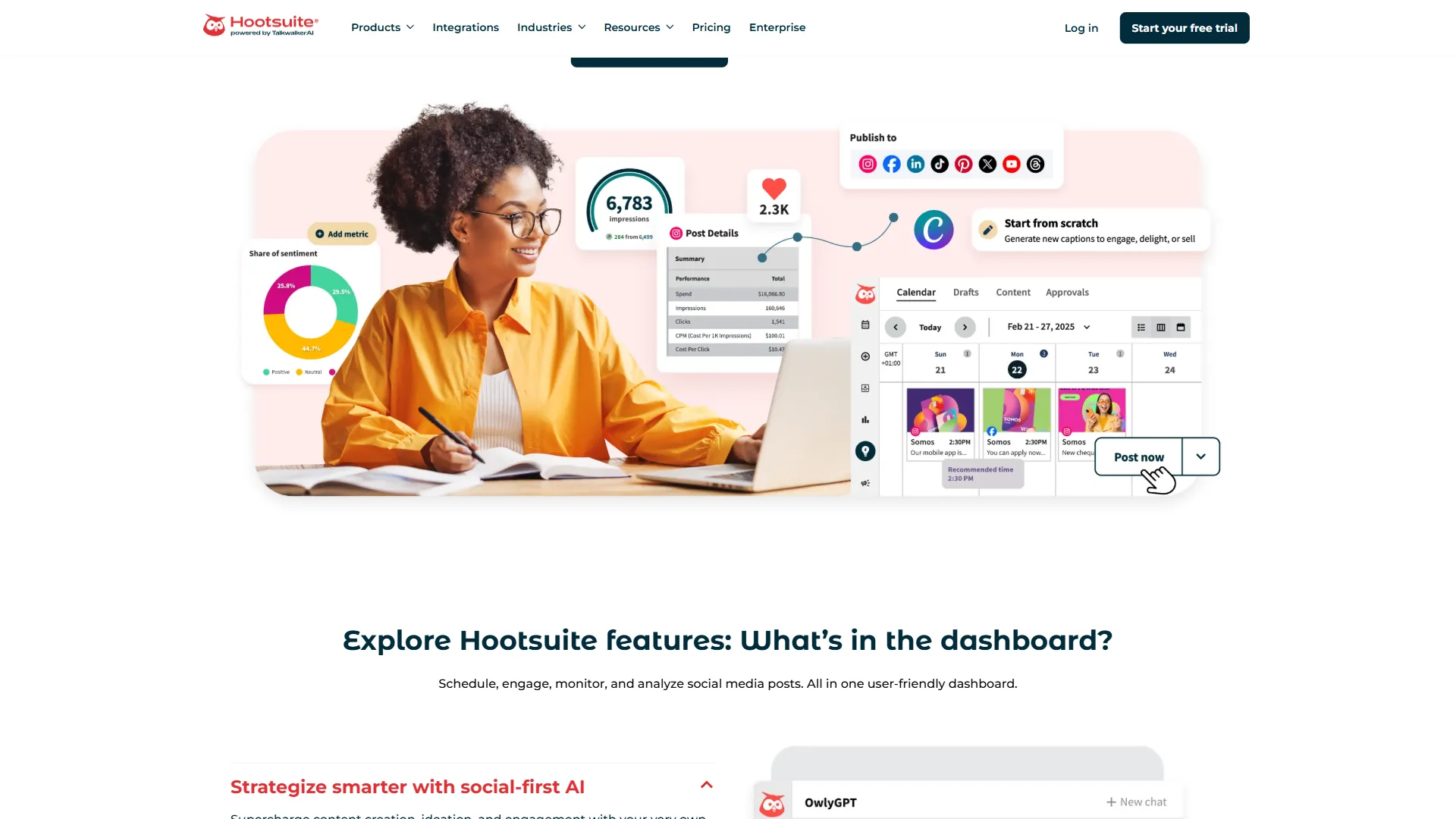
OwlyWriter AI and OwlyGPT. These aren’t afterthoughts. OwlyWriter generates captions, repurposes existing content into new formats, and suggests hashtags based on your brand voice. OwlyGPT goes further - it connects to real-time social data so you can ask questions like “what content is trending in my industry this week” and get grounded answers rather than hallucinated suggestions.
AI image generation (beta). Create social graphics without leaving Hootsuite. The integration is still maturing, but it removes a significant context-switch for content teams.
Social listening. Hootsuite’s listening tools track brand mentions, competitors, and industry keywords across platforms. This is a genuine differentiator versus Later, which has no native listening capability.
Bulk scheduling. The Team plan allows up to 350 posts scheduled at once, which is essential for agencies managing content for multiple clients.
Approval workflows. Multi-step approval processes, team assignments, and content review queues make Hootsuite practical for larger organizations where multiple stakeholders need to sign off on posts before they go live. The hootsuite alternatives breakdown covers the trade-offs in depth.
Hootsuite Pricing
| Plan | Monthly Price | Annual Price | Users | Profiles |
|---|---|---|---|---|
| Professional | $149/mo | $99/mo | 1 | 5 |
| Team | $399/mo | $249/mo | Up to 3 | 20 |
| Enterprise | Custom | From $15,000/yr | Unlimited | Unlimited |
All paid plans include a 30-day free trial, which gives you real time to evaluate the platform before committing.
The Professional plan at $99 per month (billed annually) covers a single user with five social profiles and unlimited scheduling. That’s actually competitive with Later’s equivalent offering once you factor in the AI tools included.
The Team plan jumps significantly to $249 per month annually, but includes collaboration features, approval workflows, and bulk scheduling that Later simply doesn’t match at any tier.
Hootsuite’s Limitations and Drawbacks
The price is the biggest barrier. $99 per month for a single user is a significant commitment, and there is no free plan - just the trial. Small businesses and solo creators will almost certainly find this overkill.
The interface has also been criticized for complexity. Hootsuite has accumulated features over more than a decade, and the dashboard reflects that. Expect a learning curve before you feel productive.
Who Should Choose Hootsuite
- Marketing teams at mid-market and enterprise companies managing 10+ social profiles
- Agencies running social media for multiple clients who need approval workflows
- Organizations that need social listening and competitive intelligence alongside scheduling
- Teams where multiple people collaborate on content and need permission controls
The later vs hootsuite head-to-head drills into the visual-versus-enterprise trade-off with side-by-side feature scoring.
Buffer: Best for SMBs, Creators, and Budget-Conscious Teams
Buffer sits at the opposite end of the spectrum from Hootsuite: simple by design, affordable at every tier, and genuinely usable without a training session. For individuals and small teams who found Later’s pricing frustrating, Buffer is often the most practical switch.
What Makes Buffer Stand Out
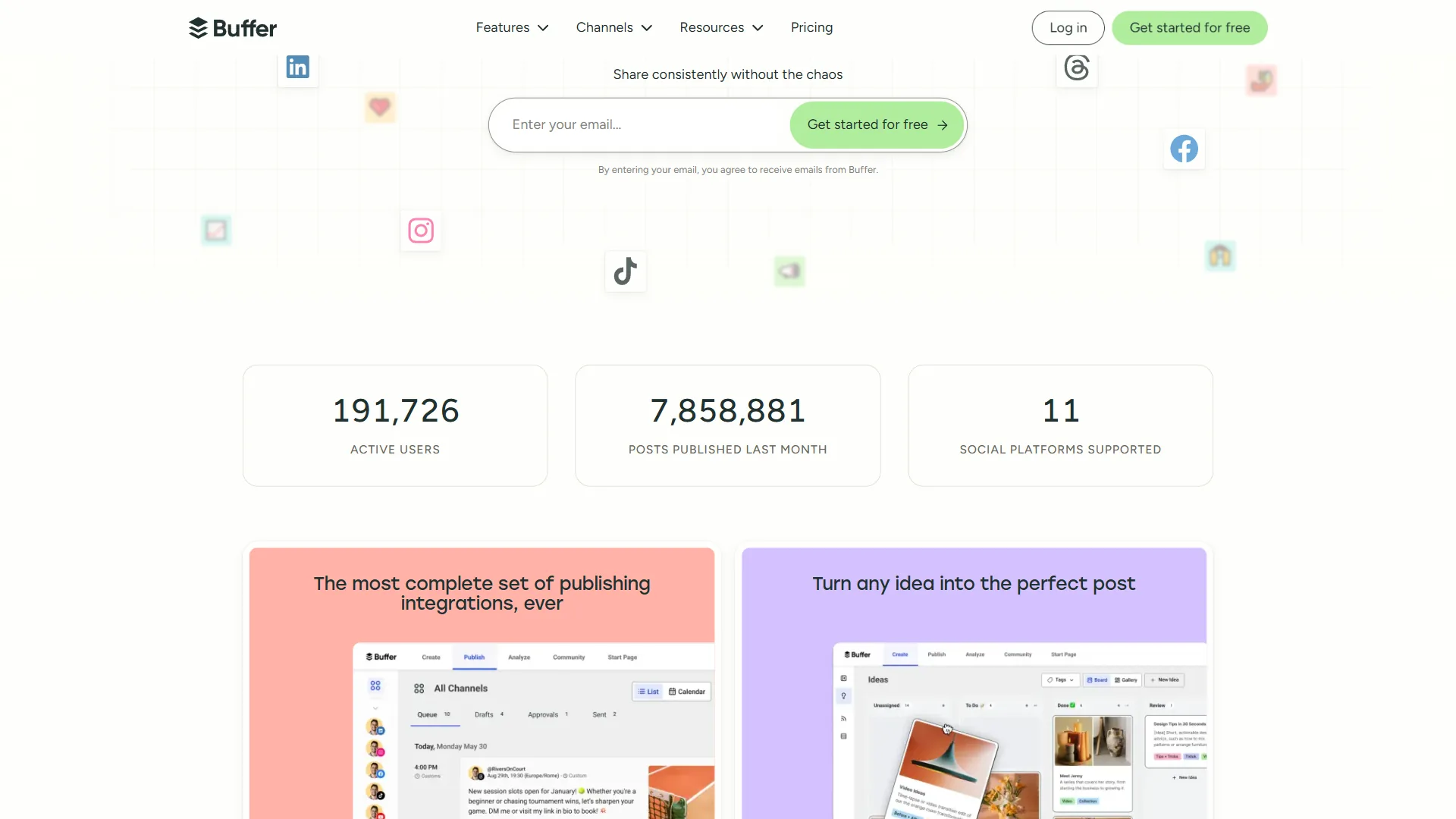
Genuinely useful free plan. Buffer’s free tier lets you connect three channels and schedule 10 posts per channel. This isn’t a crippled trial - it’s a functional planning tool that solopreneurs and early-stage creators actually use for months before needing to upgrade.
GPT-4o AI assistant. Buffer includes an AI writing assistant across all plans, including the free tier. It helps with caption drafting, content idea generation, hashtag suggestions, and repurposing content across platforms. Free users get 5 AI reply suggestions per week; paid users get unlimited access.
Cross-platform breadth. Buffer supports Instagram, TikTok, LinkedIn, X (formerly Twitter), Facebook, Threads, Bluesky, and more. For creators who need to publish consistently across a diverse channel mix, Buffer handles it cleanly.
Content ideas tool. Buffer maintains a dedicated space for storing and developing content ideas before they become scheduled posts - helpful for teams that want to keep a running backlog without cluttering the main calendar.
Analytics with 30-day history on free. Even free users get basic performance data. Paid plans unlock unlimited analytics history and custom branded reports.
Buffer Pricing
| Plan | Monthly Price | Annual Price | Channels | Users |
|---|---|---|---|---|
| Free | $0/mo | $0/mo | 3 | 1 |
| Essentials | $6/mo | $5/mo | 1 | 1 |
| Team | $12/mo | $10/mo | Unlimited | Unlimited |
The pricing here is almost shockingly accessible. The Team plan at $10 per month annually provides unlimited channels, unlimited users, approval workflows, and branded reports. This is where Buffer completely undercuts Later - Later’s equivalent plan costs significantly more and includes fewer collaborative features.
The Essentials plan at $5 per month covers a single channel with unlimited scheduling. This tier targets creators with a primary platform focus (say, just LinkedIn or just Instagram).
Buffer’s Limitations and Drawbacks
Buffer’s analytics, while improved, don’t match Hootsuite’s depth. If you need competitive benchmarking, social listening, or enterprise-grade custom reports, Buffer won’t satisfy that need.
The inbox/engagement tools are also more limited. Buffer focuses on scheduled publishing rather than community management. Responding to comments and DMs requires switching to native apps or a separate tool.
Buffer also lacks the visual grid preview that Later is known for. Instagram-first creators who rely heavily on feed aesthetics to plan their posting sequence may miss that workflow.
Who Should Choose Buffer
- Solo content creators and solopreneurs who want simple, affordable scheduling
- Small businesses managing a handful of social channels without a dedicated social team
- Startups and freelancers who need a capable free plan before they can justify a monthly expense
- Teams that want dead-simple approval workflows without an enterprise price tag
The best social media scheduling tools 2026 roundup compares Buffer against more than a dozen other contenders.
Feature-by-Feature: Later vs Hootsuite vs Buffer
These are the three best later alternatives worth considering in 2026. A 2025 social media industry report from Socialinsider found that teams using dedicated scheduling tools publish 3x more content per week than those relying on native platform tools - so the decision between these later alternatives has a real impact on output. Here’s how each stacks up across the features that matter most:
Scheduling and Publishing
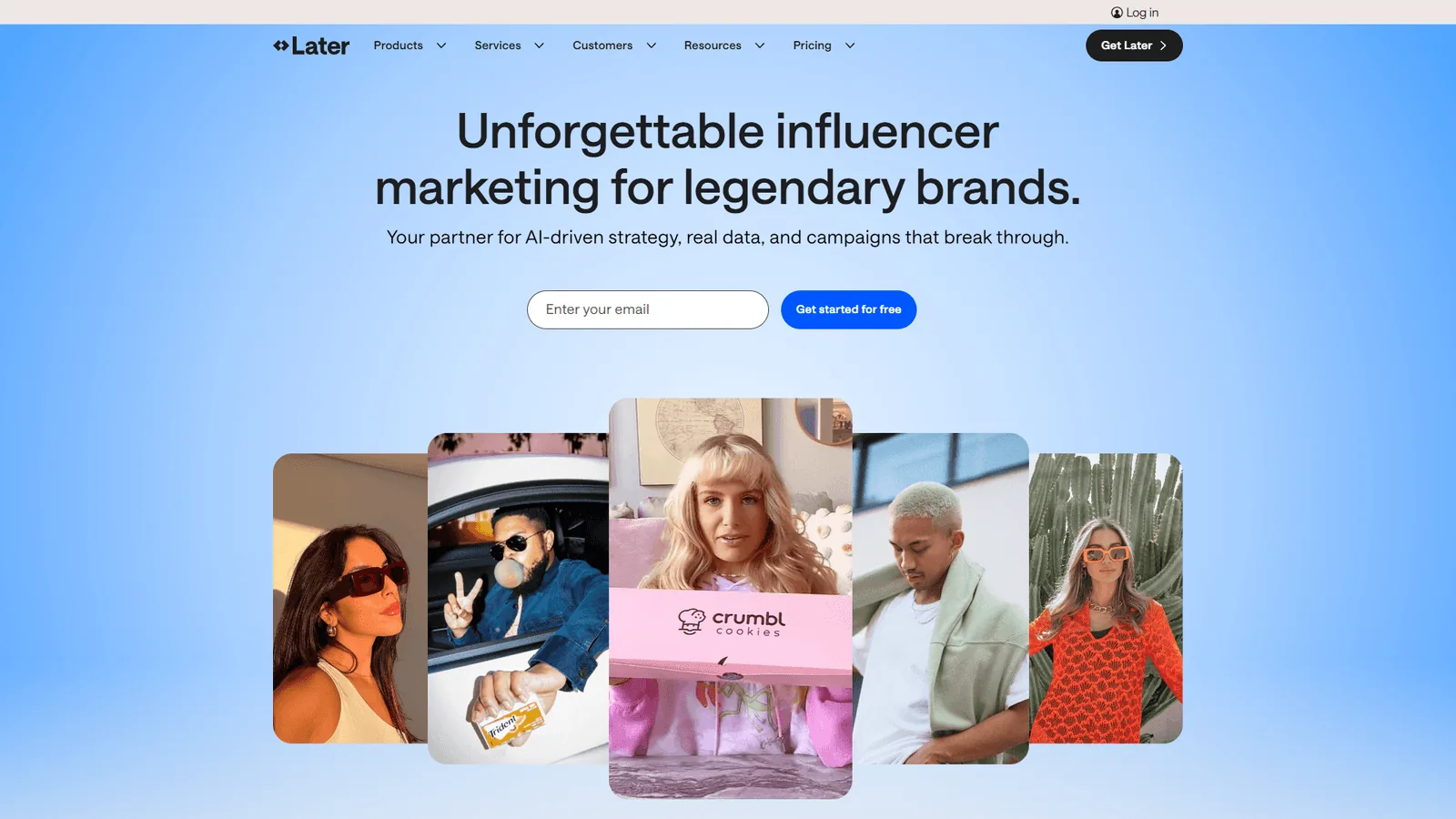
All three tools handle the basics well - calendar view, queue scheduling, draft management, and multi-platform publishing. The differences emerge at the edges:
Later excels at visual grid planning for Instagram and allows drag-and-drop rearrangement of your feed layout before publishing. This remains its strongest differentiator. Research from Buffer’s State of Social report consistently shows that visual-first teams produce higher engagement on Instagram, which is exactly the workflow Later is designed to support.
Hootsuite offers the most robust scheduling with bulk import (upload hundreds of posts at once from a CSV), auto-scheduling based on optimal engagement windows, and the most comprehensive cross-platform support including Pinterest and YouTube.
Buffer prioritizes simplicity. Its scheduler is fast to learn, the queue system works well, and the mobile app is among the most polished in the category. Buffer’s official library documents the publishing engine in detail.
AI Features
Hootsuite leads here. OwlyWriter AI handles caption generation, content repurposing, and hashtag research. OwlyGPT adds real-time social data awareness - a meaningful advantage for brands that want AI assistance grounded in current trends rather than generic outputs. AI image generation is available in beta.
Buffer includes a solid GPT-4o-powered assistant that helps with captions and ideation. It’s more limited than OwlyGPT but it’s present across all plans including free, which makes it genuinely accessible.
Later has basic AI caption assistance but it hasn’t kept pace with either alternative on this dimension. The AI social media automation guide explains where each tool’s automation actually saves time.
Analytics and Reporting
Hootsuite is the clear winner for analytics depth. Custom dashboards, competitive benchmarking, social listening integration, and branded client reports are all available.
Buffer offers straightforward performance tracking with analytics going back 13 months on paid plans and 30 days on free. Custom branded reports are available on the Team plan.
Later sits in the middle - better than basic, not as powerful as Hootsuite’s enterprise analytics. The best Instagram scheduler 2026 post breaks down where Later’s analytics shine for visual brands.
Team Collaboration
Hootsuite has the most mature collaboration toolkit: role-based permissions, multi-step approval workflows, team assignments, and an inbox for managing brand mentions and DMs across all channels.
Buffer added approval workflows to its Team plan, making it viable for small teams that need content sign-off before publishing.
Later supports team collaboration at higher tiers but the seat-based pricing can make it expensive as you add team members. The official Later permissions help center documents the seat tiers.
Pricing Summary: Which Tool Costs Less?
For a solo creator or small team:
- Buffer wins decisively. The free plan is genuinely usable, and the Team plan at $10 per month is exceptional value.
For a growing mid-market team:
- The calculation is closer. Hootsuite’s Professional plan at $99 per month (one user) compares to Buffer Team at $10 per month, but Hootsuite includes social listening, deeper analytics, and more advanced AI tools.
For an enterprise with multiple brands:
- Hootsuite is the category standard. The Enterprise pricing reflects a serious tool for serious scale.
Pro Tips: Making the Switch from Later
Before migrating from Later, think through these questions:
How many platforms do you need? If Instagram is your primary focus, Later’s visual tools are hard to replace. If you’re spread across LinkedIn, TikTok, X, and Facebook equally, Buffer or Hootsuite will serve you better. The Sprout Social alternatives roundup covers another set of multi-platform contenders.
How many team members need access? Buffer’s Team plan at $10 per month for unlimited users is extraordinarily affordable. Hootsuite’s Team plan at $249 per month is justified only if you need the advanced features.
Do you need social listening? This is Hootsuite-only territory. Neither Later nor Buffer offers native brand monitoring and competitive listening.
How important is AI-assisted content? Both Hootsuite and Buffer have meaningfully invested here. If you’re relying on AI to draft and repurpose content at scale, either is a better choice than Later. Hootsuite’s official OwlyWriter AI product page documents the supported workflows.
The Bottom Line
Later is a capable tool with a loyal user base, but it’s been outpaced on price-to-value by both major later alternatives.
Choose Buffer if you’re a solo creator, small business, or budget-conscious team. The free plan is genuinely functional, the Team plan at $10 per month is outstanding value, and the GPT-4o AI assistant covers most content creation needs without requiring an upgrade.
Choose Hootsuite if you’re managing social media at scale - multiple brands, enterprise compliance requirements, social listening needs, or a team that requires sophisticated approval workflows and analytics. The price is real, but so is the capability.
Either way, you’ll find more AI capability, more competitive pricing, and a faster-moving development roadmap than Later currently offers in 2026.
FAQ
Q: Why are people switching away from Later in 2026?
The main reasons people look for Later alternatives are pricing structure, limited analytics, and falling behind on AI features. Later charges per seat and per social profile, so a team of three managing five brands can easily exceed $100 per month. Its analytics lack competitive benchmarking and social listening, and its AI caption tool is reactive rather than proactive compared to Hootsuite and Buffer.
Q: Is there a free Later alternative?
Buffer offers a genuinely functional free plan that lets you connect three channels and schedule up to 10 posts per channel. It also includes the GPT-4o AI assistant on the free tier with 5 AI reply suggestions per week. This is not a crippled trial - it is a working tool that many solopreneurs and early-stage creators use for months before upgrading.
Q: Does Hootsuite have a free plan?
Hootsuite does not offer a permanent free plan. All paid plans include a 30-day free trial. The entry-level Professional plan starts at $99 per month billed annually, covering one user and five social profiles. While this is a significant commitment, it includes social listening, OwlyWriter AI, and bulk scheduling that Later does not match at any tier.
Q: Which Later alternative is best for small teams?
Buffer is the strongest option for small teams on a budget. The Team plan at $10 per month annually provides unlimited channels, unlimited users, approval workflows, and branded reports - significantly undercutting Later’s equivalent plan. Hootsuite’s Team plan at $249 per month is worth the premium only if your team needs social listening, advanced analytics, or multi-step approval workflows.
Q: Which Later alternative has the best AI features?
Hootsuite leads on AI capability. OwlyWriter AI handles caption generation, content repurposing, and hashtag research, while OwlyGPT connects to real-time social data so you can ask questions about current trends and receive grounded answers. Buffer includes a GPT-4o assistant across all plans including free, which covers caption drafting and content ideation at a more accessible price point.
Related Reading
- Later Review
- Hootsuite Review
- Buffer Review
- Best Social Media Management Tools 2026
- Hootsuite Alternatives
- Sprout Social Alternatives 2026