




Will AI replace technical writers is the question reshaping the profession in 2026. The short answer is no - AI will not replace technical writers entirely, but it is restructuring the role. BLS data projects 1% job growth through 2034 with around 4,500 openings per year, while AI handles first drafts and humans own accuracy verification.
Snowflake eliminated its entire technical writing department in March 2026. Roughly 70 writers, gone. The company had spent eight months screen-recording every documentation session, building training datasets from its senior writers’ workflows. Those writers spent their final six weeks transferring knowledge directly to the AI system that replaced them.
The headline writes itself: AI is coming for technical writers.
But headlines rarely survive contact with data. The question of whether AI will replace technical writers deserves more than a single corporate anecdote - even a dramatic one. It deserves an honest look at employment numbers, industry trends, and what technical writing actually involves day-to-day.
The short answer: no, AI will not replace technical writers. But it is already reshaping the role in ways that matter.
Will AI Replace Technical Writers? The Evidence
The question of whether AI will replace technical writers requires separating signal from noise. Corporate layoffs grab headlines, but employment data and workflow analysis tell a more complete story.
The Snowflake Case Study: What Actually Happened
Snowflake’s decision to cut its entire technical writing team followed a $200 million partnership with OpenAI, signed in February 2026. That deal integrates GPT-5.2 into the Snowflake AI Data Cloud and powers what the company calls Project SnowWork - an autonomous platform designed to draft API documentation and user guides directly from source code. The integration leans on OpenAI’s developer platform to handle the code-to-docs pipeline.
Management has claimed 300% efficiency gains from the new AI documentation pipeline.
The details are worth examining:
- Pre-planned knowledge extraction. Writers were screen-recorded for eight months before the layoffs. This was not a spontaneous efficiency discovery - it was a deliberate data collection operation to train a replacement system.
- Knowledge transfer period. Senior writers spent six weeks teaching the AI system their processes. The irony is hard to miss: the company needed human expertise to build the system that would eliminate human expertise.
- Scale of impact. Approximately 70 specialized roles were eliminated, making it one of the most aggressive AI-driven workforce cuts targeting a single function.
Snowflake is not alone. Canva laid off 10 of its 12 technical writers in a similar move, despite previously telling employees that increased AI adoption would not lead to layoffs. Amazon’s January 2026 reduction of 16,000 corporate positions also cited AI-driven restructuring.
These are real layoffs affecting real people. But they represent a handful of companies making aggressive bets, not an industry-wide extinction event.
What the Employment Data Actually Shows
The Bureau of Labor Statistics projects 1% growth in technical writing jobs from 2024 to 2034. That translates to a net gain of roughly 500 positions over an entire decade, moving from about 56,400 jobs to 56,900 nationwide.
That number deserves context:
| Metric | Value |
|---|---|
| Current employment (2024) | 56,400 technical writers |
| Projected employment (2034) | 56,900 technical writers |
| Growth rate | 1% (vs. 3% average for all occupations) |
| Annual openings | ~4,500 per year |
| Opening type | Mostly replacement, not expansion |
The 4,500 annual openings are significant. Even in a flat-growth field, people retire, change careers, and move into management. Those positions still need filling. The BLS explicitly notes that “as product innovation continues, technical writers are expected to be needed to convert complex information into a format that nontechnical users understand.”
Compare this to the apocalyptic framing that dominates social media. Snowflake cutting 70 writers generates more attention than 4,500 positions opening annually across the economy.
The growth rate is slower than average, and the BLS acknowledges that AI tools allowing writers to be more productive may slow employment growth. But “slower growth” is categorically different from “replacement.” Anyone asking will AI replace technical writers should weigh this data against the headline-grabbing layoffs.
Why Technical Writing Resists Full Automation
AI tools are genuinely excellent at generating draft content, checking grammar, and reformatting text. They struggle with the parts of technical writing that matter most. Our AI tools for freelance writers breakdown shows where the boundaries between human and AI work tend to land.
Accuracy Verification
Technical documentation has a zero-tolerance threshold for errors. A wrong API parameter, an incorrect configuration step, or a misattributed error code can cost users hours of debugging time and cost companies real money in support tickets.
AI models hallucinate. They generate plausible-sounding content that is factually wrong. In creative writing, this is a nuisance. In technical documentation, it is a liability. Someone needs to verify every claim against the actual product behavior, and that someone needs to understand both the product and the documentation standards.
User Context and Information Architecture
Technical writers do not just write. They make decisions about what information users need, when they need it, and how it should be organized. A documentation set for a database platform serves different audiences - a DBA, a data engineer, a business analyst - who need different information presented in different ways.
AI can generate text for any of these audiences. It cannot decide which audience matters more for a given page, how the navigation should flow between topics, or when a concept needs a tutorial versus a reference page versus a troubleshooting guide.
Product Knowledge and Stakeholder Management
Senior technical writers spend substantial time in engineering meetings, understanding upcoming features, negotiating documentation priorities, and translating between engineering language and user language. This is relationship work that happens in meetings, Slack threads, and hallway conversations.
The Snowflake case is instructive here. The company needed to record its writers for eight months and then have them spend six weeks in knowledge transfer precisely because this expertise cannot be extracted from the documentation itself. It lives in the writers’ understanding of the product, its users, and its edge cases.
How AI Is Actually Changing Technical Writing
The more accurate framing is not replacement but restructuring. Nearly 65% of technical writing teams now incorporate some form of AI in their workflows, according to industry surveys. Productivity gains average around 28% when AI tools are properly integrated.
Here is what the day-to-day shift looks like:
Tasks AI Handles Well
- First drafts. AI can generate a reasonable starting point for release notes, API references, and procedural content from source code and commit messages. The best AI writing tools 2026 roundup covers which assistants handle long-form drafts best.
- Grammar and style consistency. Tools like Grammarly catch errors and enforce style guides across large documentation sets.
- Translation and localization. AI-powered translation has improved dramatically, reducing the manual effort for multi-language documentation.
- Content reformatting. Converting between formats (Markdown to HTML, restructuring for different outputs) is mechanical work AI handles efficiently.
Tasks That Still Require Human Writers
- Information architecture. Deciding what to document, how to organize it, and what to prioritize.
- Accuracy verification. Testing procedures, confirming API behavior, validating edge cases.
- Audience analysis. Understanding who reads the documentation and what they need to accomplish.
- Strategic planning. Aligning documentation with product roadmaps, deprecation timelines, and migration paths.
- Cross-functional communication. Working with engineering, product, and support teams to gather information.
The writers who are thriving in 2026 are not competing with AI on draft generation speed. They are using AI to handle the mechanical work while focusing on the strategic, analytical, and interpersonal aspects of the role.
The Tools Technical Writers Are Actually Using
The practical reality for most technical writers in 2026 involves a mix of AI-assisted tools that augment rather than replace their work.
Grammarly: Writing Quality at Scale
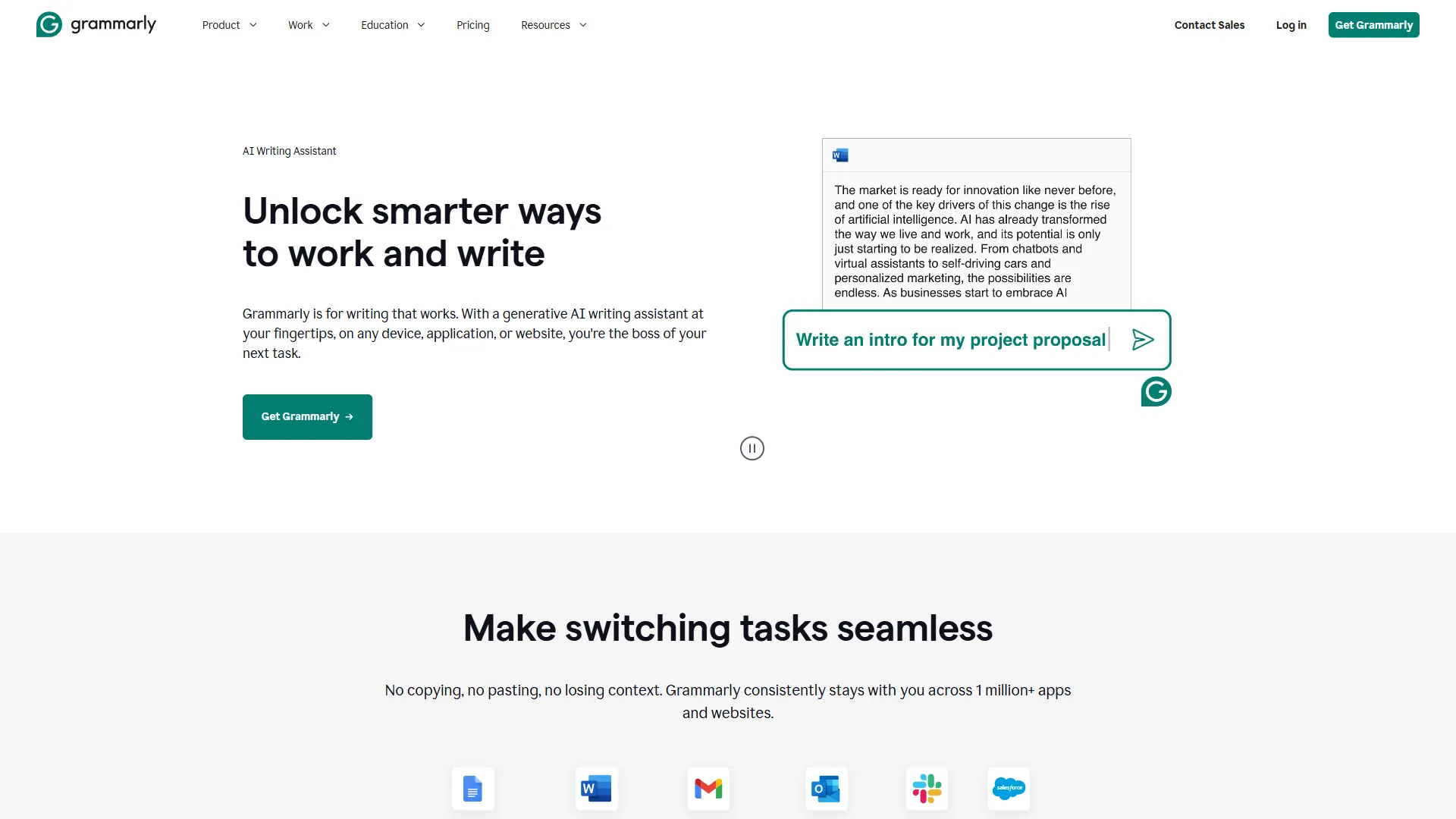
Grammarly has become nearly universal among technical writing teams. The free tier handles basic grammar and spelling. The Pro tier ($12 per month) adds tone detection, style suggestions, and consistency checks that matter for large documentation sets. For teams maintaining thousands of pages, automated style enforcement saves significant time.
Jasper: Draft Generation for Marketing-Adjacent Content

Technical writers increasingly handle product marketing content alongside documentation. Jasper’s Creator plan ($39 per month) generates reasonable first drafts for blog posts, knowledge base articles, and product descriptions. The output needs editing, but it eliminates the blank-page problem for content that does not require the same precision as API documentation.
Notion: Documentation Management and Collaboration
Notion has become the default collaboration layer for many technical writing teams. Its AI features help with summarization, content organization, and draft generation within the context of a structured workspace. The value is not in the AI writing itself but in keeping documentation organized and accessible across teams.
What Snowflake Got Right - and What It Might Get Wrong
Snowflake’s bet is not irrational. For a company with deep AI infrastructure and a $200 million OpenAI partnership, testing whether AI can handle documentation is a reasonable experiment. The 300% efficiency claim, if accurate, represents genuine productivity improvement.
But there are risks the efficiency numbers do not capture:
Documentation quality degradation is slow and invisible. Bad documentation does not break immediately. It erodes user trust over time as small inaccuracies accumulate, edge cases go undocumented, and the information architecture drifts from what users actually need. The full cost may not be visible for 12-18 months. The AI hype vs reality analysis covers similar slow-burn quality issues across other AI rollouts.
Support costs often absorb documentation failures. When documentation is incomplete or inaccurate, users file support tickets instead. If Snowflake’s support volume increases over the next year, the 300% documentation efficiency gain may be offset by higher support costs.
Institutional knowledge is gone permanently. The 70 writers who left took their understanding of user pain points, product quirks, and documentation history with them. If the AI system produces inadequate documentation, rebuilding that expertise from scratch will be expensive.
This pattern has played out before. Companies that aggressively outsourced technical writing in the 2000s often discovered that cheap documentation led to expensive support. AI-generated documentation is not the same as outsourced documentation, but the risk of prioritizing cost over quality is similar.
The Real Threat: Fewer Jobs, Not Zero Jobs
So will AI replace technical writers entirely? The honest answer is nuanced. AI will not eliminate the profession. It will likely reduce the total number of positions while increasing the expectations and compensation for the positions that remain.
Here is what the structural shift looks like:
- Fewer junior positions. Entry-level technical writing work - formatting, basic procedural content, simple edits - is the most automatable. Companies will hire fewer junior writers and expect the ones they hire to work with AI from day one.
- Higher expectations for seniors. Senior technical writers will be expected to manage AI-generated output, maintain quality across larger documentation sets, and contribute to content strategy and information architecture.
- New hybrid roles. Titles like “Documentation Engineer” and “AI Content Strategist” are appearing in job postings. These roles combine traditional technical writing skills with AI tool management, prompt engineering, and content operations.
- Concentration in complex domains. Technical writing for simple SaaS products is more automatable than writing for medical devices, financial systems, or safety-critical software. Writers in regulated or high-complexity domains face less displacement risk.
The MIT study released in early April 2026 reinforces this pattern: across the labor market, routine and automation-prone job openings fell 13% after ChatGPT’s debut, while demand for analytical, technical, and creative roles grew 20%. The data answers the question of whether AI will replace technical writers with a clear “not entirely” - but the profession is restructuring around AI capabilities.
Practical Advice for Technical Writers in 2026
The writers who will thrive are the ones who treat AI as a tool rather than a threat. Here is what that looks like in practice:
Learn the AI tools. Grammarly, Jasper, Notion AI, and GitHub Copilot for docs-as-code workflows are table stakes. Technical writers who refuse to use AI tools will be outperformed by writers who do. The Grammarly alternatives comparison covers other writing assistants worth keeping on a shortlist.
Move up the value chain. Focus on information architecture, content strategy, user research, and cross-functional communication. These are the skills AI cannot replicate and the skills that justify higher compensation. The AI impact on software engineering teams write-up shows similar role-restructuring patterns playing out in adjacent disciplines.
Develop domain expertise. A technical writer who deeply understands healthcare compliance, financial regulation, or embedded systems is far harder to replace than a generalist who writes about any product handed to them. The AI tools for content creators breakdown highlights tools that pair well with deep domain workflows.
Build measurement skills. Learn to track documentation metrics - page views, search queries, support ticket deflection, time-to-resolution. Writers who can demonstrate the ROI of good documentation are harder to cut than writers who cannot quantify their impact. Standards like the ISO/IEC/IEEE 26515 documentation framework give measurement programs a credible structural anchor.
Understand the AI stack. Knowing how LLMs work, where they fail, and how to evaluate AI-generated content is becoming a core competency. Writers who can manage AI output quality are more valuable than writers who either ignore AI or blindly trust it. For practical guidance on which tools to start with, see the Society for Technical Communication resources.
The Bottom Line
AI will not replace technical writers - but it is already replacing some technical writing tasks. The writers who adapt by moving up the value chain, developing domain expertise, and learning to manage AI output quality will find themselves more valuable, not less. Tools like Grammarly, Jasper, and Notion are becoming standard in the technical writer’s toolkit - not as replacements, but as force multipliers. The profession is not dying. It is evolving, and the data supports cautious optimism for writers willing to evolve with it.
FAQ
Q: Will AI eliminate technical writers?
So will AI replace technical writers entirely? The honest answer is nuanced. AI will not eliminate the profession. It will likely reduce the total number of positions while increasing the expectations and compensation for the positions that remain.
Q: Which 3 jobs will survive AI?
But headlines rarely survive contact with data. The question of whether AI will replace technical writers deserves more than a single corporate anecdote - even a dramatic one.
Q: Is there a future for technical writers?
The short answer: no, AI will not replace technical writers. But it is already reshaping the role in ways that matter.
Q: What 5 jobs will AI not replace?
The short answer: no, AI will not replace technical writers. But it is already reshaping the role in ways that matter.
Related Reading
- AI Impact on Software Engineering Teams - How AI mandates are restructuring development organizations
- Best AI Writing Tools 2026 - Comprehensive comparison of AI writing assistants
- AI Tools for Freelance Writers - Practical AI tools for professional writers
- Grammarly Alternatives - Top alternatives to Grammarly for writing assistance
- Grammarly Review
- Jasper Review
- Notion Review
External Resources
- BLS Occupational Outlook: Technical Writers - Official employment projections through 2034
- Benzinga: Snowflake Cuts Entire Team - Reporting on the Snowflake technical writing layoffs
- BLS Projects Just 1% Growth for Technical Writing - Analysis of BLS data and structural changes in the field