


"Vibe coding" started as a joke about letting AI write your code while you just describe what you want. Google is now treating it as a product category.
Google AI Studio has added Firebase integration and a coding agent called Antigravity that, together, let you go from a text prompt to a deployed full-stack web app without leaving the browser. The update shipped March 19, 2026, and it's available now at aistudio.google.com/apps.
This isn't a code autocomplete tool. Antigravity plans an entire project structure, writes code across multiple files, runs it in a built-in browser preview, and fixes its own errors autonomously. Think of it as closer to Bolt or Replit Agent than to Copilot or Cursor - it builds the whole thing, not just the next line.
What the Firebase Integration Actually Does
The interesting part isn't the AI writing frontend code. Plenty of tools do that. It's the backend wiring.
When you describe an app that needs user accounts or saved data, Antigravity detects that automatically and offers to provision Firebase services for you. Specifically:
- Cloud Firestore for database storage with real-time sync and offline support
- Firebase Authentication with Google Sign-In preconfigured
- Auto-generated security rules (which you review before they go live)
- Secrets Manager for storing API keys to external services like Google Maps or payment processors
It also installs frontend libraries on its own. Ask for animations and it pulls in Framer Motion. Need 3D? It grabs Three.js. The supported frameworks include React, Angular, and Next.js.
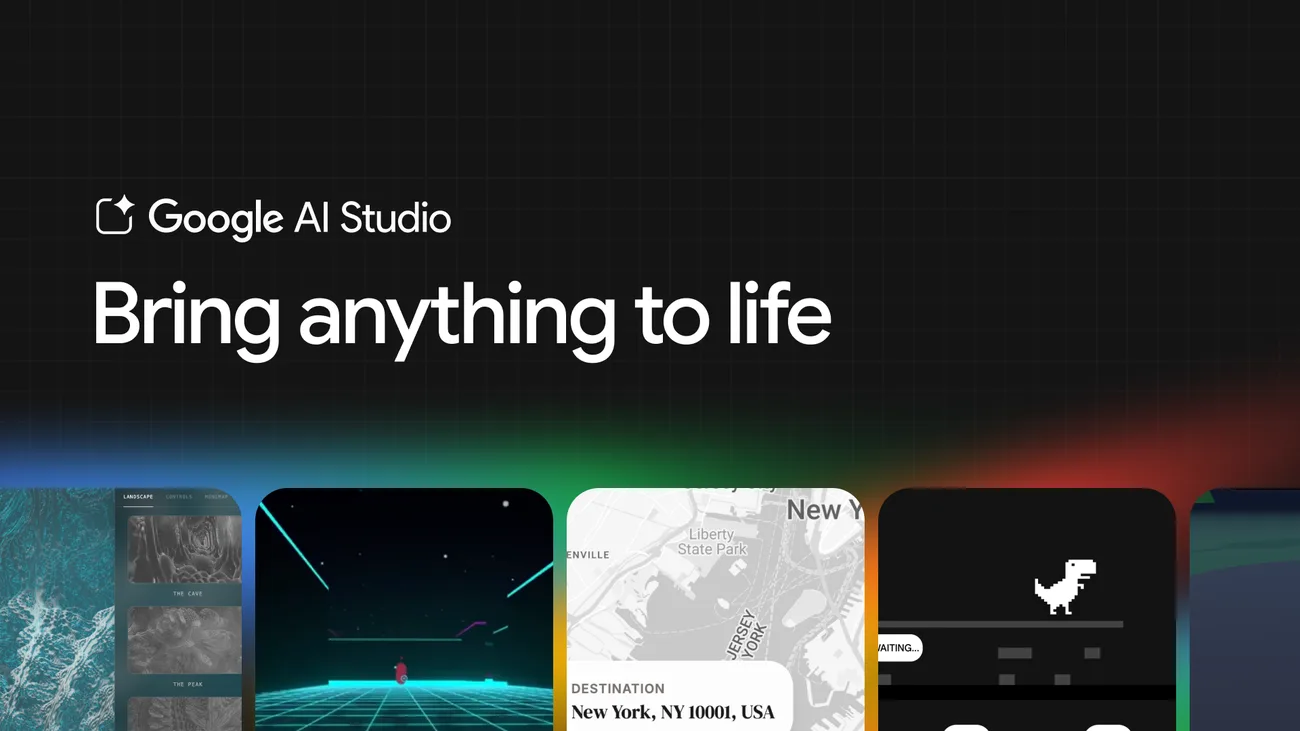
Google says hundreds of thousands of apps have been built using this experience internally over recent months. The example apps they're showing off include a multiplayer laser tag game with leaderboards, a collaborative 3D particle visualization, and a recipe manager that uses Gemini to generate recipes.
Where This Fits in the Vibe Coding Landscape
The pitch is similar to what Bolt, Lovable, and Replit have been doing - describe an app, get a working app. But Google has two structural advantages here.
First, Firebase is already the backend for millions of production apps. The integration isn't a toy database bolted on for demos. Firestore handles real-time sync, offline caching, and scales without configuration. That's a genuine gap in most vibe coding tools, where the AI builds a beautiful frontend connected to nothing.
Second, Google controls the whole stack. The roadmap includes Google Workspace integration (connecting to Drive and Sheets) and one-click export to the Antigravity platform for production deployment. If you're already in Google's ecosystem, the friction drops to near zero.
The catch is the same one every vibe coding tool faces: these apps work great for prototypes and internal tools, but production software needs error handling, testing, and maintenance that no AI agent handles reliably yet. A multiplayer game demo is impressive. Running it for 10,000 concurrent users with billing and support is a different problem.
Google is offering a free tier, though specific pricing limits weren't disclosed. For prototyping, hackathons, and internal tools, this is genuinely useful right now. For production apps, it's a starting point that still needs a developer to take over.