


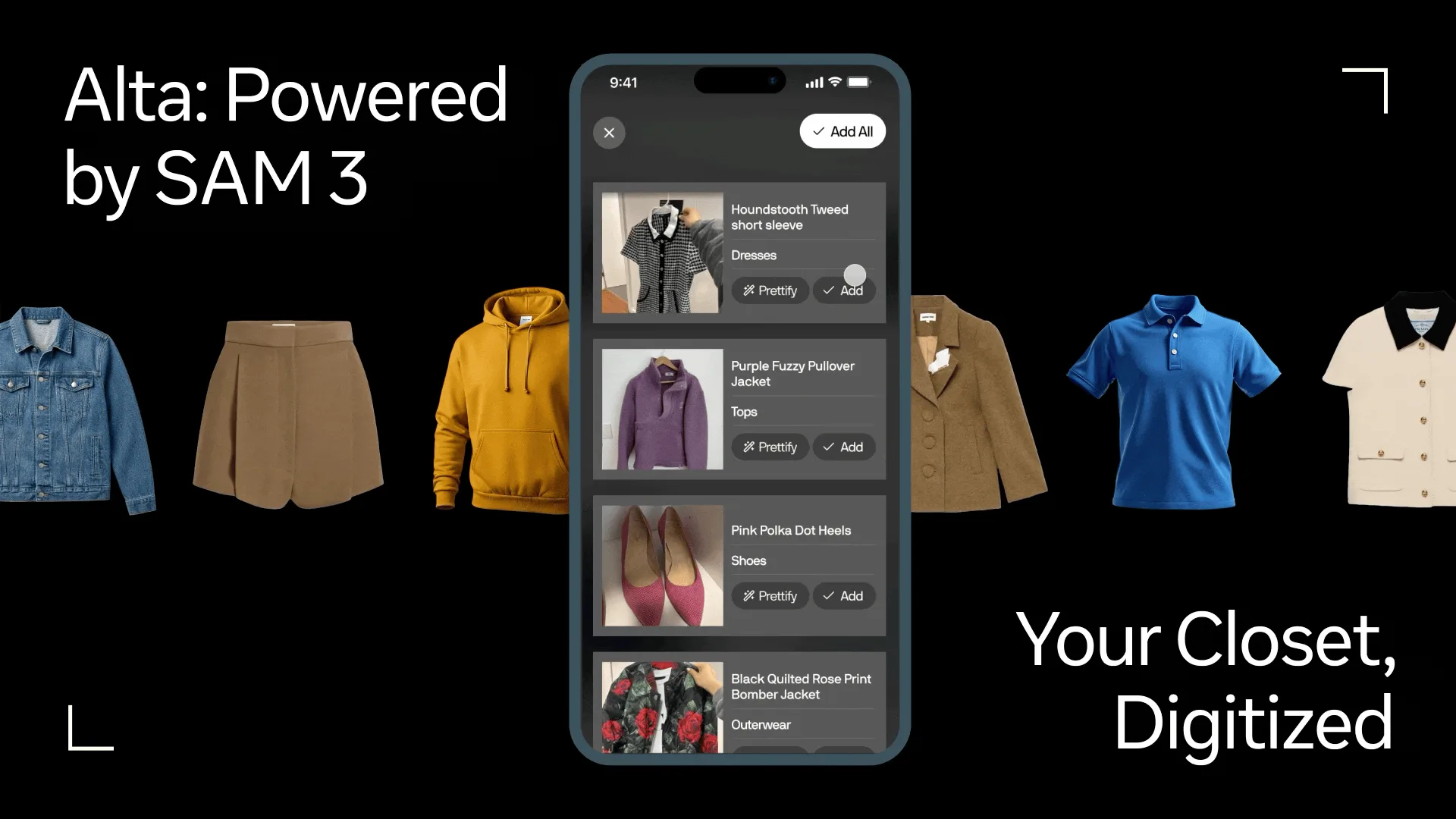
A fashion startup called Alta Daily is using Meta's open-source image-recognition technology to build a digital wardrobe catalog, and the implementation shows how AI research tools are finding their way into practical consumer products.
The technology is Meta's Segment Anything Model (SAM), released in 2023. SAM does one core thing: it isolates individual objects in a photo. Point it at an image containing a shirt, a jacket, and a pair of pants, and SAM traces a clean boundary around each item separately - even when they overlap, share similar colors, or sit against a cluttered background. For fashion applications, this is harder than it looks.
Alta Daily described the integration in a post on Meta's AI blog. The workflow is straightforward: photograph your clothes in normal conditions - hung on a door, laid on a bed, folded in a pile - and SAM identifies and segments each garment into a clean catalog entry. The result is a searchable digital inventory of what you own, built without the user having to photograph items against white backgrounds or manually tag each piece.
The Problem Earlier Wardrobe Apps Couldn't Solve
Previous digital closet apps stalled on user experience. Manually tagging clothes is tedious. Matching purchases to retailer product images only works for recently bought, branded items. Requiring controlled photo conditions meant most people gave up after a few sessions.
SAM removes the hard step. It was trained across an enormous variety of objects and real-world conditions, so it handles messiness better than category-specific models trained only on professional clothing photography. A wrinkled blazer against a tan wall is a segmentation challenge that earlier tools often failed. SAM handles these cases more reliably.
Because Meta released SAM as open-source, Alta Daily built on it without licensing costs. That's increasingly the pattern for consumer AI products: use open-source foundation models for the heavy lifting, and focus product engineering on the application layer. Tools like Adobe Firefly and Canva's AI features operate on similar logic - the model isn't the differentiator, the product around it is.
Fashion tech has a long history of features that demo well and die in production. Whether Alta Daily's implementation holds up at wardrobe scale - inconsistent lighting, complex patterns, heavily distressed fabrics - is the real test.