

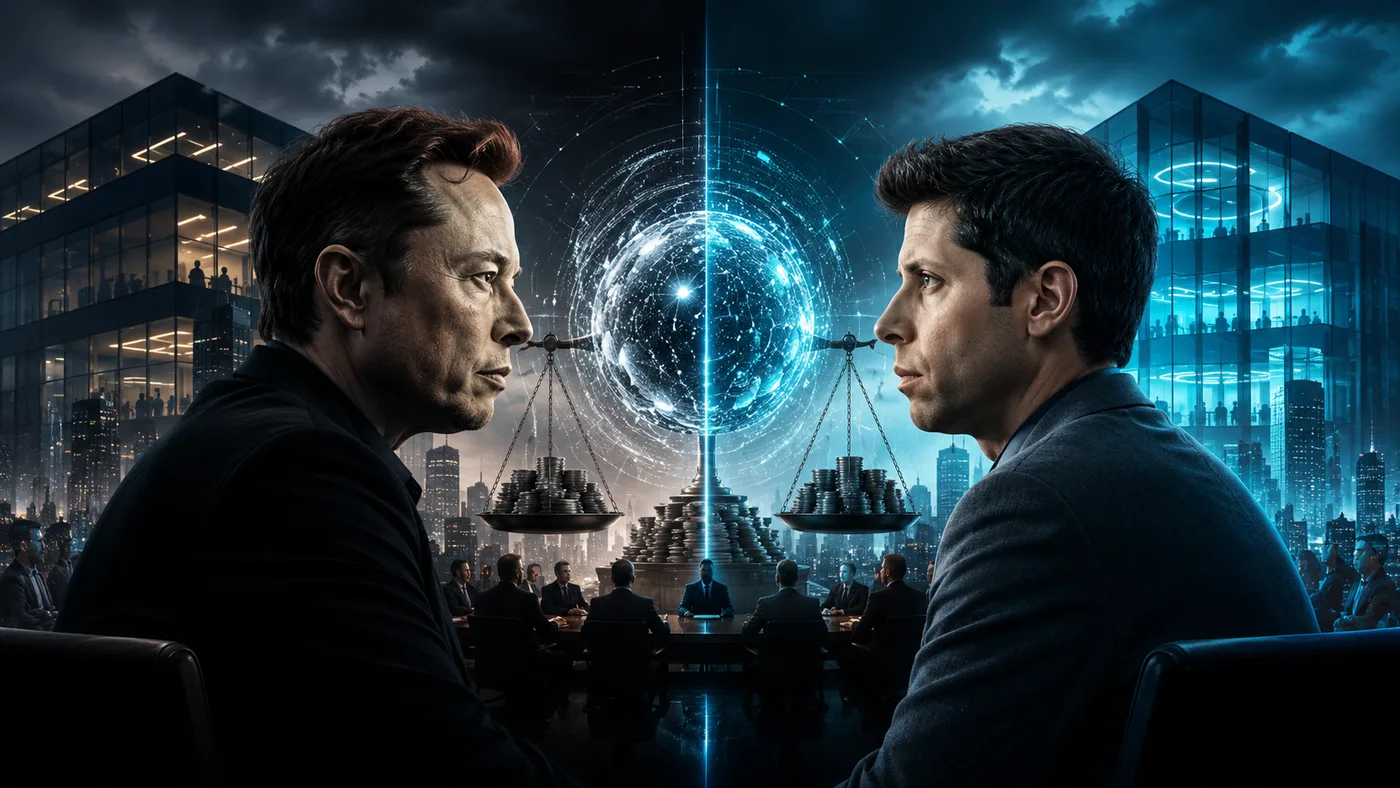
"By the end of this week, you and Sam will be the most hated men in America." That line - delivered during the Musk vs. Altman trial - captures how bitter this dispute has become. But the trial itself appears to have undercut Musk's central argument.
Musk sued OpenAI and Sam Altman claiming Altman had "stolen" a non-profit organization, betraying the founding mission to develop AI for the benefit of humanity rather than shareholders. The lawsuit hinged on the idea that Musk was a pure-hearted non-profit true believer while Altman engineered a corrupt for-profit pivot behind his back.
That story got complicated fast. As TechCrunch reported, the trial surfaced evidence suggesting Musk held similar views about commercializing OpenAI. If accurate, it means the disagreement between Musk and Altman was less about principles and more about who would control the outcome.
This matters beyond the personalities involved. OpenAI's structure - a non-profit board that technically controls a capped-profit commercial entity - is already strange. The company is now pursuing a full for-profit conversion that would remove that non-profit oversight layer entirely. Musk's lawsuit was one of the few active legal challenges to that transition. If the trial evidence weakens his standing, the conversion faces less friction.
For people who use ChatGPT daily, the practical stakes are straightforward: a fully for-profit OpenAI is more accountable to investors than to any mission statement. Pricing decisions, safety priorities, and model access policies all flow from that. The non-profit structure was always imperfect - it never actually stopped OpenAI from charging enterprise customers or raising billions from Microsoft - but it at least created a governance mechanism beyond pure profit motive.
The trial isn't over. But if Musk's own communications show he wanted a commercial OpenAI too, his argument that Altman "stole" something sacred becomes a lot harder to make.