


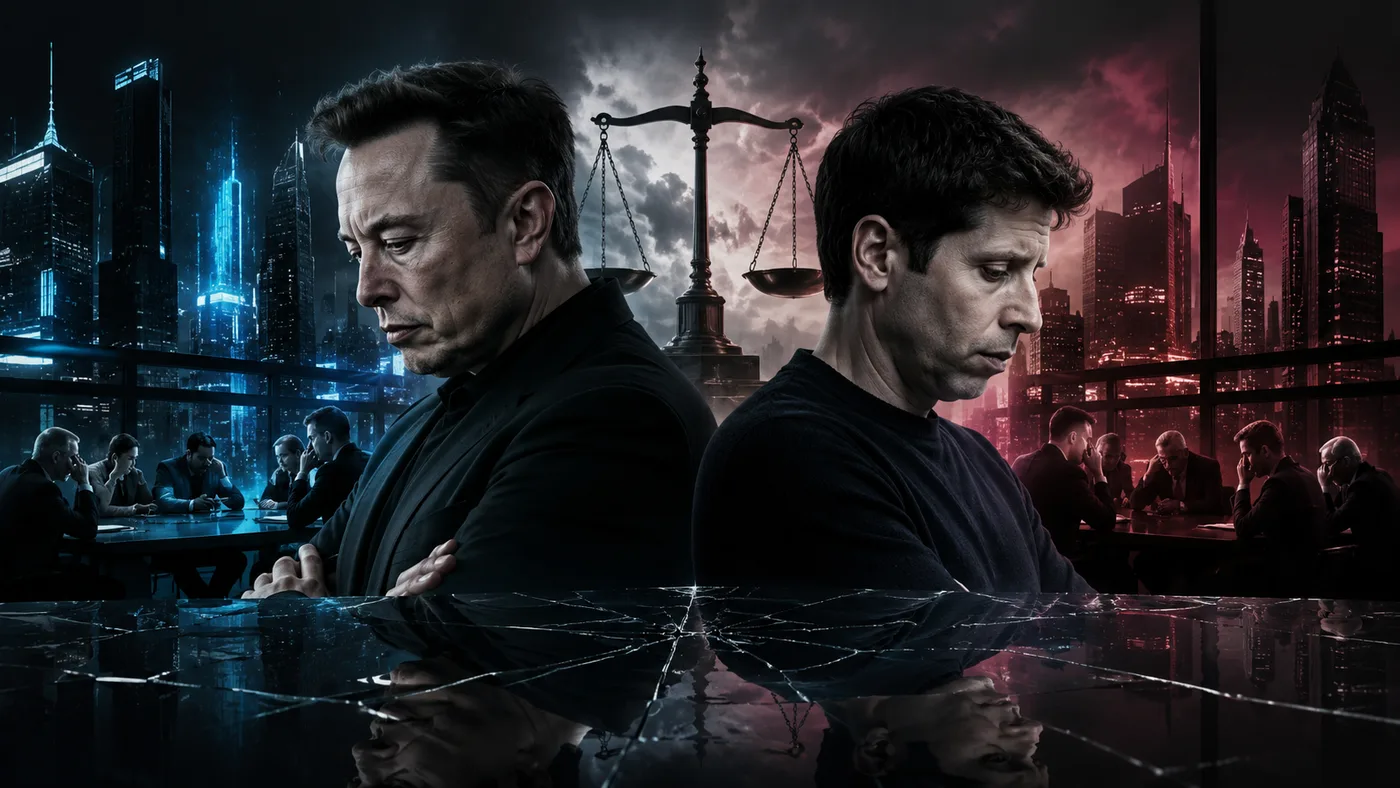
Three years after his public break with OpenAI, Elon Musk finally got his day in federal court - and the closing arguments have damaged both sides more than they've clarified anything.
A jury is now deliberating on Musk's claim that OpenAI and CEO Sam Altman violated the company's original nonprofit charter by shifting toward commercial profit. Musk co-founded OpenAI in 2015 and contributed roughly $44 million before leaving the board in 2018. His lawsuit argues that Altman ran a bait-and-switch: raising money and goodwill under a mission of safe, open AI development, then restructuring around a for-profit model backed by Microsoft's $13 billion investment.
Wired's coverage of the closing arguments describes a trial that made the key figures on both sides look self-interested rather than principled. Internal communications introduced as evidence showed Musk pushing for personal control over the organization he later claimed to be defending on idealistic grounds. OpenAI's defense framed the lawsuit as a competitive attack from a bitter ex-insider - convenient, given that Musk's own xAI now competes directly with OpenAI's products.
The stakes extend past the two men. If Musk wins, OpenAI could be forced to restructure or pause its ongoing conversion from nonprofit to for-profit status - a process already under scrutiny from attorneys general in California and Delaware. A loss hands OpenAI cleaner legal footing to complete that conversion and move toward a planned IPO.
No outcome here produces a clean winner. The trial's more lasting contribution may be the paper trail it exposed: a detailed record of how the people who built modern AI actually talked about money, control, and mission when they thought no one outside the room was watching.