

OpenAI's Agents SDK - the software toolkit developers use to build AI agents - got a significant update on April 15, adding native sandbox execution and a model-native harness.
The sandbox execution piece solves a real security problem. When an AI agent runs code as part of a task (writing a script, processing a file, calling an external service), that code has to execute somewhere. Without isolation, a misconfigured or manipulated agent could touch files or systems it shouldn't. Native sandboxing means the SDK now runs that code in a contained environment by default - the agent can't reach your production database or other sensitive resources unless you explicitly open that access.
The model-native harness is more architectural. Rather than building coordination logic that wraps around the model's outputs after the fact, the harness is designed to work directly with how OpenAI's models structure their responses. For long-running agents - the kind that work across multiple files and tools over many sequential steps - this should mean more stability and easier debugging when a step fails.
What This Means for Agent Builders
Most developers building production agents have stitched together their own solutions to these problems: custom sandboxing setups, retry logic, state management between steps. The SDK taking on native responsibility for execution security and model-level coordination shrinks what you have to build and maintain yourself.
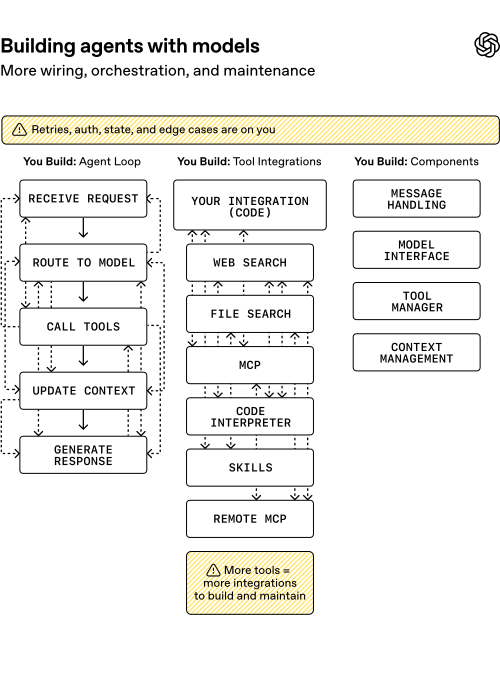
There are tradeoffs. The model-native harness is built specifically for OpenAI's models. If your architecture needs agents that can swap between providers - running ChatGPT for some tasks and a different model for others - this update adds tighter coupling to OpenAI's stack.
The long-running agent reliability problem is also only partially addressed. Sandbox execution and better model integration help, but agent stability still depends on how well you define tasks, handle errors, and manage context across steps. Better infrastructure doesn't replace design decisions.
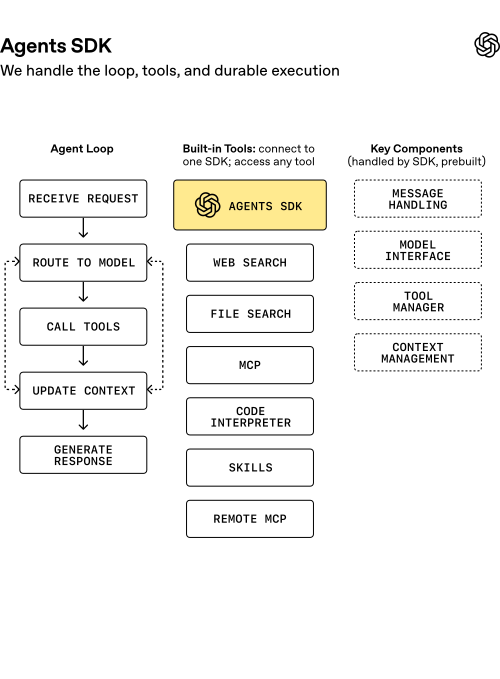
OpenAI has been investing heavily in the agent development layer since early 2025. This update fits that pattern: pulling more of the hard infrastructure work into the SDK so developers spend time on product logic rather than plumbing.