





The best AI agent platforms in 2026 are Claude Agent SDK, CrewAI, LangGraph, AutoGPT, Taskade, Relevance AI, Cursor, and Replit - eight platforms split across developer frameworks, no-code business tools, and coding agents. Autonomous AI agents now handle everything from multi-step coding tasks to end-to-end business workflows. The challenge is no longer whether to use AI agent platforms, but which one from any ai agent platforms list fits a given use case, and whether the best AI agent app for that workflow is a developer framework or a no-code tool. “2026 will be the year that AI agents work,” Sam Altman wrote, OpenAI’s CEO, in a January 2026 reflection.
This guide evaluates each of the eight platforms on features, pricing, and learning curve to help teams pick the best AI agents for personal use or production, including ai agent platforms free of charge on entry tiers. This analysis draws on current vendor documentation and independent research rather than sponsored placement; AI Productivity may earn a commission from links on this page, and our rankings are editorially independent.
TL;DR: AI Agent Platforms Compared
The top AI agent platforms compared here are Claude Agent SDK, CrewAI, LangGraph, AutoGPT, Taskade, Relevance AI, Cursor, and Replit, ranging from free open-source frameworks to paid tools up to $39 per month, split into three categories:
| Category | Platforms | Technical Level | Pricing |
|---|---|---|---|
| Developer frameworks | Claude Agent SDK, CrewAI, LangGraph, AutoGPT | Intermediate-Advanced | Free / usage-based / from $39/mo |
| No-code business agents | Taskade, Relevance AI | Beginner | Free tier / from $19/mo |
| Coding agents | Cursor, Replit | Intermediate | Free tier / from $20/month |
Quick recommendation: Developers start with CrewAI or LangGraph, business teams with Relevance AI or Taskade, and coders with Cursor or Claude Code.
Selection Criteria: How AI Agent Platforms Work
AI agent platforms are systems that run an LLM in a loop - receiving a goal, breaking it into steps, executing actions, and adjusting - the architecture that separates an autonomous agent from a traditional chatbot. Every AI agent builder platform shares the same building blocks:
- Planning module - decomposes a goal into subtasks using chain-of-thought reasoning from an LLM like GPT-5, Claude Opus 4, or Gemini 2.5
- Memory system - short-term conversation context plus long-term vector-database storage
- Tool use - calling external APIs, running code, and searching the web
- Orchestration layer - manages execution flow and coordinates multiple agents
- Feedback loop - agents evaluate their own output, detect failures, and retry
In its guide Building effective agents, Anthropic noted that agents “are systems where LLMs dynamically direct their own processes and tool usage” - the autonomy that distinguishes a true agent from a fixed workflow.
Category 1: Developer-Focused Agent Frameworks
Developer-focused agent frameworks are code-first platforms - Claude Agent SDK, CrewAI, LangGraph, and AutoGPT - that give engineers full control over agent behavior in exchange for requiring coding ability.
Claude Agent SDK
What it is: Anthropic’s official framework for building production-grade AI agents using Claude models, released in early 2026 with structured primitives for tool use, multi-turn conversations, and autonomous tasks.
Key features: Native integration with Claude Opus 4, Sonnet 4, and Haiku 4; extended thinking; built-in tool use; configurable agent loops with memory management; MCP (Model Context Protocol) support; and a guardrails system.
Pricing: Usage-based through Anthropic’s API - Claude Sonnet 4 runs at $3/$15 per million input/output tokens and Claude Opus 4 at $15/$75 per million. No platform fee.
Best for: Teams building custom agent systems that need Claude’s reasoning and safety properties, particularly for coding.
Limitations: Claude models only, requires Python or TypeScript experience, and no visual builder. Its standout quality is extended thinking - agents reason through multi-step problems before acting.
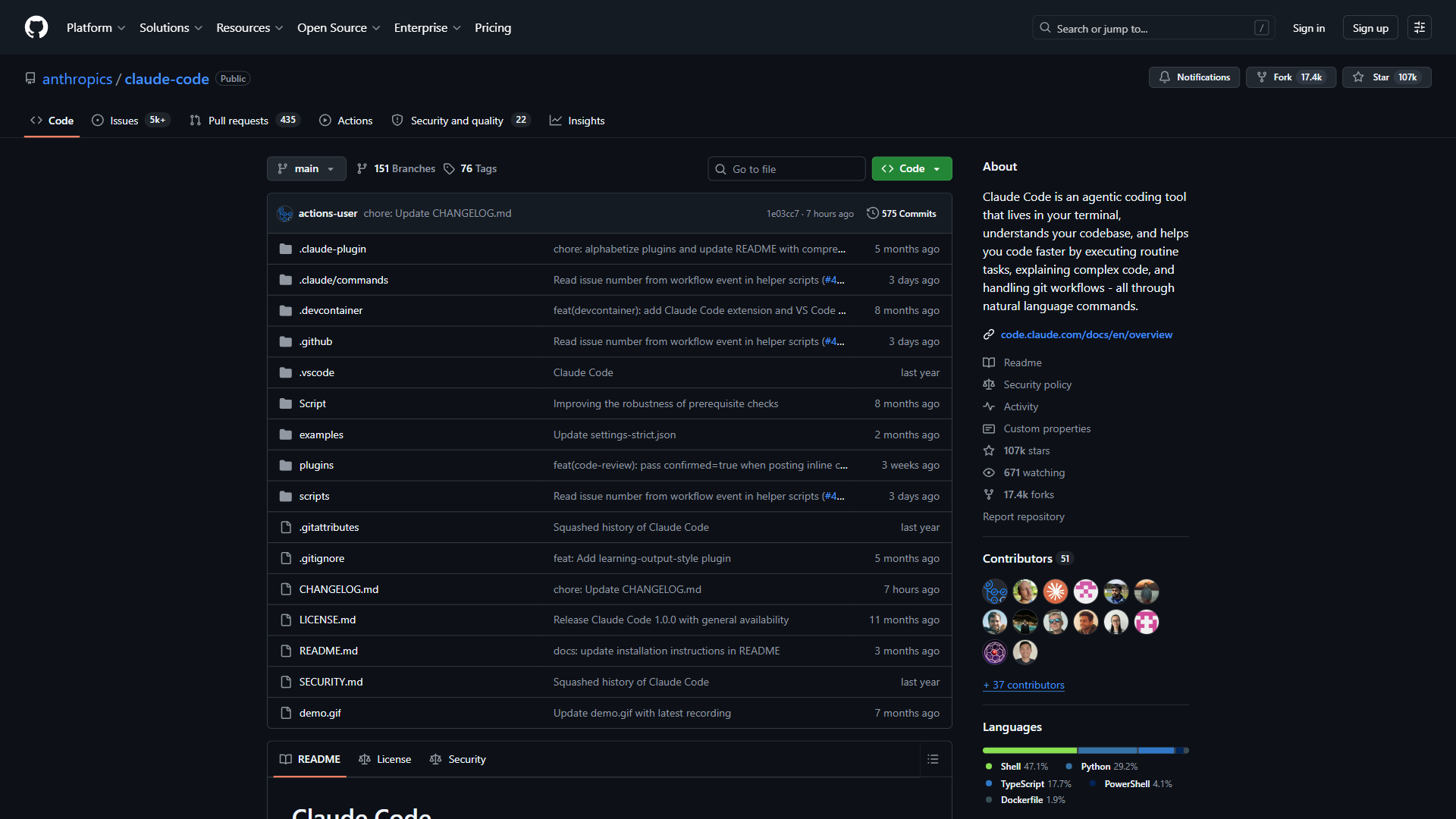
For hands-on coding with Claude, Claude Code provides a ready-made terminal-based agent:
CrewAI
What it is: An open-source Python framework for orchestrating multiple AI agents that work together as a “crew.” Each agent gets a defined role, goal, and tools, and the framework manages delegation.
Key features: Role-based agent design with defined personas; task dependency graphs; multi-provider LLM support (OpenAI, Anthropic, Ollama); built-in tools for web search and code execution; a Flows API for conditional workflows; and short-term, long-term, and entity memory.
Pricing: The open-source core is free but requires your own LLM API keys; CrewAI Enterprise pricing is custom.
Best for: Teams that need specialized agents collaborating on content pipelines, research workflows, and data processing.
Limitations: Multi-agent overhead increases latency and token costs, and debugging is harder than single-agent systems. Its standout quality is the “crew” metaphor, which makes multi-agent design genuinely accessible.
LangGraph (LangChain)
What it is: LangGraph is the agent orchestration layer built on LangChain, the most widely adopted LLM application framework. It models agent workflows as directed graphs, giving developers fine-grained control over execution flow.
Key features: Graph-based workflow design with cycles, branches, and conditional routing; persistent state checkpointing; human-in-the-loop approval; LangSmith integration for tracing; and LangGraph Cloud for managed deployment.
Pricing: LangGraph is open-source and free to self-host. LangSmith observability starts at $39 per month for Plus.
Best for: Engineers who need maximum control and auditable execution paths in production systems where predictability matters.
Limitations: Steep learning curve, a heavy abstraction layer for simple use cases, and occasional breaking changes. Its standout quality is the graph-based architecture, the strongest choice for enterprise deployments where auditability matters.
AutoGPT
What it is: One of the original autonomous AI agent projects, AutoGPT pioneered giving an LLM a goal and letting it recursively plan and execute steps. It has evolved since its viral 2023 launch into a more structured platform.
Key features: Goal-driven autonomous execution; built-in web browsing; file system access; sandboxed code execution; a plugin ecosystem; AutoGPT Forge for benchmarked custom agents; and Agent Protocol compliance.
Pricing: Fully open-source and free, requiring API keys for underlying LLM providers (OpenAI, Anthropic, etc.).
Best for: Experimentation and learning about autonomous agent architectures - open-ended tasks where the path to completion is unclear.
Limitations: High token consumption, lower production reliability than structured frameworks, and a tendency to get stuck in loops. Its standout quality is being the purest expression of autonomous AI agents - valuable when the path to completion is genuinely unknown.
Category 2: No-Code Agent Platforms for Business
No-code agent platforms are visual tools - led by Taskade and Relevance AI - that let non-developers build and deploy AI agents without code, trading flexibility for faster time-to-value.
Taskade AI Agents
What it is: Taskade has evolved from a project management tool into a full AI workspace with unlimited AI agents that automate tasks, generate content, and manage workflows within projects and task lists.
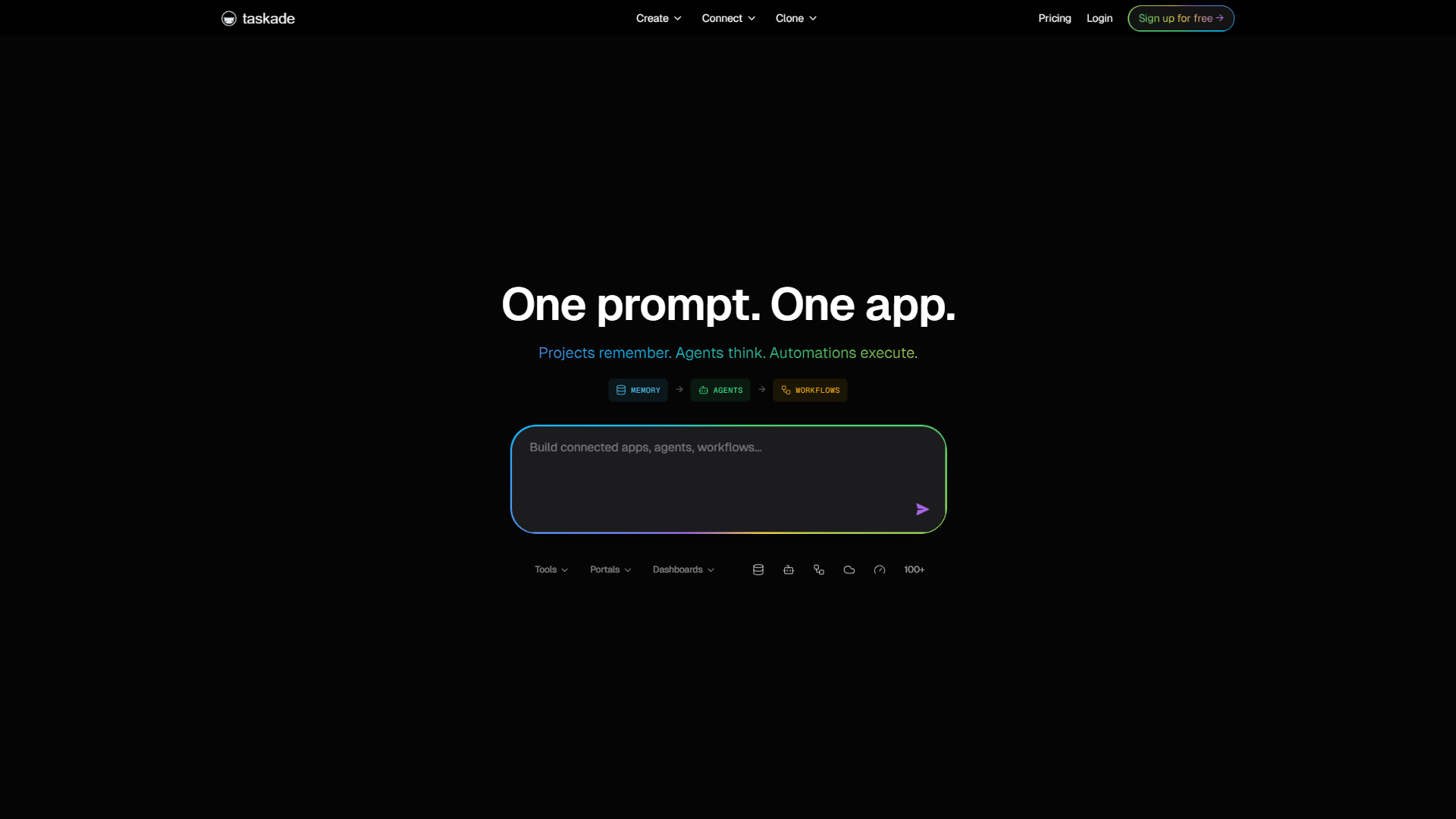
Key features: Unlimited AI agents on all paid plans; a custom agent builder with knowledge base training; AI Autopilot mode; Taskade Genesis to generate a workspace from one prompt; real-time multiplayer with agents and humans; and pre-built agent templates.
Pricing: Free plan with limited features. Paid access starts with Starter at $8/month and Pro at $20/month; all paid plans include AI agents.
Best for: Non-technical teams that want AI agents inside their project management workflow for content and task automation.
Limitations: Agents operate within Taskade’s ecosystem (limited external integrations) and offer narrower customization than code-first frameworks. Its standout quality is the tight integration between agents and project management, making “agent as teammate” practical.
Relevance AI
What it is: A no-code platform for building an “AI workforce” - specialized AI agents (AI workers) that handle business functions like sales research, support triage, and data enrichment.
Key features: A visual drag-and-drop agent builder; pre-built AI worker templates for sales, marketing, and support; multi-step workflows with conditional logic; CRM, database, and email integrations; knowledge base grounding in company data; and human-in-the-loop approval.
Pricing: Free tier includes 100 agent runs per month. Starter is $19 per month, Pro is $199 per month, and Enterprise pricing is custom.
Best for: Business teams automating repetitive knowledge work - lead qualification, response drafting, data extraction - without engineers.
Limitations: Complex workflows can hit execution limits on lower tiers, and pricing scales quickly with high-volume usage. Its standout quality is the “AI workers” model, which mirrors actual job functions and makes adoption intuitive for non-technical stakeholders.
Category 3: Coding-Focused Agent Tools
Coding-focused agent tools are platforms - Cursor, Replit, and ChatGPT’s Code Interpreter - that apply agent architectures to software development, offering autonomous coding beyond traditional autocomplete.
Cursor (Agent Mode)
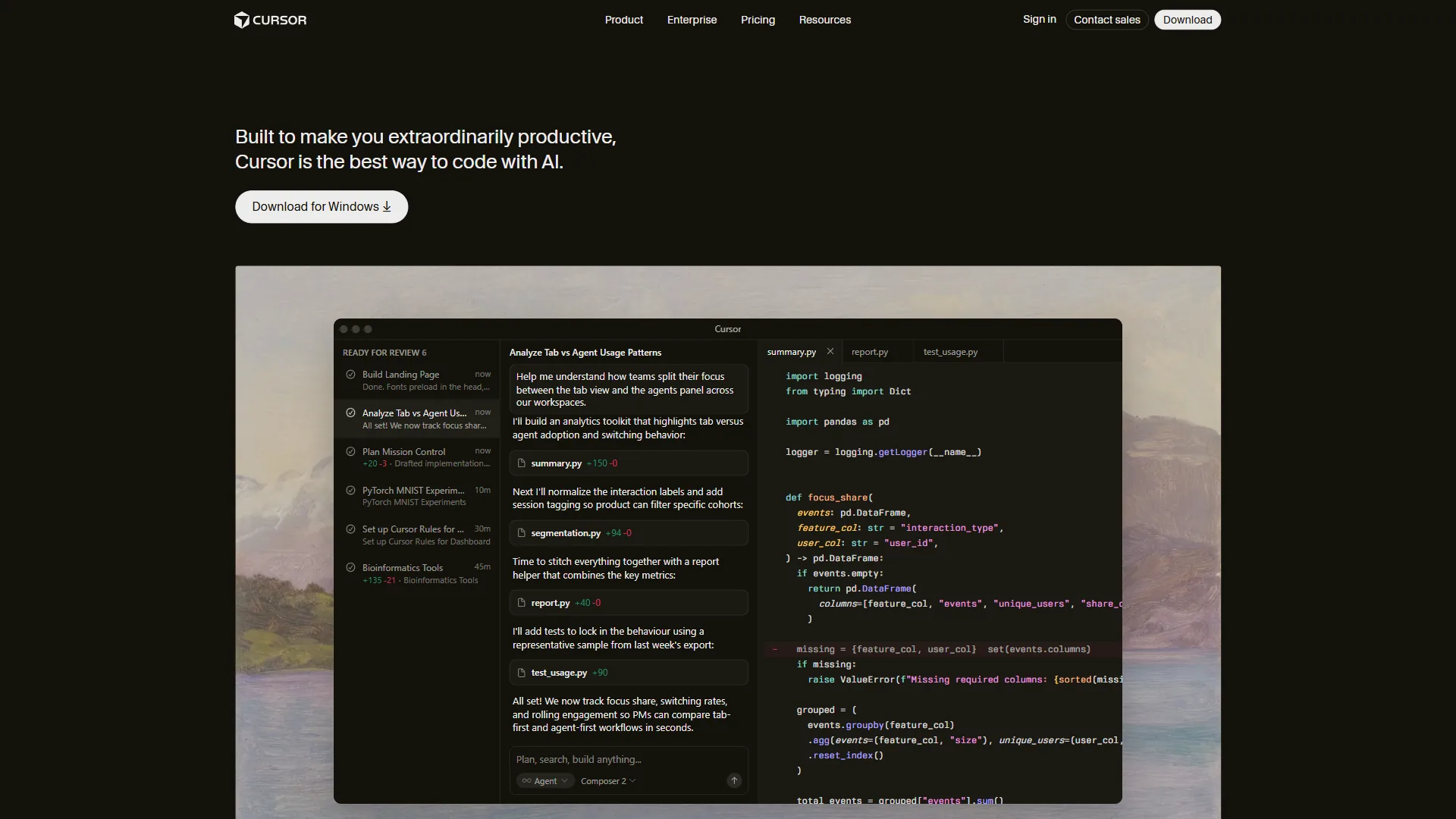
Cursor is one of the most powerful ai agents for coding in 2026. Its Agent mode turns the editor into an autonomous coding agent that plans multi-file changes, runs terminal commands, and fixes errors automatically.
Key agent capabilities: Multi-file editing with codebase-wide context, autonomous error-correction loops, terminal command execution, multi-provider LLM support (Claude, GPT, Gemini), and a Rules system for project-specific behavior.
Pricing: Free tier with limited completions; Pro is $20/month and Teams is $40/month per user.
Best for: Developers who want an AI coding agent embedded in their editor, especially for large codebases needing multi-file edits.
Replit Agent
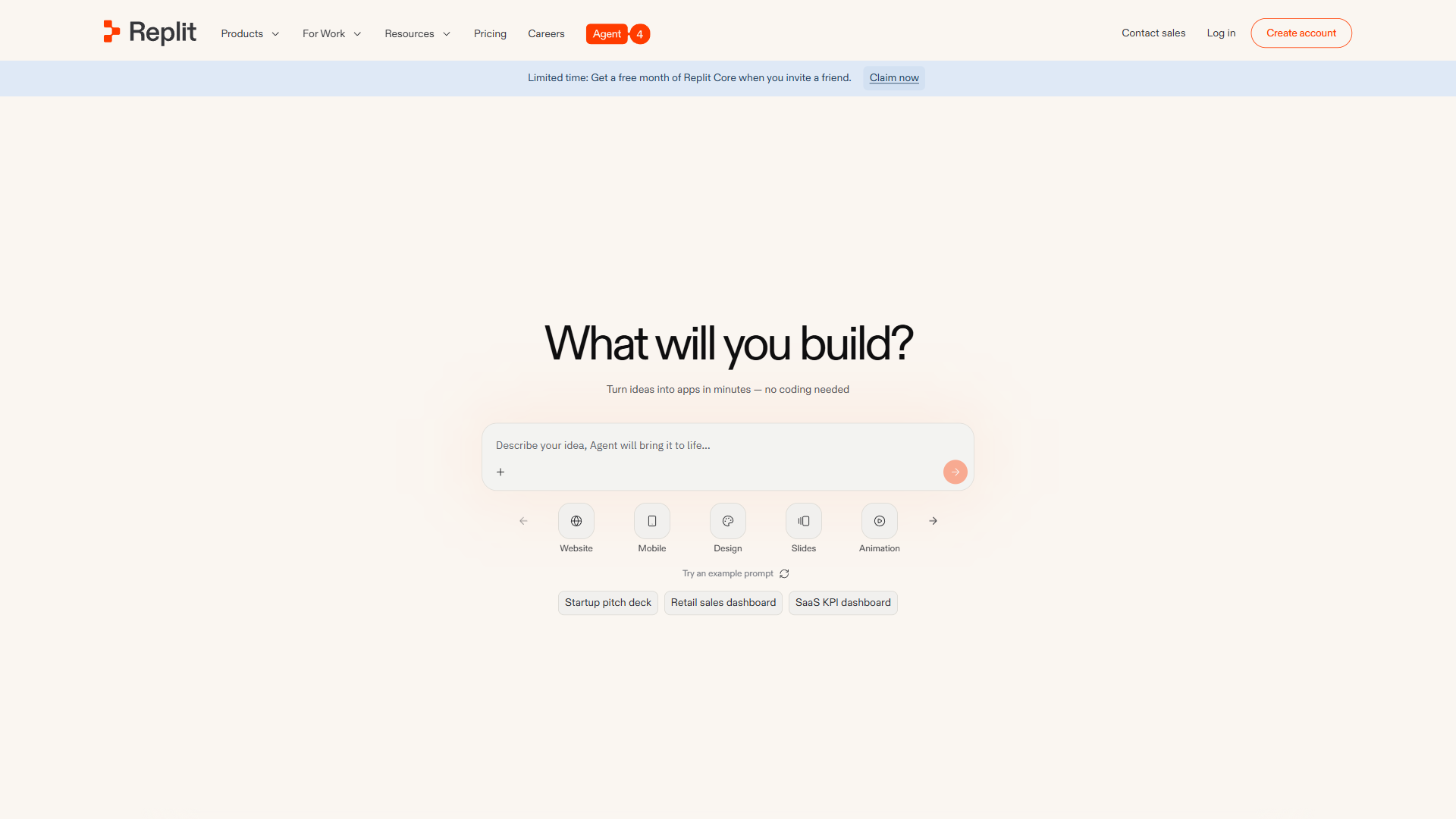
Replit provides a complete cloud development environment where the AI agent handles everything from scaffolding to deployment. Replit Agent 3 builds full-stack applications from natural language descriptions, including database, API, and frontend setup.
Key agent capabilities: Full-stack app generation from text prompts, automatic deployment and hosting, self-testing and error correction, access to 300+ AI models, up to 200 minutes of autonomous development on paid plans, and built-in database management.
Pricing: Free tier available; Replit Core is $25/month with enhanced agent capabilities.
Best for: Non-developers and early-stage builders who want to go from idea to deployed app without managing infrastructure.
ChatGPT with Code Interpreter and GPTs
ChatGPT operates as an agent through its Code Interpreter and custom GPTs. While not a dedicated agent platform, its ability to write and execute Python, analyze files, and take multi-step actions makes it a practical agent tool.
Key agent capabilities: Code Interpreter executes Python in a sandboxed environment; custom GPTs carry configured tools and knowledge bases; web browsing for research; DALL-E image generation; and the Operator feature for web-based tasks.
Pricing: Free tier with GPT-4o mini; Plus is $20/month and Pro is $200/month.
Best for: General-purpose agent tasks - data analysis, research, document processing - where a dedicated framework is overkill.
Limitations: Cursor lacks the deep observability LangGraph offers, Replit Agent breaks down on complex production codebases, and ChatGPT’s Code Interpreter has no persistent state - skip these tools for large-scale production systems where audit trails matter most.
Feature-by-Feature: AutoGPT vs CrewAI
AutoGPT and CrewAI are two structurally different frameworks: AutoGPT runs a single self-directed agent in a loop, while CrewAI orchestrates multiple specialized agents with defined roles. AutoGPT offers broad autonomy with less structure; CrewAI is more structured but needs more upfront design.
| Aspect | AutoGPT | CrewAI |
|---|---|---|
| Agent count | Single autonomous agent | Multiple specialized agents |
| Control model | Goal-driven, self-directed | Role-based, orchestrated |
| Predictability | Lower - agent chooses its path | Higher - workflow is pre-defined |
| Token efficiency | Lower - autonomous loops are expensive | Moderate - depends on crew size |
| Production readiness | Experimental | Production-viable with Enterprise |
| Learning curve | Lower initial setup | Higher - requires crew design |
| Best for | Exploration, research | Structured workflows, pipelines |
In practice, CrewAI is stronger for production, while AutoGPT is better for experimentation.
Can Non-Developers Build AI Agents Without Coding
Four main platforms let non-developers build functional AI agents in 2026 without writing code: Taskade for the lowest barrier to entry, Relevance AI for a Zapier-style visual workflow builder, ChatGPT Custom GPTs for instruction-based agents, and Replit for building applications from plain English. Start with Taskade or Relevance AI for business automation and Replit for application building.
Which Tool Fits Business Automation Workflows
Relevance AI is the best fit for most business automation workflows, with Taskade suiting project-embedded automation and CrewAI Enterprise suiting teams that have engineering resources:
- Relevance AI is the strongest pure business automation platform - pre-built AI worker templates cover sales, support, and marketing.
- Taskade is ideal when agents need to operate within ongoing project management workflows.
- CrewAI Enterprise suits businesses with engineering resources that need custom multi-agent workflows.
For most small to mid-size businesses without engineering teams, Relevance AI offers the best balance of capability and accessibility.
Pricing Comparison: AI Agent Platforms
AI agent platform pricing starts at $0 for open-source frameworks (CrewAI, LangGraph, AutoGPT) and runs to $19-$39 per month for paid no-code and coding tools, plus usage-based API costs on the open-source options.
| Platform | Free Tier | Entry Price | Mid-Tier | Enterprise |
|---|---|---|---|---|
| Claude Agent SDK | - | API usage ($3-15/M tokens) | API usage | Volume discounts |
| CrewAI | Open-source | $0 self-hosted | - | Custom |
| LangGraph | Open-source | $0 self-hosted | LangSmith Plus $39/mo | Custom |
| AutoGPT | Open-source | $0 self-hosted | - | - |
| Taskade | Limited features | $8/month per user | $20/month per user | Contact sales |
| Relevance AI | 100 runs/month | $19/mo | $199/mo | Custom |
| Cursor | Limited completions | $20/month | $40/month per user | Contact sales |
| Replit | Basic features | $25/month | $40/month per user | Contact sales |
| ChatGPT | GPT-4o mini | $20/month (Plus) | $200/month (Pro) | Contact sales |
Cost consideration: Open-source frameworks are free but require paying for LLM API calls - a CrewAI workflow making 50 GPT-5 calls per task can cost more in API fees than a single-agent Taskade automation.
Best Picks by Use Case for AI Agent Platforms
The best AI agent platform is use-case specific: LangGraph for production systems, CrewAI for multi-agent collaboration, Cursor and Claude Code for coding, Relevance AI for no-code automation, and AutoGPT for learning.
- Production agent systems: LangGraph offers the most control - graph-based architecture plus LangSmith observability is the strongest foundation for enterprise use.
- Multi-agent collaboration: CrewAI’s role-based design is built for content pipelines and research teams.
- Coding and development: Cursor and Claude Code lead the field; Replit Agent is fastest for full-stack apps.
- No-code automation: Relevance AI for structured processes, Taskade for team-embedded agents.
- Learning: AutoGPT remains the best sandbox for understanding how autonomous agents operate.
- General agent tasks: ChatGPT with Code Interpreter handles data analysis and research without a dedicated platform.
The Bottom Line
The AI agent platforms landscape in 2026 has three tiers: developer frameworks for maximum control, no-code platforms for business teams, and coding-specific agents for software development. Frameworks like CrewAI, LangGraph, and Claude Agent SDK offer the most flexibility but require engineering investment; no-code platforms like Taskade and Relevance AI democratize agent creation.
For most teams evaluating their first agent platform, the practical advice is to start with the simplest option that meets the use case - a Taskade agent that ships this week delivers more value than a custom LangGraph system that takes a month. For complex, high-volume workflows where reliability is non-negotiable, a developer framework pays dividends.
FAQ
The questions below are the most common AI agent platform queries - which platforms rank best, which are free, and how much they cost.
Q: What are the best AI agent platforms in 2026?
The eight most capable AI agent platforms in 2026 are Claude Agent SDK for production agent systems, CrewAI for multi-agent orchestration, LangGraph for complex stateful workflows, AutoGPT for experimental autonomous tasks, Taskade for no-code team productivity, Relevance AI for business automation, Cursor for AI coding, and Replit for full-stack app building.
Q: Are there any free AI agent platforms?
Yes, several leading AI agent platforms are free of charge on entry tiers. CrewAI, LangGraph, and AutoGPT are open-source frameworks available at no cost, while Relevance AI offers a free tier before paid plans starting from $19 per month - letting teams test autonomous agents before committing.
Q: Which AI agent platform is best for non-technical users?
Taskade AI Agents and Relevance AI are the most accessible no-code options for beginners. Taskade starts at $8/month with a workspace-based environment for team productivity agents, while Relevance AI offers a free tier and no-code AI workforce features from $19 per month - both designed for business automation without coding.
Q: What is the difference between developer frameworks and no-code AI agent platforms?
Developer frameworks like Claude Agent SDK, CrewAI, LangGraph, and AutoGPT require technical skills to build custom agents through code. No-code platforms like Taskade and Relevance AI let business users configure agents through visual workspaces. Coding-specific tools like Cursor and Replit sit in between, targeting developer workflows with intermediate complexity.
Q: How much do AI agent platforms cost?
AI agent platform costs split by category. Open-source frameworks like CrewAI, LangGraph, and AutoGPT are free to self-host, with LangSmith Plus from $39 per month for observability. Claude Agent SDK uses usage-based API pricing. No-code options include Taskade from $8/month and Relevance AI from $19 per month, and coding agents include Cursor from $20/month and Replit from $25/month.
Related Reading
The guides and reviews below offer deeper coverage of the platforms above.
- Cursor Review - AI-powered code editor with agent mode
- Claude Code Review - Terminal-based autonomous coding agent
- Best AI Coding Assistants 2026: Complete Developer Guide
- Best AI Automation Tools 2026: Gumloop vs Zapier vs Make vs n8n
- Claude vs ChatGPT: Anthropic Claude vs OpenAI GPT
External Resources
The links below are the primary vendor documentation behind this comparison.