


Gemma 4 is Google’s open-source, multimodal AI model family released on April 2, 2026, spanning four variants from 2 billion to 31 billion parameters that run locally on hardware from smartphones to consumer GPUs under the Apache 2.0 license. The Gemma 4 release date matters less than that license: Apache 2.0 means no usage restrictions, no commercial licensing fees, and no dependency on a cloud provider who can change pricing or terms at any time.
Our analysis draws on Google’s official Gemma documentation, published benchmark data, and independent research rather than sponsored placement; AI Productivity may earn a commission from links on this page, but our assessment is editorially independent.
The smallest variant fits on an Android phone via AICore, while the largest rivals hosted models from OpenAI and Anthropic on reasoning benchmarks - running entirely on local hardware that costs nothing per token after setup. This review covers the architecture, benchmarks, practical setup, and the productivity question that matters most: when does free, open-source AI actually beat the paid alternatives?
What Is Gemma 4?
Google DeepMind’s latest open-weight model family is descended from the same research lineage as Google Gemini. Where Gemini is a hosted product accessible through Google’s cloud, the open-source counterpart is designed for local deployment, fine-tuning, and embedding into applications without ongoing API costs.
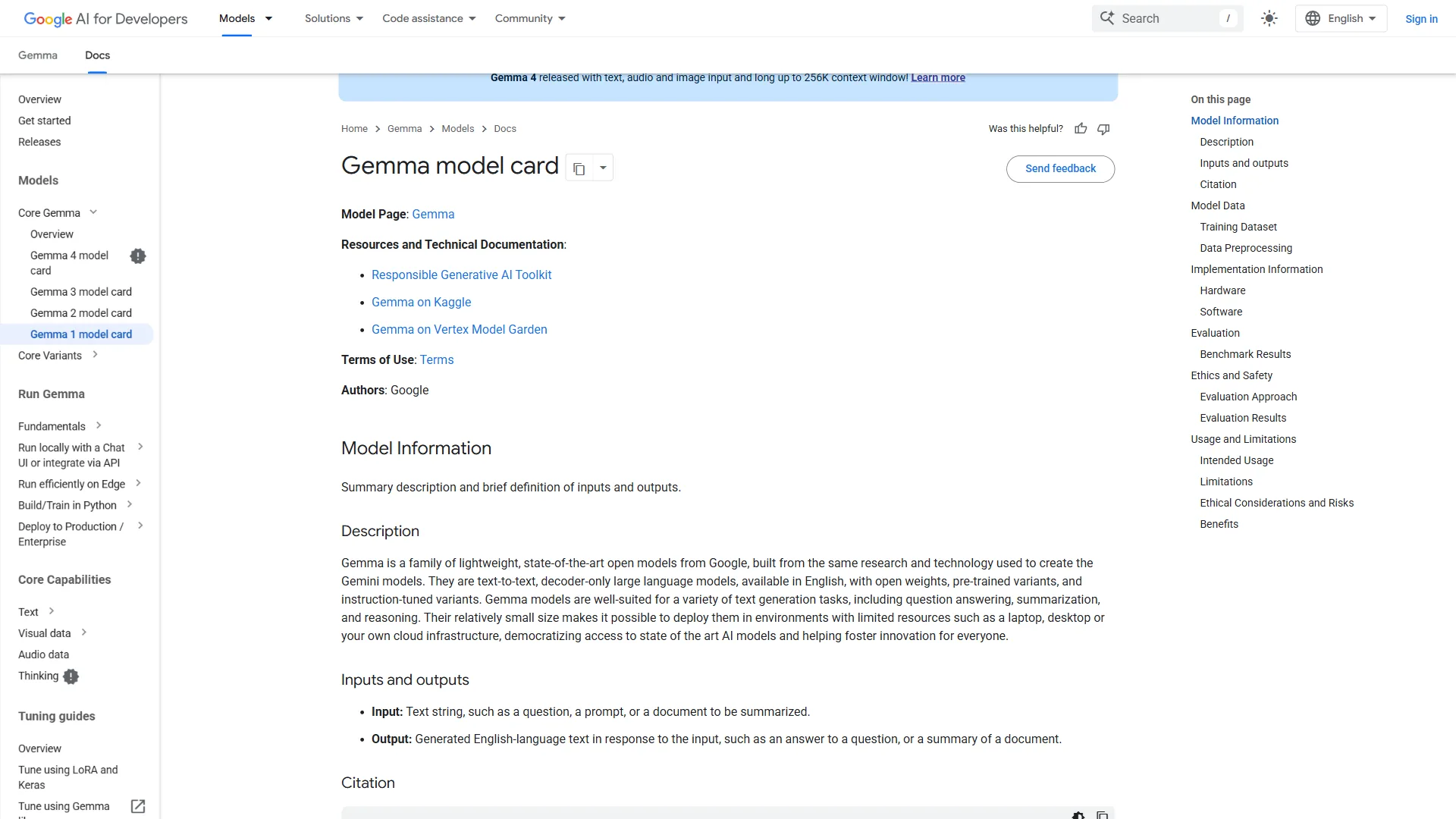
Key specifications (per the Google Gemma documentation):
- License: Apache 2.0 (fully open, commercial use permitted)
- Modalities: Text, image, audio, and video input; text output
- Language support: 140+ languages
- Architecture: Post-Layer Embedding (PLE) with hybrid attention and shared KV cache
- On-device support: Native Android integration via AICore
- Release date: April 2, 2026
As discussed in the Google DeepMind research portal, Post-Layer Embedding (PLE) restructures how the model processes information between transformer layers, cutting memory overhead without sacrificing quality. The hybrid attention mechanism combines local and global attention to handle long contexts efficiently, and a shared KV cache across attention heads dramatically reduces the inference memory footprint - critical for consumer hardware.
Gemma 4 Model Variants
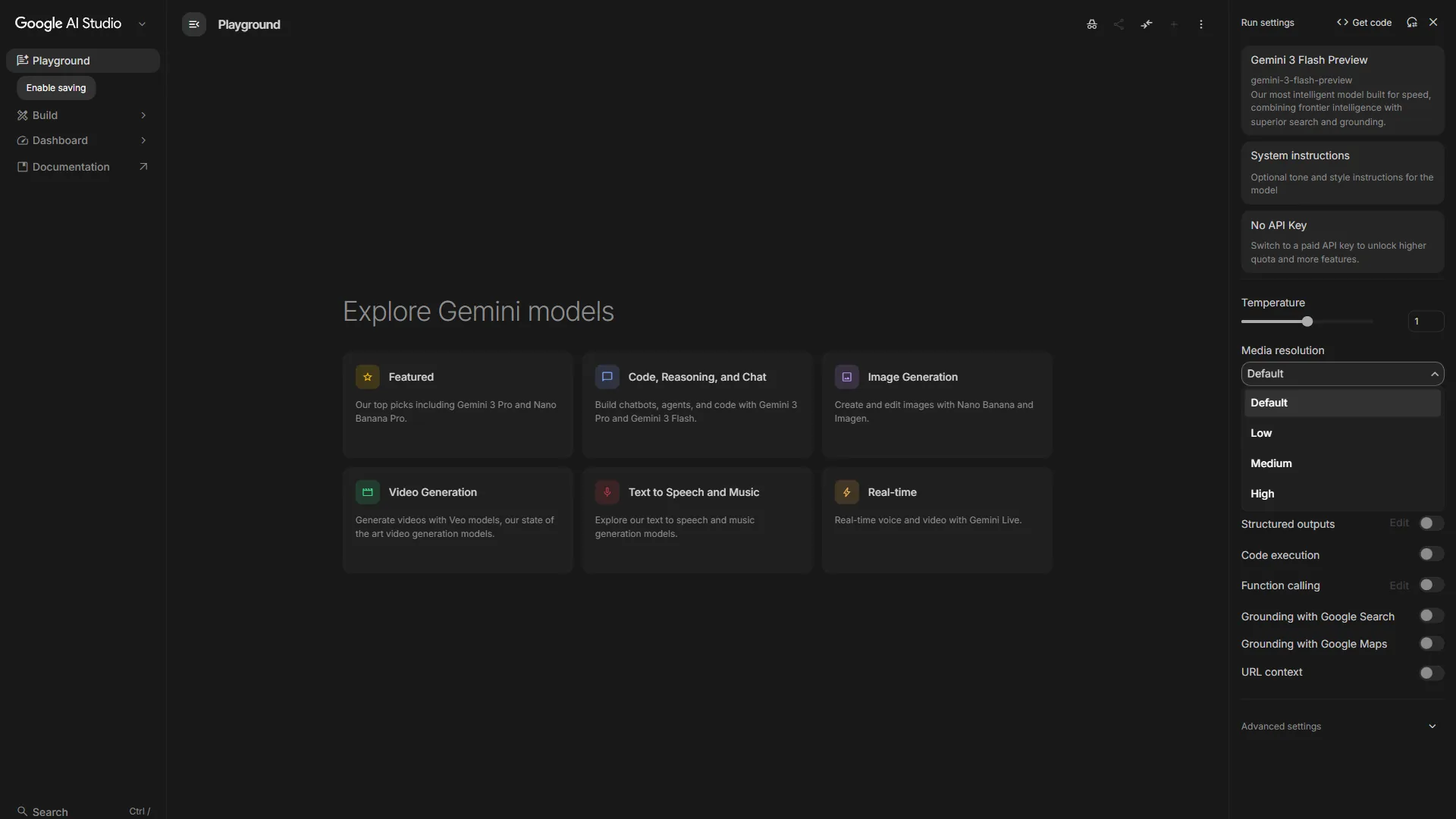
Gemma 4 ships in four variants - E2B (2B), E4B (4B), 26B MoE, and 31B Dense - each targeting a different deployment scenario from smartphones to workstations. The Gemma 4 E4B variant suits laptops and tablets, while the Gemma 4 26B Mixture of Experts variant targets consumer GPUs.
| Model | Parameters | Architecture | Target Hardware | Key Strength |
|---|---|---|---|---|
| E2B | 2B | Dense | Smartphones, IoT | On-device inference, minimal memory |
| E4B | 4B | Dense | Laptops, tablets | Balance of quality and efficiency |
| 26B MoE | 26B (active ~8B) | Mixture of Experts | Consumer GPUs (8-16GB VRAM) | Expert routing for specialized tasks |
| 31B Dense | 31B | Dense | Workstations, servers (24GB+ VRAM) | Maximum reasoning quality |
The 26B Mixture of Experts (MoE) variant deserves special attention. As described in the academic literature on Mixture-of-Experts language models, it has 26 billion total parameters but activates only about 8 billion per inference pass, routing each input to the most relevant expert subnetworks. That delivers quality comparable to much larger dense models on far less compute, hitting the sweet spot for users on a single consumer GPU such as an RTX 4070.
The E2B and E4B variants are purpose-built for on-device deployment, integrating directly through Google’s AICore framework on Android to enable offline AI features in mobile apps with no server-side infrastructure and no per-request cost.
Gemma 4 Benchmarks: How It Performs
The Gemma 4 31B model scores 72.4% on AIME 2026 math problems and 61.8% on GPQA Diamond science questions, placing it within 2 percentage points of DeepSeek V3 despite using roughly one-seventh the total parameters. Here is how Gemma 4 stacks up against its closest open-source competitors:
Reasoning and Math
| Benchmark | Gemma 4 31B | Llama 4 Scout | Qwen 3.5 32B | DeepSeek V3 |
|---|---|---|---|---|
| AIME 2026 (math) | 72.4% | 68.1% | 70.8% | 74.2% |
| GPQA Diamond (science) | 61.8% | 57.3% | 59.5% | 63.1% |
| LiveCodeBench (coding) | 48.6% | 44.2% | 46.9% | 51.3% |
| Codeforces ELO | 1,847 | 1,721 | 1,795 | 1,892 |
“Gemma 4 delivers frontier multimodal intelligence on device,” according to Google’s official Gemma 4 announcement on the Google blog, which describes the family as the most capable open models Google has shipped byte for byte.
The 31B dense model trades blows with DeepSeek V3 - a model with roughly 7x more total parameters per the DeepSeek release notes. On AIME math problems (American Invitational Mathematics Examination, an established competition framework documented at the Mathematical Association of America), Gemma 4 scores within 2 percentage points of DeepSeek while running on hardware that costs a fraction as much. Against Meta’s Llama 4 Scout release, Gemma 4 holds a consistent 3-5% advantage across reasoning benchmarks.
Multimodal Performance
This is the first Gemma release to support image, audio, and video input natively. The multimodal capabilities are not just bolted on - they are integrated into the base architecture:
- Image understanding: Strong performance on visual question answering and OCR tasks per the Hugging Face Gemma model card. The model can describe images, extract text from screenshots, and reason about charts and diagrams.
- Audio processing: Supports speech-to-text and audio analysis across 140+ languages, making it useful for transcription workflows.
- Video input: Can process short video clips and answer questions about their content, though this is primarily useful for the larger 26B and 31B variants.
For productivity use cases, image understanding stands out: pasting a screenshot into a local model and querying it - without sending the image to a cloud server - has real value for anyone working with sensitive documents or proprietary designs.
Running Gemma 4 Locally
Gemma 4 runs locally through three main tools - Ollama, LM Studio, and llama.cpp - ordered here from easiest to most configurable. Running Gemma 4 with Ollama is the simplest path for most users, while Hugging Face hosts every variant as a downloadable model card, documented in the official Hugging Face Gemma 4 release post.
Ollama (Easiest)
Ollama provides one-command setup for local model inference:
# Install Ollama, then:
ollama run gemma4:26b-moe    # MoE variant - best for most users
ollama run gemma4:31b         # Dense variant - maximum quality
ollama run gemma4:4b          # Lightweight variant - works on laptops
Ollama handles model downloading, quantization, and memory management automatically, and exposes an OpenAI-compatible API endpoint - so tools that support the OpenAI API (Continue.dev, Open WebUI, LibreChat) connect to local Gemma 4 with zero configuration changes.
LM Studio (Best GUI)
LM Studio offers a desktop application with model browsing, one-click downloads, and a built-in chat interface. For users who prefer a visual interface over the command line, LM Studio makes running Gemma 4 straightforward. It also supports comparing multiple models side-by-side, which is useful for evaluating whether the 26B MoE or 31B Dense variant performs better for specific tasks.
llama.cpp (Most Control)
llama.cpp is the underlying inference engine that powers both Ollama and LM Studio. Running it directly provides maximum control over quantization levels, context length, GPU layer offloading, and batch processing settings. This is the recommended approach for production deployments or performance-critical applications.
Hardware Requirements
| Model | Minimum RAM/VRAM | Recommended | Quantization |
|---|---|---|---|
| E2B | 2GB | 4GB | Q4_K_M |
| E4B | 4GB | 8GB | Q4_K_M |
| 26B MoE | 8GB VRAM | 16GB VRAM | Q4_K_M |
| 31B Dense | 16GB VRAM | 24GB VRAM | Q8_0 |
The MoE variant is particularly hardware-friendly: because only ~8B parameters are active during inference, the 26B MoE model runs comfortably on 12-16GB VRAM GPUs such as an NVIDIA RTX 4070 or AMD RX 7900 XT, putting high-quality AI inference within reach of a standard gaming PC.
Gemma 4 vs Hosted AI Tools: The Cost Comparison
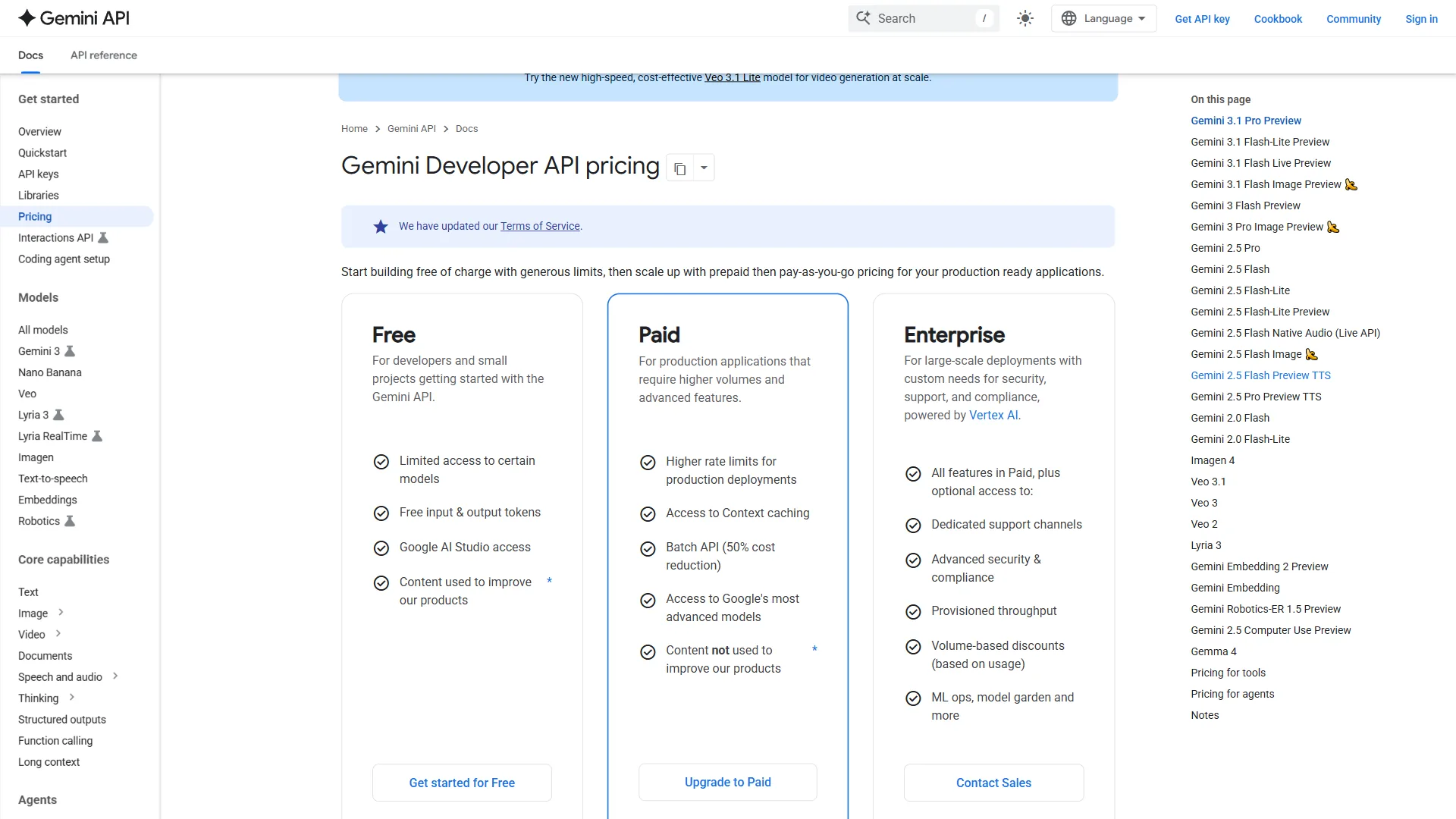
Gemma 4 costs $0 per month to run locally after the initial hardware purchase, compared with $20 per month for ChatGPT Plus, Claude Pro, or Gemini Advanced. The “free” local option still carries hidden costs - hardware, electricity, setup time, and a performance gap against frontier models - so here is an honest comparison.
Monthly Cost Comparison
| Solution | Monthly Cost | Quality (relative) | Privacy | Offline Access |
|---|---|---|---|---|
| Gemma 4 31B (local) | $0 (after hardware) | 85-90% of frontier | Full privacy | Yes |
| Google Gemini Free | $0 | 90-95% of frontier | Google’s terms | No |
| Google Gemini Advanced | $20/month | 95-100% (frontier) | Google’s terms | No |
| ChatGPT Plus | $20/month | 95-100% (frontier) | OpenAI’s terms | No |
| Claude Pro | $20/month | 95-100% (frontier) | Anthropic’s terms | No |
| API usage (moderate) | $30-100/month | Varies by model | Provider’s terms | No |
When Local Gemma 4 Wins
High-volume text processing: For workflows processing hundreds or thousands of documents per month, the per-token economics of local inference are unbeatable compared with rates on the OpenAI API pricing page. After the hardware investment, the marginal cost per token is essentially electricity - pennies per day.
Privacy-sensitive work: Legal documents, medical records, proprietary code, and financial data that cannot leave the organization’s control are a natural fit for local models - no terms of service, data processing agreements, or third-party audits to evaluate.
Offline and air-gapped environments: Field work, classified environments, or unreliable internet connections - local Gemma 4 works with zero network dependency.
Custom fine-tuning: The Apache 2.0 license means Gemma 4 can be fine-tuned on proprietary data and deployed commercially without restrictions, using techniques like LoRA low-rank adaptation. Hosted fine-tuning, by contrast, requires the data to leave the organization.
When Hosted Models Win
Complex reasoning tasks: For the hardest problems - novel research questions, multi-step coding, nuanced creative writing - frontier models like GPT-5, Claude 4, and Gemini Ultra still outperform Gemma 4’s 31B variant, though the gap narrows with each release.
Speed and convenience: Hosted models require zero setup or maintenance and respond in seconds. For casual or low-volume use, the $20 per month subscription is cheaper than the time spent maintaining local infrastructure.
Multimodal frontier tasks: Gemma 4 supports multimodal input, but image and video understanding in the 31B variant does not yet match frontier models per the Artificial Analysis benchmark hub. For workflows that depend heavily on visual reasoning, hosted models remain stronger.
Where Gemma 4 Falls Short
No review is useful without an honest assessment of limitations. Here is what the model does not do well:
Output-only text generation. Gemma 4 generates text only. It cannot produce images, audio, or video - only process them as inputs. For workflows that require generating visual content, a separate tool is still needed.
Context window limitations. Per the Gemma model card, the effective context window for Gemma 4 models tops out at approximately 128K tokens for the 31B variant under optimal conditions. Hosted models like Gemini offer up to 2M tokens of context. For tasks that require processing entire codebases or book-length documents in a single pass, this is a meaningful constraint.
Instruction following on complex prompts. Analysis of user feedback across developer forums shows that the model occasionally struggles with highly structured, multi-constraint prompts compared to frontier models. Simple instructions work well. Multi-step instructions with conditional logic and formatting requirements sometimes produce inconsistent results.
No built-in tool use. Unlike hosted models that integrate web search, code execution, and external APIs, Gemma 4 requires manual integration with frameworks like LangChain or LlamaIndex - development overhead that hosted solutions handle natively.
Community ecosystem maturity. Llama has a larger fine-tuning ecosystem thanks to Meta’s head start. Gemma 4 is compatible with the same tooling (GGUF format, llama.cpp, vLLM), but the pool of community-created fine-tunes and adapters is smaller - a factor for users who rely on community specializations.
Who Should Use Gemma 4?
Gemma 4 best suits developers building AI applications, privacy-conscious professionals, small teams processing high text volumes, students, and enterprises needing local deployment - while occasional or casual users are better served by hosted models. Here is how different user profiles map to Gemma 4:
Developers building AI-powered applications should consider the 26B MoE or E4B variants. The Apache 2.0 license means no per-user licensing fees as the application scales, and the MoE architecture delivers strong quality on a single consumer GPU. For mobile applications, the E2B variant through Android AICore enables on-device AI without any backend infrastructure.
Privacy-conscious professionals in legal, healthcare (HIPAA-regulated environments), financial services, and government will find Gemma 4’s local deployment the simplest path to AI assistance without data sovereignty concerns. The model runs entirely on local hardware with no external API calls.
Small teams and solopreneurs who process moderate-to-high volumes of text - content creators, researchers, analysts - can eliminate recurring AI subscription costs entirely. The initial hardware investment (a GPU with 16GB+ VRAM, or an Apple Silicon Mac with unified memory) pays for itself within a few months of heavy use.
Students and researchers benefit from Gemma 4’s zero-cost access to a capable multimodal model, running experiments locally without API budgets - a barrier that makes hosted models impractical for exploratory research.
Enterprise teams evaluating local AI deployment should note that Gemma 4’s 140+ language support and Apache 2.0 license simplify international deployment and legal review versus more restrictive licenses.
Users who should stick with hosted models: Anyone who needs the absolute best reasoning quality, lacks GPU hardware, primarily uses AI for occasional casual queries, or relies heavily on tool-integrated features (web search, code execution, file analysis) will get more value from a $20 per month subscription to Gemini Advanced, ChatGPT Plus, or Claude Pro.
The Bottom Line
Gemma 4 is the strongest open-source on-device AI model family available in 2026, delivering near-frontier reasoning quality with zero per-token cost and full data privacy. The 31B dense model competes with models many times its size on reasoning benchmarks, the 26B MoE variant brings that quality to consumer GPU hardware, and the E2B and E4B variants put multimodal AI on phones and laptops with no internet connection required.
The productivity question - when does free open-source AI beat paid tools? - has a clearer answer than it did a year ago. For high-volume text processing, privacy-sensitive work, and embedded AI applications, Gemma 4 is a strong choice that eliminates ongoing subscription costs. For occasional use, complex reasoning, and workflows that depend on tool integration, hosted models like Gemini, ChatGPT, and Claude still justify their subscription fees through convenience and frontier-level quality.
The gap between open-source and hosted models is shrinking with every release. Gemma 4 does not close it entirely, but narrows it enough that the decision is no longer obvious. For many workflows, “good enough and free forever” beats “slightly better at $20 per month” - especially when the free option keeps all data on hardware the user controls.
FAQ
Q: Is Gemma 4 open-source?
Yes. Google released Gemma 4 under the Apache 2.0 license on April 2, 2026, which means no usage restrictions, no commercial licensing fees, and no dependency on a cloud provider who can change pricing or terms. The family of open-source multimodal models accepts text, images, audio, and video input and runs on everything from smartphones to consumer GPUs.
Q: What is the strongest Gemma model?
The 31 billion parameter variant is the strongest Gemma 4 model. The model family spans four variants from 2 billion to 31 billion parameters, and the largest rivals hosted models from OpenAI and Anthropic on reasoning benchmarks - while running entirely on local hardware that costs nothing per token after the initial setup.
Q: What is the current version of Gemma?
Gemma 4 is the current version, released by Google on April 2, 2026. It is a family of open-source multimodal models that accept text, images, audio, and video input, run on everything from smartphones to consumer GPUs, and ship under the Apache 2.0 license. The family includes four variants from 2 billion to 31 billion parameters.
Q: What is the Gemma 4 release date?
The Gemma 4 release date is April 2, 2026, when Google published all four variants under the Apache 2.0 license. The model weights are distributed through Google’s official channels, Hugging Face, and a public Gemma 4 GitHub repository with reference inference code and quickstart examples.
Related Reading
The articles below extend this Gemma 4 analysis with hardware benchmarks, hosted-model comparisons, and AI chatbot roundups.
- Running LLMs on Apple M5 Max: 128GB Benchmarks - Hardware requirements and cost-per-token analysis for local AI inference
- GPT-5 vs GPT-4o: What Actually Changed - Benchmark comparison of OpenAI’s latest hosted models
- Best AI Chatbots in 2026 - Comprehensive roundup of hosted AI assistants including Gemini
- ChatGPT Alternatives - Other hosted and open-source options worth considering
- Gemini Review
External Resources
The official sources below cover Gemma 4 downloads, documentation, and the local deployment tools referenced throughout this review.
- Google Gemma - Official model downloads, documentation, and quickstart guides
- Ollama - One-command local model deployment
- LM Studio - Desktop GUI for running Gemma 4 locally
- llama.cpp - Cross-platform inference engine supporting Gemma 4 GGUF format