


HR teams running on spreadsheets, scattered Google Docs, and a shared inbox feel the strain the moment headcount crosses about fifteen employees. Onboarding checklists go missing, time off requests pile up in email threads, and nobody is quite sure who reports to whom after the last reorganization. A proper Zoho People setup is built to replace all of that with a single HR system of record, and for teams already on other Zoho apps it slots into the broader suite without forcing a rip-and-replace.
Zoho People is the HR information system inside Zoho’s ecosystem, covering employee records, onboarding, time off, attendance, performance, learning, and an HR helpdesk. It is included in the Zoho One bundle, which means HR teams already running Zoho CRM, Zoho Books, or Zoho Mail can typically activate Zoho People without adding another subscription. Zoho One costs $37 per user per month on annual billing for the All Employee plan, which replaces what most small businesses pay separately for BambooHR, Gusto add-ons, and similar HR point tools - assuming the rest of the business actually uses the other Zoho apps.
This guide walks through a complete Zoho People setup for a small to mid-sized HR team. You will create the organization, import employees, build the org chart, design onboarding workflows, set up time off policies, enable self-service, and configure the role-based permissions that keep payroll-grade data away from the wrong eyes. Plan on roughly 75 minutes for the core configuration.

What Do You Need Before Starting a Zoho People Setup?
Before you begin the Zoho People setup, gather the items below so you do not have to pause halfway through.
An employee roster in spreadsheet form. Zoho People accepts CSV imports, so a clean spreadsheet with names, emails, job titles, departments, hire dates, and reporting managers will save hours of manual entry. Export from your current payroll system or HRIS and clean up the columns first.
A defined org structure. You need to know who reports to whom and what your departments are called. Zoho People uses these to build the org chart, route approvals, and scope permissions.
Time off policy details. Pull together your PTO policy, sick leave rules, parental leave, bereavement, and any country-specific entitlements. Note the accrual method, carry-over rules, and observed holidays per region.
Admin access to your domain. Required if you plan to use single sign-on or send onboarding emails from a verified company address.
Decision on Zoho People standalone vs. Zoho One. If HR is the only Zoho app you plan to use, the standalone Zoho People app is fine. If you are already running Zoho CRM, Zoho Books, or Zoho Mail, the Zoho One bundle at $37 per user per month annually almost always works out cheaper than stitching together separate subscriptions.
Step 1: Create Your Zoho People Account
Begin your Zoho People setup login by signing up at zoho.com/people. You can create a fresh Zoho account or sign in with an existing one - if your team already uses Zoho CRM or Zoho Mail, use those credentials so everything lives under the same organization ID.
When prompted, select the data center region closest to your primary operations (US, EU, India, Australia, China, or Japan). This choice affects where employee data is physically stored and cannot be changed later without a support ticket. For European organizations operating under GDPR-aware data handling expectations, the EU data center is the natural pick.
If you have already committed to the Zoho One suite, activate Zoho People from your Zoho One admin console instead - it appears in the apps list and switches on without a separate billing event. Otherwise, the standalone trial gives full feature access for fifteen days. Confirm your email, set your password, and complete the initial workspace prompt to land in the Zoho People dashboard.
Step 2: Configure Your Organization Profile
From the dashboard, head to Settings then Organization. Fill in the legal company name, registered address, primary phone number, website, and time zone. If you operate across multiple countries, use the Locations module to add each office. Each location gets its own time zone, holiday calendar, working hours, and weekend definitions - a Friday-Saturday weekend in the Middle East versus a Saturday-Sunday weekend in North America will break attendance reports if you forget to set it.
Next, define departments and designations under Organization > Departments. Departments are the operational units (Engineering, Sales, Marketing, Finance), and designations are the job titles within them. Both feed the org chart and the permission system, so spend a few minutes getting them right rather than letting employees self-identify into chaos.
Upload your company logo under Organization > Branding so it appears on emails, the employee portal, and PDF exports. Finally, configure your fiscal year and workweek under Organization > General Settings - the fiscal year drives reporting cycles for performance reviews and leave accruals, so align it with whatever your finance team already uses.
Step 3: Add Employees and Build the Org Chart
With the organization configured, you are ready to load employees. Most teams combine three approaches.
Bulk import via CSV. Go to Employees > Import and download the Zoho People template. Map your spreadsheet columns to the Zoho fields - at minimum first name, last name, email, employee ID, hire date, department, designation, and reporting manager. Upload the file and review the preview before confirming. Zoho will flag duplicates, missing required fields, and email format errors before committing.
Manual entry. For small teams or one-off additions, click Add Employee and fill in the form directly. Slower, but a chance to enter the full record (emergency contacts, education, certifications) in one pass.
Onboarding workflow auto-creation. When you set up onboarding workflows in Step 4, new hires can be added automatically as they accept offers in Zoho Recruit, without re-entering data.
Once employees are loaded, navigate to Employees > Org Chart. Zoho People builds the chart automatically from the reporting manager field on each record. The org chart is more than a visualization - Zoho People uses it to route approvals, scope permissions (managers see their direct reports’ data by default), and power directory search. Getting it right early avoids cleanup later.
Step 4: Set Up Onboarding Workflows
Onboarding is where Zoho People earns its keep, and it is the module most HR teams underuse. The goal is a repeatable workflow that runs the moment an offer is accepted, so new hires arrive on day one with account, paperwork, training, and first-week meetings already in motion.
Go to Settings > Onboarding > Workflows and click Create Workflow. Name it clearly (New Hire Onboarding - Engineering, since you may want different flows per department). The editor lets you assemble a sequence of stages, each containing tasks assigned to specific people or roles.
Typical onboarding stages:
Pre-boarding. Send the welcome email, dispatch the equipment order to IT, request background check completion, and e-sign the offer letter and tax forms.
Day one. Schedule orientation, assign the buddy, deliver the employee handbook, and trigger the team intro email.
Week one. Assign compliance training (security awareness, harassment prevention, code of conduct - the SHRM resource library has free templates for each), schedule one-on-ones, and grant system access.
Day thirty and ninety check-ins. Trigger feedback surveys, schedule manager reviews, and collect documentation on probationary milestones.
For each task, assign an owner (the new hire, the hiring manager, IT, HR), set a due date relative to the start date, and choose whether the task requires a deliverable. Zoho People sends reminders automatically and escalates overdue items.
Build separate workflows for different roles, locations, or departments rather than forcing a single one to fit everyone. The module supports conditional steps based on employee fields, so a single workflow can branch on country to handle US I-9 verification versus a UK right-to-work check.
Step 5: Configure Time Off Policies
Time off configuration absorbs the most setup time, especially with multiple countries or grandfathered policies. Once configured, the system runs itself and your inbox stops drowning in PTO requests.
Navigate to Settings > Leave Tracker. Start with the holiday calendar by adding company holidays for each location. You can import a country’s standard public holiday list and layer on company-specific days like a year-end shutdown.
Next, define leave types under Leave > Leave Types. Common types: Annual Leave, Sick Leave, Parental Leave, Bereavement, Jury Duty, Unpaid Leave. For each type, configure:
Accrual rules. Whether leave accrues monthly, annually, on hire-date anniversary, or as a lump sum, plus the rate (1.67 days per month for 20 days annual, for example).
Eligibility. Scope to specific departments, locations, employment types, or tenure thresholds.
Carry-over rules. How many unused days roll into the next year, with what cap, and whether they expire.
Approval flow. Who approves - direct manager, HR, or a multi-level chain.
Notice requirements. Minimum notice periods and maximum consecutive days.
Once leave types are defined, assign them to leave plans and apply plans to employee groups. A senior plan might include 25 days while a standard plan includes 20. Test the configuration before announcing it - submit a sample leave request as a test employee, walk it through the approval chain, and confirm balances update correctly. Far easier to catch a misconfigured accrual now than to claw back days later.
Step 6: Enable Self-Service for Employees
The self-service portal is what employees see day-to-day, so a clean rollout here drives adoption more than any other single decision. Go to Settings > Self-Service to configure what employees can view and edit on their own records.
At minimum, let employees update personal details (phone, address, emergency contacts), submit and track time off requests, view leave balances, see the company directory and org chart, and access policies and the employee handbook. Letting employees fix a typo in their own emergency contact removes a recurring HR ticket category.
Configure the mobile experience next. Zoho People has dedicated iOS and Android apps, and most employees will check leave balances and submit requests from their phone rather than the web. Verify the mobile app shows the same self-service options.
Set up the employee directory under People > Directory. Decide which fields are visible to colleagues (name, photo, designation, department, work email, work phone, office location are sensible defaults) and which stay private to HR (home address, salary, performance ratings, document attachments).
Configure announcements under Self-Service > Announcements for policy updates and recognition. If you want to push self-service further, enable the HR Cases module so employees submit HR tickets through a structured queue rather than email.
Step 7: Set Permissions and Approvals
Permissions are the last piece of the core Zoho People setup, and easy to get wrong. The goal: give managers visibility into their direct reports without exposing payroll-grade data, let HR see everything, and limit employees to their own records.
Go to Settings > Roles and Permissions. Zoho People ships with default roles - Employee, Manager, HR Manager, Administrator - that work for most small organizations. For larger or more regulated environments, create custom roles that match your real org chart.
For each role, configure access per module:
Employee Database. Which fields a role can view or edit. Managers typically see job-related fields (designation, department, hire date) but not personal fields (home address, bank details).
Leave. Whether managers approve leave for direct reports only or an entire department.
Performance. Who can initiate, view, and complete reviews.
Documents. Sensitive files like signed offer letters, tax forms, and disciplinary records should be locked to HR only.
Reports. Restrict org-wide analytics. Turnover, salary, and headcount reports are typically HR-only.
After roles are defined, configure approval workflows under Settings > Approvals. Keep chains flat - a two-step approval (manager then HR) covers most needs. Test permissions by impersonating users from different roles before announcing the rollout. The built-in impersonate-user feature lets administrators see exactly what an employee sees, which is the fastest way to catch over-exposed fields.
How Do You Maintain Your Zoho People Setup at Scale?
A clean Zoho People setup is not a one-time event. As your organization grows, the configuration that worked for 30 employees starts to creak at 150, and workflows that fit a single-country team need rework when you open another region.
Audit roles and permissions quarterly. Employees move between teams or get promoted, and rights tend to accumulate rather than reset. Walk through every custom role each quarter and prune access that no longer matches the current role.
Refresh onboarding workflows whenever the new-hire experience changes. New compliance requirements, training programs, equipment vendors, or benefits enrollment windows should trigger a workflow update. Review the onboarding flow once a quarter and after any significant policy change.
Reconcile leave balances annually. Run a balance reconciliation report at fiscal year-end and confirm every employee’s balance matches what your policy says it should be.
Use Zoho Flow for cross-app automation. Zoho People integrates natively with Zoho Payroll, Zoho Books, and Zoho Recruit, but Zoho Flow extends that to hundreds of external apps. Push new hires into Slack, sync time off into Google Calendar, or trigger an offboarding checklist in your IT system when an employee record is marked inactive.
Layer on modules you skipped during initial rollout. Most teams launch with Employee Database, Onboarding, Time Off, and Self-Service, then add Performance Management, the LMS for training, Cases for the HR helpdesk, and Surveys over the following quarters. Avoid switching everything on at once - employee adoption suffers when the portal feels overwhelming on day one.
Watch for multi-country complications. Hires onboarded in regions you have not configured expose gaps in holiday calendars, leave entitlements, and tax document requirements. Add a checklist item to your offer-acceptance process that flags whenever a hire is in a new jurisdiction.
The Bottom Line on Zoho People
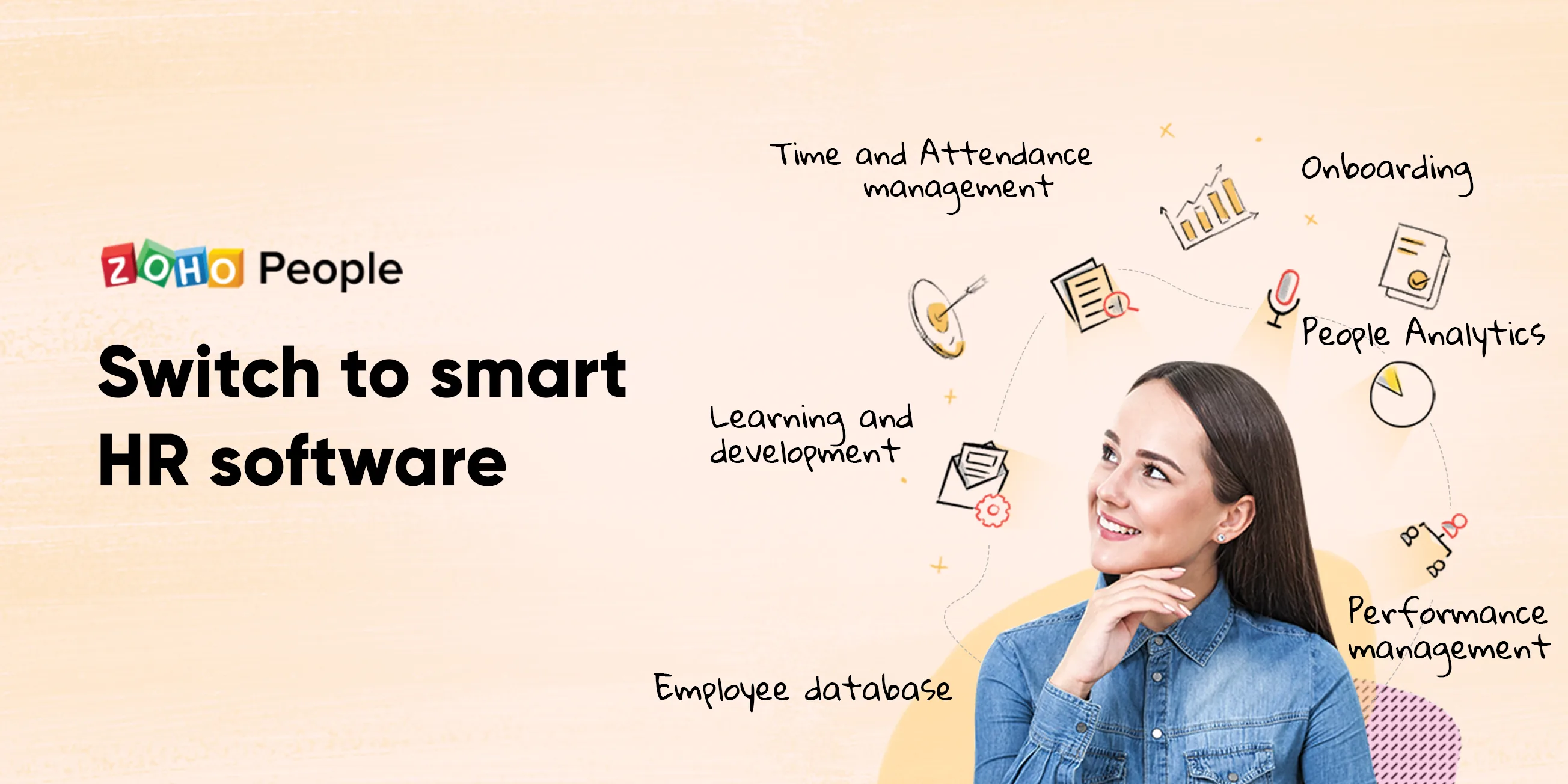
Zoho People is a credible HR system of record for small and mid-sized organizations, particularly those already invested in the Zoho ecosystem. The core modules - Employee Database, Onboarding, Time Off, Self-Service, Org Chart - cover the day-to-day operations most teams currently spread across spreadsheets, email, and point tools. Configuration takes longer than vendors typically advertise, but the result pays back the time within the first month.
The economic case is strongest for teams already running other Zoho apps. If you are using Zoho CRM, Zoho Books, or Zoho Mail, adding Zoho People via the Zoho One bundle at $37 per user per month annually typically replaces standalone subscriptions to BambooHR, Gusto add-ons, or similar HR tools and breaks even quickly. If HR is the only Zoho app you need, evaluate standalone Zoho People against dedicated HRIS platforms on functionality fit rather than price alone.
Where Zoho People fits less well: organizations that need deep payroll built directly into the HRIS (Zoho Payroll is a separate product and is not available in every country), and teams that prioritize a polished consumer-grade UI above feature breadth. For teams that have outgrown spreadsheets and want a system that handles records, onboarding, time off, and self-service without breaking the budget, Zoho People is a defensible choice.
Frequently Asked Questions
Does Zoho People include payroll, or do I need Zoho Payroll separately?
Zoho People does not include payroll processing. Payroll is handled by Zoho Payroll, a separate product that integrates natively with Zoho People and is currently available in select countries (the United States, India, and the UAE among them). For other regions you will need to integrate with a local payroll provider via Zoho Flow or export data manually each pay cycle.
Can employees access Zoho People from a mobile app?
Yes. Zoho People has dedicated mobile apps for iOS and Android. Employees can submit time off requests, check leave balances, view the directory, clock in and out for attendance, complete onboarding tasks, and access announcements from their phones. Managers can approve leave and view direct reports from the mobile app as well.
How does Zoho People handle multi-country employee records?
Zoho People supports multi-country setups through the Locations module. Each location gets its own time zone, public holiday calendar, working hours, weekend definition, and currency. Leave types can be scoped to specific locations so a UK employee sees UK statutory entitlements while a US employee sees US PTO policies. Onboarding workflows can branch conditionally based on country to handle region-specific paperwork like US I-9 forms or UK right-to-work checks.
Can I customize onboarding workflows for different roles?
Yes. Zoho People lets you create multiple onboarding workflows and assign each to specific departments, designations, locations, or employment types. A typical configuration uses a separate workflow per major job family or per country. Within each workflow you can use conditional steps that branch based on employee fields, so a single workflow can adapt without needing dozens of near-identical copies.
What happens to employee data if we cancel Zoho People?
Zoho provides data export tools that let administrators download employee records, time off history, performance reviews, and document attachments before cancellation. Exports come in standard formats (CSV for tabular data, original file formats for documents) so you can import them into a successor system or archive them. Plan the export at least two weeks before your cancellation date and verify the exports are complete before letting the subscription lapse.
Want to learn more about Zoho One?
Related Reading
- Zoho One: Complete Suite Review
- Best AI HR Tools 2026
- Best AI Recruiting Tools
- AI Tools for Small Business
Related Guides
- Zoho Recruit Setup for Staffing Agencies: Pipeline to Placement
- Zoho Connect Team Collaboration Setup
- Zoho Mail Custom Domain Setup: Migrate from Gmail
- Zoho Vault Password Manager Setup: Team Password Sharing Guide
- Zoho Marketing Automation Guide
External Resources
- Zoho One pricing - All Employee and Flexible User plans; Zoho People is included in every Zoho One subscription
- Zoho CRM pricing - CRM tiers for teams connecting HR data to sales pipelines
- Zoho Books pricing - accounting tiers for payroll-adjacent financial workflows
- Zoho Mail pricing - email tiers relevant to onboarding communication setup
- Zoho People product page - official feature overview and module catalog.
- Zoho People admin guide - configuration documentation for org setup, roles, leave, and onboarding.
- Zoho People community forum - peer answers, workaround patterns, and feature requests.
Related Guides
- Apollo Sequences Automated Outreach: Complete 2026 Guide
- Elevenlabs Zapier Integration: Complete 2026 Guide
- How to Summarize Meetings with AI: Never Miss Action Items
- Migrate HubSpot to Zoho CRM: Sales Team Guide 2026
- Zoho AI Agents: Step-by-Step Zia Agent Studio Setup
- Zoho AI Guide: Zia Features, Pricing, and Use Cases 2026
- Zoho Assist Setup Guide: Free Remote Support for IT
- Zoho Bookings Setup: Schedule Appointments Fast
- Zoho Books API Guide: OAuth, Endpoints, Webhooks
- Zoho Books GST Filing Guide for Indian Businesses