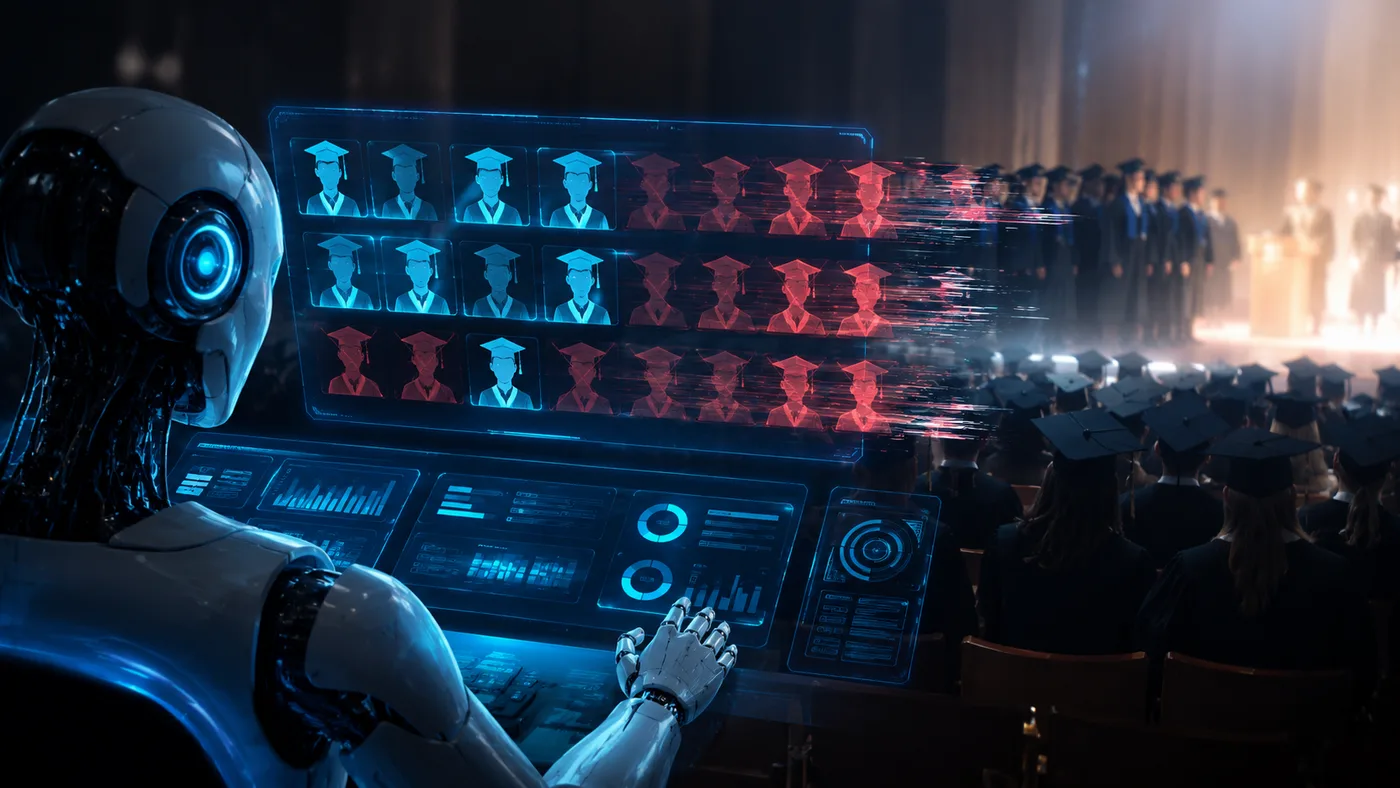
Hundreds of graduates walked across a stage this spring to silence - or worse, the wrong name - after a college deployed an AI system to handle commencement announcements and it allegedly missed hundreds of students entirely. The crowd responded with boos.
Graduation ceremonies are close to the worst possible environment to beta-test an automated name system. Names are deeply personal, the audience is thousands of people who waited years for this moment, and there is no graceful recovery when the system skips your name in front of your family. AI text-to-speech systems have improved steadily on common English names, but they break down on names from non-Western languages, hyphenated names, and names with unconventional spellings - which describes a substantial share of any real graduating class. A system that clears 95% accuracy in internal testing still fails roughly 1 in 20 people. At a ceremony of 2,000 graduates, that's 100 names dropped.
The pattern here is familiar: a school adopts an "AI solution" without pressure-testing it against the actual diversity of their student population. Vendors tend to benchmark on generic datasets that skew heavily toward common American names. The fix is straightforward - require vendors to provide failure-rate data specifically on names matching your student body's language backgrounds before signing anything, and keep a human operator in the loop with a live fallback mic. An AI that reads 95% of names correctly is a liability at a ceremony, not an asset.