


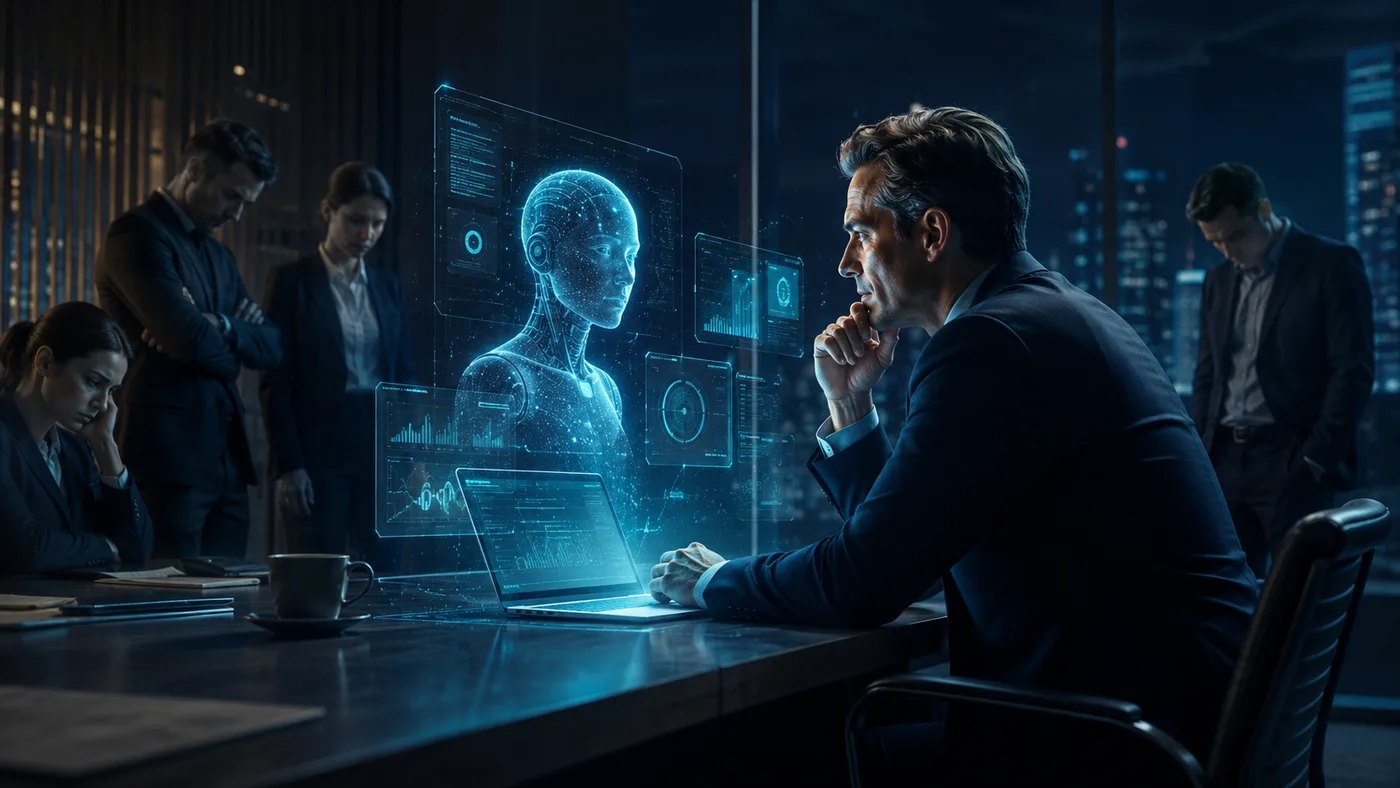
What happens when the person with final say over a decision can't tell a hallucination from a fact? A lot of workers are finding out right now.
A pattern is playing out in offices across industries: executives copy something into ChatGPT, read the output once, and run with it - more confident in what the model returned than in what their own team told them. No prompt iteration, no cross-checking, no asking whether the model even had access to the right information. Just paste and proceed.
The core problem isn't that executives use AI. It's that they're using it as a black box they trust unconditionally, while treating it like a neutral expert that's done actual research. ChatGPT is not doing research. It's generating plausible-sounding text based on patterns in its training data. When you ask it about your company's specific procedures, competitor pricing, or current regulations, it doesn't know any of that - it estimates, and its estimates can be completely wrong in ways that look exactly like correct answers.
What Makes This Different From Other Bad Decision-Making
Leaders have always made decisions with incomplete information. That's not new. What's new is the false precision AI adds. A VP who asks three colleagues and gets three vague answers understands the information is uncertain. A VP who gets a clean five-paragraph ChatGPT response with bullet points and confident language gets no such signal. The model writes with the same tone whether it's 95% accurate or making things up entirely.
This is the hallucination problem (when a model generates false information presented as fact) in its most damaging form - not a rare edge case, but a routine event that most non-technical users have no way to detect.
There's also the skills erosion angle. When a manager stops asking their analyst for input because ChatGPT answers faster, two things happen. The analyst's judgment stops being tested and developed. And the manager loses their ability to tell when the AI is wrong, because they've stopped calibrating against human expertise.
What Responsible AI Delegation Actually Looks Like
The executives doing this well are treating AI outputs as a first draft, not a final answer. They use ChatGPT to structure a problem, draft an outline, or summarize a long document - and then they bring that draft to the people who actually know the domain. The AI accelerates the work; it doesn't replace the person who knows what they're talking about.
For anyone managing upward through this problem: the most effective frame isn't "ChatGPT is unreliable" (that argument rarely lands with a confident user). It's showing specific cases where the output was wrong about something verifiable. Once a decision-maker has seen a hallucination they would have caught if they'd checked - and especially once they've seen one that caused a real problem - the dynamic tends to shift.
The companies that will use AI well over the next few years are not the ones whose leaders trust it most. They're the ones whose leaders understand what it can and can't do - and build review habits around the gaps.