



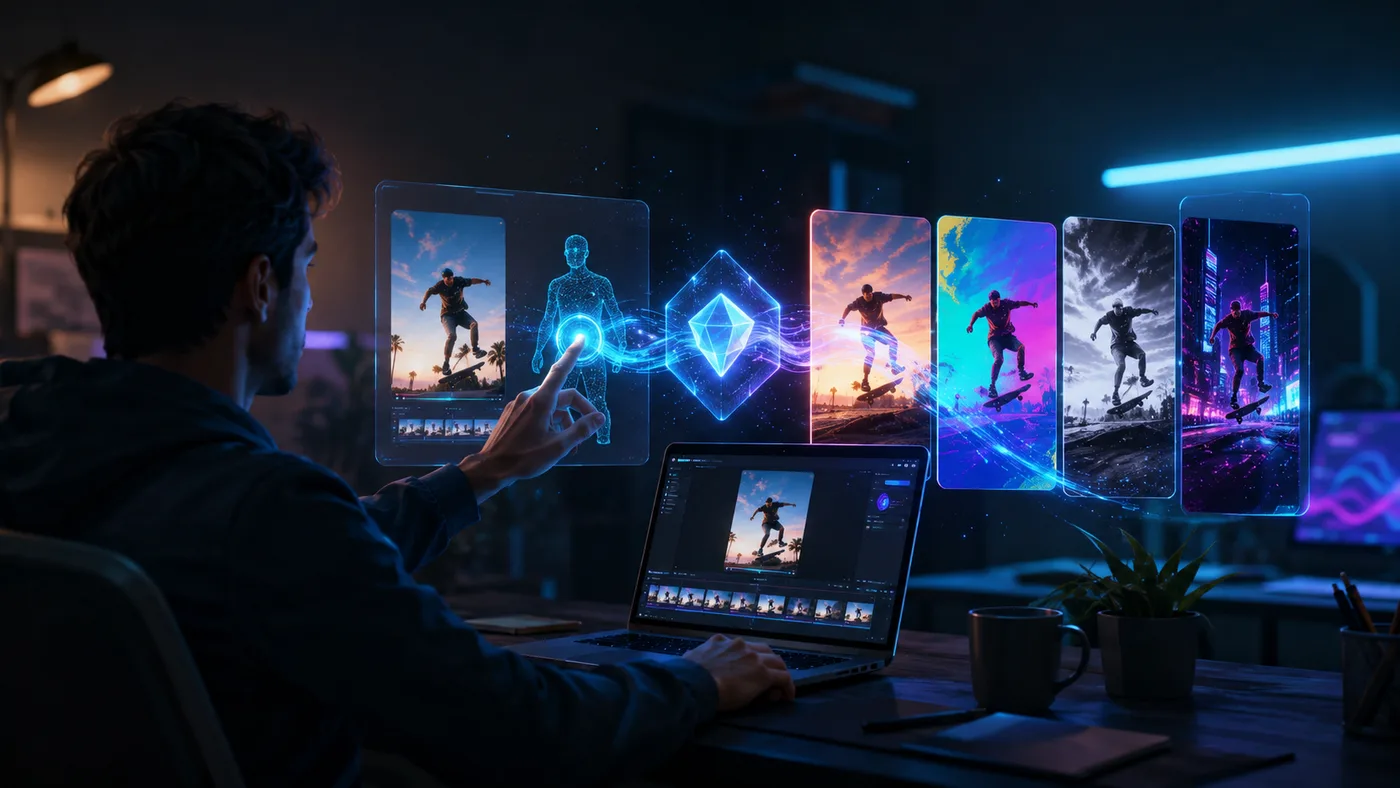
Google has added an AI remix feature to YouTube Shorts that lets you restyle any public clip or digitally insert yourself into it, powered by Gemini Omni (Google's multimodal AI model that processes video, audio, and text together).
The feature shows up at the bottom of any Short as a remix icon. Tap it, choose "reimagine," and you can type a prompt to transform the visual style of the clip - turning a cooking video into a cartoon, for example - or use your own camera to place yourself inside someone else's video. Google announced the feature on May 20.
For content creators on short-form video, this changes the remixing workflow significantly. Previously, building on another creator's video meant screen-recording it, importing it into a separate editing app, and manually compositing your footage on top. Now it's a few taps inside YouTube itself.
Who Actually Controls This
The feature uses existing YouTube content permissions. Creators can already restrict whether their Shorts appear in remix tools, so the "reimagine" option only shows up on clips where the original uploader hasn't blocked it. That's a reasonable guardrail, though it also means the most viral or commercially sensitive clips will likely be off-limits.
The self-insertion angle is the more technically aggressive piece. Placing yourself into someone else's video - even with their permission - creates obvious questions about misuse: putting a real person's face in a context they didn't consent to, or cloning the visual style of a creator without credit. Google hasn't published detailed policy language on what's prohibited beyond its existing synthetic media rules.
Practical Implications for Creators
For marketers and social media managers, the style-transfer capability is immediately useful. You can take a trending Short and recreate its aesthetic for your own content rather than reverse-engineering the look manually. Duet-style response videos also become faster to produce.
The self-insertion feature will likely appeal most to reaction and commentary creators who currently rely on picture-in-picture overlays. Whether the output quality is good enough to replace dedicated tools like Adobe Express or D-ID for polished production is the real test - and that depends on how precise Gemini's compositing is with real-world lighting and movement.
YouTube hasn't released a timeline for broad rollout. The feature appears to be in early availability, with full details in the company's announcement.