


Flux alternatives are AI image generation models and platforms that compete with Black Forest Labs’ open-source Flux.1 Schnell and Dev variants. Top options include Midjourney, which sets the industry standard for artistic quality and refined aesthetics, and Ideogram, which leads the market on accurate text rendering within generated images in 2026.
Flux has earned a strong reputation in the AI image generation space. The open-source Flux.1 models from Black Forest Labs - particularly the Schnell (fast) and Dev variants - produce high-quality photorealistic images with impressive prompt adherence, and the model architecture has been widely adopted across third-party platforms and self-hosted deployments.
But Flux isn’t always the right tool. Whether you’re running into limitations with Flux’s text rendering, looking for a fully managed platform that removes the self-hosting complexity, or simply want to compare the quality of different approaches before committing, the alternatives are strong in 2026.
This guide covers the best Flux alternatives, with a particular focus on Midjourney - which continues to set the industry standard for artistic quality - and Ideogram - which leads the market on accurate text rendering within images.
The AI image generation field is evolving rapidly. Black Forest Labs, the team behind Flux, has published technical details on the model architecture that explain its strengths in photorealism and prompt adherence. The Artificial Analysis text-to-image leaderboard on Hugging Face provides independent benchmark comparisons across major image generation models including Flux, Midjourney, and others. For teams producing commercial visual content, Adobe’s guidance on AI image generation for professional use covers licensing considerations that matter when choosing between open-source and commercial tools.
Why People Leave Flux
Flux’s strengths are well-established: fast inference times, strong photorealism, good prompt following, and an open-source model that you can run locally or deploy on infrastructure you control. But several scenarios push users toward alternatives:
Self-hosting complexity. Flux’s best results come from fine-tuned or full-precision versions that require substantial GPU resources. The Hugging Face Diffusers documentation for Flux shows the dependency stack and VRAM requirements involved, and organizations without ML infrastructure often find third-party platforms easier to work with than self-hosted Flux.
Text in images. Flux handles text-in-image generation better than older diffusion models, but it’s not the leader. Ideogram specifically optimized for this use case and consistently outperforms Flux on text accuracy within generated images, a topic also covered in our best AI image generators roundup.
Artistic quality at the highest tier. For professional creative work, concept art, and marketing visuals where aesthetic quality is paramount, Midjourney’s V7 model produces results that are noticeably different - more refined, more coherent, with a distinct artistic polish - than what you get from Flux even with careful prompting.
Streamlined workflow. Flux requires either a third-party platform (Replicate, ComfyUI, fal.ai) or self-hosting. Users who want a polished, purpose-built experience often find Midjourney or Ideogram’s native platforms more productive.
The Best Flux Alternatives in 2026
Each alternative carries its own tradeoffs - none of them is a universal upgrade over Flux. Midjourney’s drawbacks are no free tier, no self-hosting, and an interpretive prompt style that frustrates users who want literal control. Ideogram’s limitations show up on photographic realism and on volume pricing. The summaries below cover both the strengths and the honest downsides of each tool.
1. Midjourney - Best for Artistic Quality
Midjourney remains the gold standard for pure artistic image quality in 2026. The V7 model - released in April 2026 and now the default per the Midjourney Version documentation - produces images with a level of coherence, texture richness, and creative vision that’s immediately recognizable. Hands are rendered correctly, proportions hold up under scrutiny, and the model’s understanding of artistic styles and composition is unmatched.
How Midjourney compares to Flux:
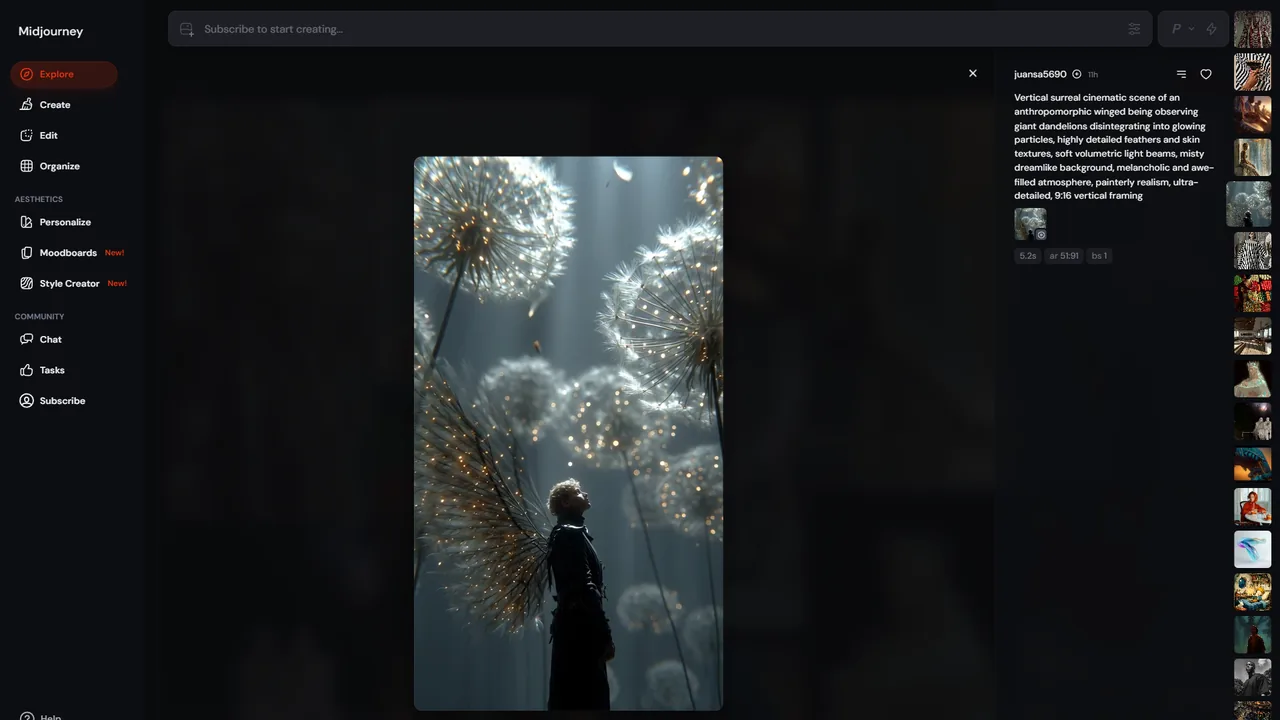
Flux is a strong model, and in raw photorealism benchmarks the gap between Flux.1 [dev] and Midjourney V7 is smaller than it once was. But Midjourney wins decisively on:
- Artistic coherence: Midjourney’s V7 understands composition, light, and aesthetic intent at a deeper level. Complex scenes with multiple subjects maintain internal consistency.
- Creative direction: Midjourney interprets stylistic prompts with more nuance. “In the style of a 1970s science fiction novel cover” produces work that feels more like that aesthetic rather than a surface-level approximation.
- Image polish: The final output from Midjourney V7 has a quality that professional designers describe as “already finished.” Flux outputs, particularly from faster variants, sometimes need additional refinement passes.
- Personalization: After rating 200 images, Midjourney learns your aesthetic preferences and starts tailoring outputs to what you respond to, a workflow described in the Midjourney Personalization guide. This is a unique feature with no direct equivalent in Flux.
Where Flux has advantages over Midjourney:
- Free access: Flux models are open-source and can be run free with sufficient hardware - Black Forest Labs publishes weights on the Black Forest Labs Hugging Face organization. Midjourney requires a paid subscription with no free tier.
- Self-hosting control: For organizations with data privacy requirements, running Flux locally is an option Midjourney doesn’t offer.
- Text in images: Flux generally outperforms Midjourney on accurate text rendering within images (though Ideogram leads both on this specific task).
- API access: Flux is more accessible for programmatic integration via providers like Replicate’s Black Forest Labs collection. Midjourney’s API is available but less standardized.
Midjourney Pricing:
| Plan | Monthly | Annual (per month) | Fast GPU Time |
|---|---|---|---|
| Basic | $10 | $8 | 3.3 hours/month |
| Standard | $30 | $24 | 15 hours/month + unlimited Relax |
| Pro | $60 | $48 | 30 hours/month + unlimited Relax |
| Mega | $120 | $96 | 60 hours/month + unlimited Relax |
As detailed on the Midjourney plans page, the Standard plan at $30 per month ($24 per month annually) is the sweet spot for most users. It provides 15 hours of Fast GPU time plus unlimited image generation in Relax mode, which produces full-quality images with a slightly longer wait. This is sufficient for most professional creative workflows.
The Pro plan adds video generation in Relax mode, Stealth mode (private images), and 12 simultaneous Fast jobs - useful for agencies and production workflows.
What the V7 model brings:
The V7 model represents a significant leap from V6. Improvements include:
- Substantially better coherence for human bodies, hands, and faces
- Richer, more detailed textures across all subjects
- Improved Draft Mode: 10x faster rendering at half the cost, useful for rapid iteration before committing to full-quality generation
- Omni Reference: advanced reference mode that allows more precise style and subject guidance
- Enhanced personalization that adapts to individual aesthetic preferences
Who should use Midjourney instead of Flux:
- Professional designers and artists who need the highest possible image quality
- Marketing teams producing visual content for commercial use (all paid plans include commercial rights)
- Concept artists working on games, films, or advertising
- Users who find Flux’s deployment complexity frustrating and want a polished, purpose-built platform
- Anyone who values aesthetic quality over total control
2. Ideogram - Best for Text in Images
Ideogram is the standout choice when your use case involves readable text within generated images. This is a niche but important use case: creating social media graphics with overlaid text, generating product mockups with label copy, designing logos or title cards, or producing any image where words need to be legible and correctly spelled.
Flux improved text rendering significantly with the Flux.1 models, but Ideogram built text accuracy as a core design goal from the start, as outlined on the Ideogram about page. The platform uses a different architectural approach to text rendering that produces correctly spelled, well-formatted text within images at a rate that other models can’t match.
Ideogram’s strengths as a Flux alternative:
Typography and legibility. Ideogram consistently produces correctly spelled, cleanly rendered text within images. This sounds basic but remains genuinely hard for most diffusion-based models. In direct comparisons, Ideogram’s text accuracy rate is substantially higher than Midjourney, DALL-E 3, or standard Flux outputs.
Design-oriented outputs. Ideogram’s model is trained with a strong sense of graphic design principles - layouts that use negative space well, typographic hierarchy that makes sense, compositions that look intentionally designed rather than photographically generated. This makes it particularly useful for UI mockups, marketing materials, and graphic design work.
Style consistency. Ideogram 2.0 introduced significant improvements to style adherence and consistency across generations, documented on the Ideogram 2.0 launch announcement. For brand work that requires repeating a specific visual style across multiple assets, Ideogram maintains that consistency better than many competitors.
Canvas editor. Ideogram provides a built-in canvas for combining AI generations with editing tools - cropping, inpainting, adding elements. This makes it more of a design tool than a pure image generator, which suits certain professional workflows.
Ideogram Pricing:
Ideogram offers a free tier with limited daily generations - useful for evaluation but not sufficient for professional workflows. According to the Ideogram subscription plans, paid options start at around $8 per month (billed annually) for the Basic plan, with the Plus plan at around $20 per month providing higher generation limits and faster queue priority.
Where Flux outperforms Ideogram:
- Photorealistic images: For pure photorealism without text requirements, Flux.1 [dev] and similar models produce more natural, convincing photographs
- Landscape and nature scenes: Ideogram’s design-oriented bias shows in nature photography, where it sometimes over-composes scenes in ways that look slightly artificial
- Custom fine-tuning: Flux models can be fine-tuned on custom datasets for brand-specific or specialized visual styles
Who should use Ideogram instead of Flux:
- Social media managers creating graphics with text overlays
- Brand teams producing marketing materials with taglines, product names, or titles
- Designers creating mockups for websites, apps, or physical products
- Content creators making thumbnails, title cards, or promotional images
- Anyone whose primary frustration with AI image generation is garbled or misspelled text
Comparison Table: Flux vs Midjourney vs Ideogram
| Feature | Flux | Midjourney V7 | Ideogram |
|---|---|---|---|
| Image quality (artistic) | Very Good | Best-in-class | Good |
| Photorealism | Excellent | Excellent | Good |
| Text in images | Good | Limited | Best-in-class |
| Starting price | Free (self-hosted) | $10/month | Free tier / around $8/month |
| Free tier | Yes (open-source) | No | Yes (limited) |
| Commercial rights | Depends on model variant | All paid plans | Paid plans |
| Web interface | Third-party platforms | midjourney.com + Discord | ideogram.ai |
| API access | Yes (via platforms) | Available | Yes |
| Self-hosting | Yes | No | No |
| Video generation | Limited | Pro/Mega plans | No |
| Personalization | No | Yes (V7) | No |
| Style reference | Yes | Yes (Omni Ref) | Yes |
| Inpainting/editing | Via ComfyUI | Partial | Yes (Canvas) |
Other Flux Alternatives Worth Evaluating
The four tools below are real alternatives but each one has clear limitations versus Flux. DALL-E 3 lacks Flux’s prompt adherence, Adobe Firefly trades model quality for licensing safety, Stable Diffusion requires substantial setup work, and Leonardo AI’s quality ceiling is below both Flux and Midjourney. Skip these alternatives if your workflow already runs cleanly on Flux and you do not need the specific tradeoff each one offers.
DALL-E 3 (via ChatGPT or API)
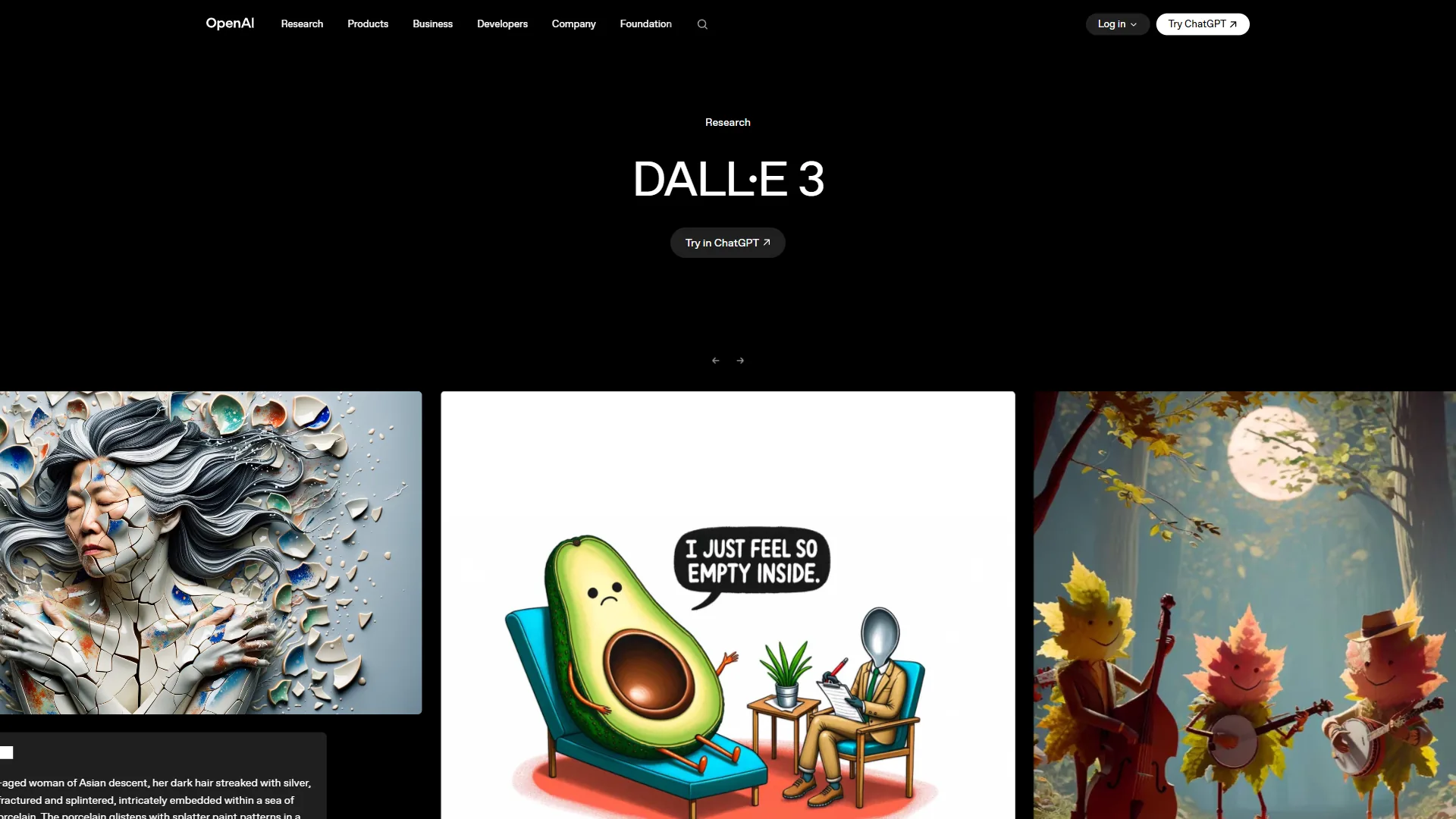
OpenAI’s DALL-E 3 is the most accessible AI image generator for existing ChatGPT users, as detailed in the OpenAI DALL-E 3 announcement and the related OpenAI DALL-E 3 system card research. The image quality is solid - not quite at Midjourney’s artistic level, but better than Flux’s faster variants, and the integration with ChatGPT’s conversational interface makes it uniquely easy to iterate with natural language instructions. DALL-E 3 handles text in images better than Midjourney but worse than Ideogram. For occasional generation without a dedicated image subscription, it’s a natural choice for ChatGPT Plus subscribers.
Adobe Firefly
For commercial work where content licensing provenance matters, Adobe Firefly is the most defensible choice. According to the Adobe Firefly FAQ, the model was trained exclusively on licensed and public domain content, which means organizations with legal departments that scrutinize IP risk can use Firefly without concerns about training data disputes. Image quality has improved substantially with Firefly 3, and deep integration with Photoshop and the Creative Cloud suite makes it the natural choice for teams already using Adobe tools. Pricing is included with Creative Cloud subscriptions or available standalone.
Stable Diffusion (SDXL / SD 3.5)
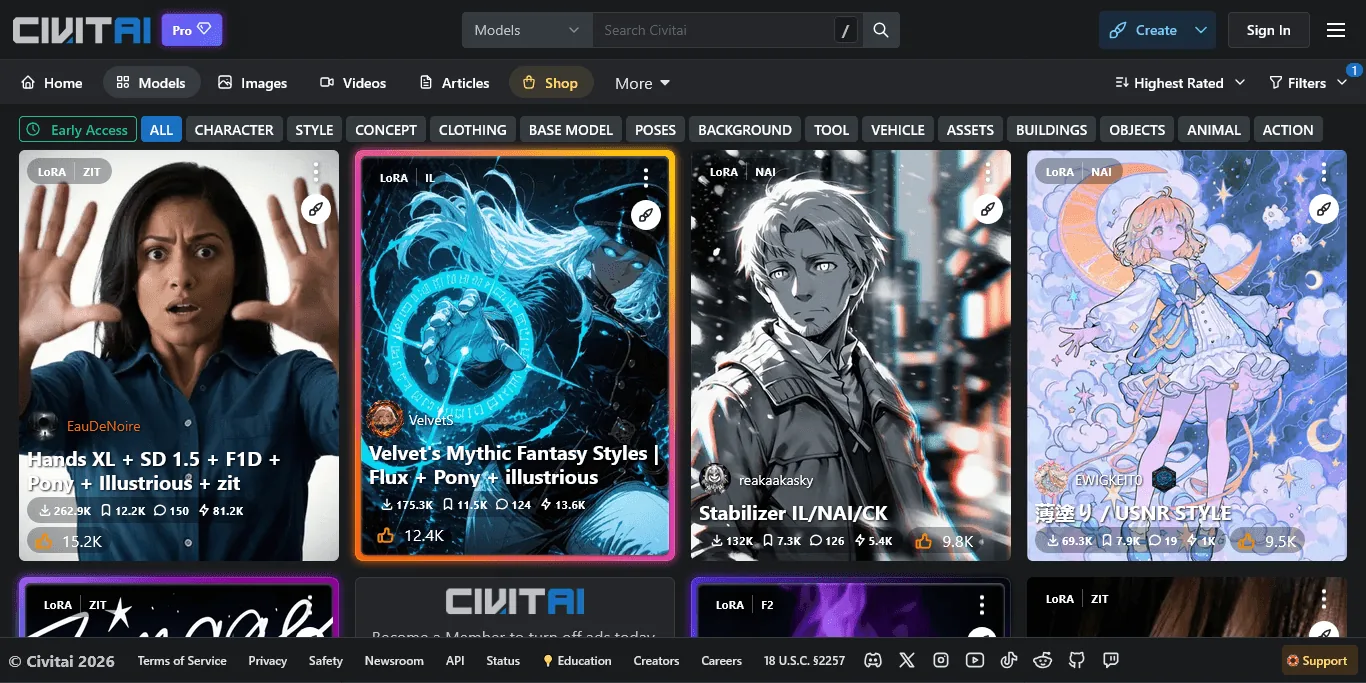
If Flux appeals to you primarily because of its open-source nature and self-hosting capabilities, Stable Diffusion remains the other major open-source option. The SDXL and SD 3.5 models are competitive in quality benchmarks - Stability AI’s SD 3.5 release notes document the architectural changes - and the extensive ComfyUI and Automatic1111 ecosystem provides deep workflow customization. Our Stable Diffusion tutorial walks through setup and prompting techniques, and the broader comparison of open-source image models is worth reading alongside this guide. For users who want fine-grained control, custom LoRA training, and full control over their infrastructure, Stable Diffusion’s community and tooling are more mature than Flux’s.
Leonardo AI
As shown on the Leonardo AI pricing page, Leonardo offers a managed platform built on Stable Diffusion models with a strong focus on consistency - the ability to maintain character and style across multiple generations. The platform includes a generous free tier, ControlNet integration, image-to-image editing, and the option to train custom models on your own images. For users who want Stable Diffusion’s capabilities without self-hosting, Leonardo provides a polished interface. Quality is below Midjourney V7 but above what you’d get from basic Stable Diffusion checkpoints.
Best Picks by Use Case
Choose Midjourney if: Artistic quality is your primary criterion and you’re creating professional creative work - concept art, marketing visuals, product photography mockups, or any images where aesthetic excellence matters. The V7 model is simply better than any other platform for this use case, and the $30 per month Standard plan provides sufficient generation volume for most professional workflows.
Choose Ideogram if: You need readable text within your images. There’s no better tool for this specific requirement. If your workflow involves creating graphics with headlines, product labels, social media copy, or any text that needs to be legible and correctly spelled, Ideogram’s architecture solves the problem that defeats most other models.
Stick with Flux if: You need self-hosting control for data privacy, you want to fine-tune on custom datasets, your workflow is already built around ComfyUI or similar, or you need programmatic API access at scale with predictable costs.
Choose DALL-E 3 if: You’re already paying for ChatGPT Plus and need occasional image generation without a separate subscription. The conversational refinement loop is uniquely intuitive.
Choose Adobe Firefly if: Your organization needs to demonstrate provenance for generated images - IP-safe content created without unlicensed training data.
Pro Tips: What Quality to Expect
It’s worth being concrete about what quality differences actually look like in practice, because the marketing claims from each platform can obscure the real trade-offs. Our AI image generation tips guide covers prompting techniques that help you get better results from any of these tools.
Midjourney V7 produces images that feel crafted. Complex lighting, materials, and scene composition behave according to physical logic. Portrait photography has a professional studio quality. Architectural visualization and product renders have a precision that stands up under close inspection. The weakness is control: Midjourney interprets prompts rather than following them literally, which is either a feature or a bug depending on what you need.
Flux.1 produces images that feel technically correct. The photorealism is strong, edge detail is clean, and the output is predictable relative to your prompt. The weakness is that “technically correct” can shade into “slightly sterile” - images that look generated rather than crafted. The difference is subtle for many use cases but apparent when comparing directly.
Ideogram produces images that look designed. The sense of compositional intentionality is strong, particularly for images that mix text and visual elements. The downside is that photographic realism suffers slightly - skin textures, natural environments, and organic materials look more rendered than Flux or Midjourney at their best.
The Bottom Line
Flux is a strong foundation, but it’s not the only answer.
Midjourney remains the tool to beat for pure artistic quality. If you’re producing professional creative work and care deeply about the aesthetic caliber of your outputs, Midjourney V7 justifies the $10-30/month subscription. The platform’s continued development and personalization features make it a long-term investment rather than a commodity tool.
Ideogram fills a specific and important gap: accurate text rendering within AI-generated images. If that’s your bottleneck, Ideogram solves it more reliably than any other platform, including Flux.
Neither tool replaces Flux for self-hosted, privacy-sensitive, or deeply customized workflows - but for the majority of professional users who want the best possible output from a managed platform, these alternatives deliver.
FAQ
Q: What is similar to flux?
Stick with Flux if: You need self-hosting control for data privacy, you want to fine-tune on custom datasets, your workflow is already built around ComfyUI or similar, or you need programmatic API access at scale with predictable costs.
Q: What are the best Flux alternatives in 2026?
The top Flux alternatives are Midjourney and Ideogram. Midjourney continues to set the industry standard for artistic quality and refined aesthetics, while Ideogram leads the market on accurate text rendering within generated images. Both compete directly with Black Forest Labs’ open-source Flux.1 Schnell and Dev variants across different creative priorities.
Q: Why would someone choose an alternative over Flux?
Users move away from Flux for four main reasons: self-hosting complexity that requires substantial GPU resources, weaker text-in-image rendering compared to Ideogram, lower artistic polish than Midjourney V7 for professional creative work, and a desire for a streamlined, purpose-built workflow instead of third-party platforms like Replicate, ComfyUI, or fal.ai.
Q: Which Flux alternative is best for text inside images?
Ideogram is the strongest alternative for text rendering within generated images. While Flux handles text-in-image generation better than older diffusion models, it is not the leader in this area. Ideogram specifically optimized for this use case and consistently outperforms Flux on text accuracy within generated images in 2026.
Q: Which alternative delivers the highest artistic quality?
Midjourney is the gold standard for artistic image quality in 2026. The V7 model, released in April 2026 and now the default, produces images with coherence, texture richness, and creative vision that are noticeably more refined than Flux output even with careful prompting - especially for concept art, marketing visuals, and professional creative work.
Related Reading
- Midjourney Review
- Flux Review
- DALL-E 3 - OpenAI image generator accessible via ChatGPT
- Stable Diffusion - Open-source image generation with extensive community tooling
- Best AI Image Generators for Professional Marketing
- Midjourney vs DALL-E 3: Complete Feature Comparison
- Stable Diffusion Alternatives 2026 - Open-source and commercial alternatives to Stable Diffusion
- Midjourney Prompt Engineering 2026: Write Better Prompts, Get Better Images