
The Claude Certified Architect exam guide is a preparation resource for Anthropic’s CCA-F certification: a 60-question, 120-minute proctored exam requiring 720 out of 1,000 to pass, covering the Claude API, Claude Code, and Model Context Protocol integrations.
Anthropic’s Claude Certified Architect - Foundation (CCA-F) exam, delivered as the Claude Certified Architect Skilljar course on the Anthropic Academy, has quickly become the most sought-after AI certification for developers building production systems with large language models. Unlike vendor-neutral AI certifications that test theoretical knowledge, the CCA-F validates hands-on ability to design, implement, and optimize Claude-powered applications across real-world architectures.
Whether you are an AI engineer preparing for the exam, a team lead evaluating whether the certification is worth the exam cost and investment, or a developer searching for a Claude Certified Architect exam guide pdf or a Claude certified architect exam guide free preview before paying - this Claude Certified Architect exam guide covers everything the competitor articles leave out, including practice questions and answers, actual code patterns, MCP server examples, CLAUDE.md configuration strategies, and the exam-day logistics that nobody else bothers to document.
What Is the Claude Certified Architect Exam?
The CCA-F is Anthropic’s official foundation-level certification validating proficiency in designing and deploying Claude-based applications. Launched in late 2025 through the Anthropic Academy on the Skilljar platform, it targets developers and architects who build production systems using the Claude API, Claude Code, and the broader Anthropic ecosystem.
Exam Format at a Glance
| Detail | Specification |
|---|---|
| Exam Code | CCA-F |
| Questions | 60 multiple-choice |
| Duration | 120 minutes |
| Passing Score | 720 out of 1,000 |
| Proctoring | Online, proctored via Skilljar |
| Cost | Included with Anthropic Academy enrollment |
| Retake Policy | 14-day waiting period after a failed attempt |
| Validity | 2 years from passing date |
The 720/1,000 passing threshold translates to roughly 72% accuracy, but the scoring is weighted - questions in higher-weight domains contribute more to the final score, which is why a timed Claude Certified Architect practice exam routine matters. This means strong performance in Model Context Protocol (18%) or API Integration (22%) can compensate for weaker areas.
Who Should Take This Certification?
The CCA-F is designed for practitioners with at least 3-6 months of hands-on Claude development experience. The ideal candidate has:
- Built at least one production application using the Claude API
- Worked with prompt engineering beyond basic chat completions
- Some familiarity with tool use, function calling, or agentic patterns
- Experience with at least one Claude deployment pattern (API, Claude Code, or enterprise)
Developers coming from a pure front-end or no-code background may find the exam challenging without dedicated preparation, particularly the API Integration and MCP domains.
What Are the Five CCA-F Exam Domains and Their Weightings?
The CCA-F exam is organized into five domains, each with a specific weight that determines how many questions and scoring points it contributes. Understanding these weights is critical for prioritizing study time.
Domain 1: Claude API and SDK Integration (22%)
This is the heaviest domain and covers the mechanics of building with Claude’s APIs. Expect questions on:
- API request structure - Messages API format, system prompts, role-based messaging
- SDK usage - Python and TypeScript SDK patterns, error handling, retry logic
- Streaming - Server-sent events, chunked responses, handling partial outputs
- Authentication - API key management, organization-level access, rate limiting
- Batching - Batch API for high-volume processing, cost optimization
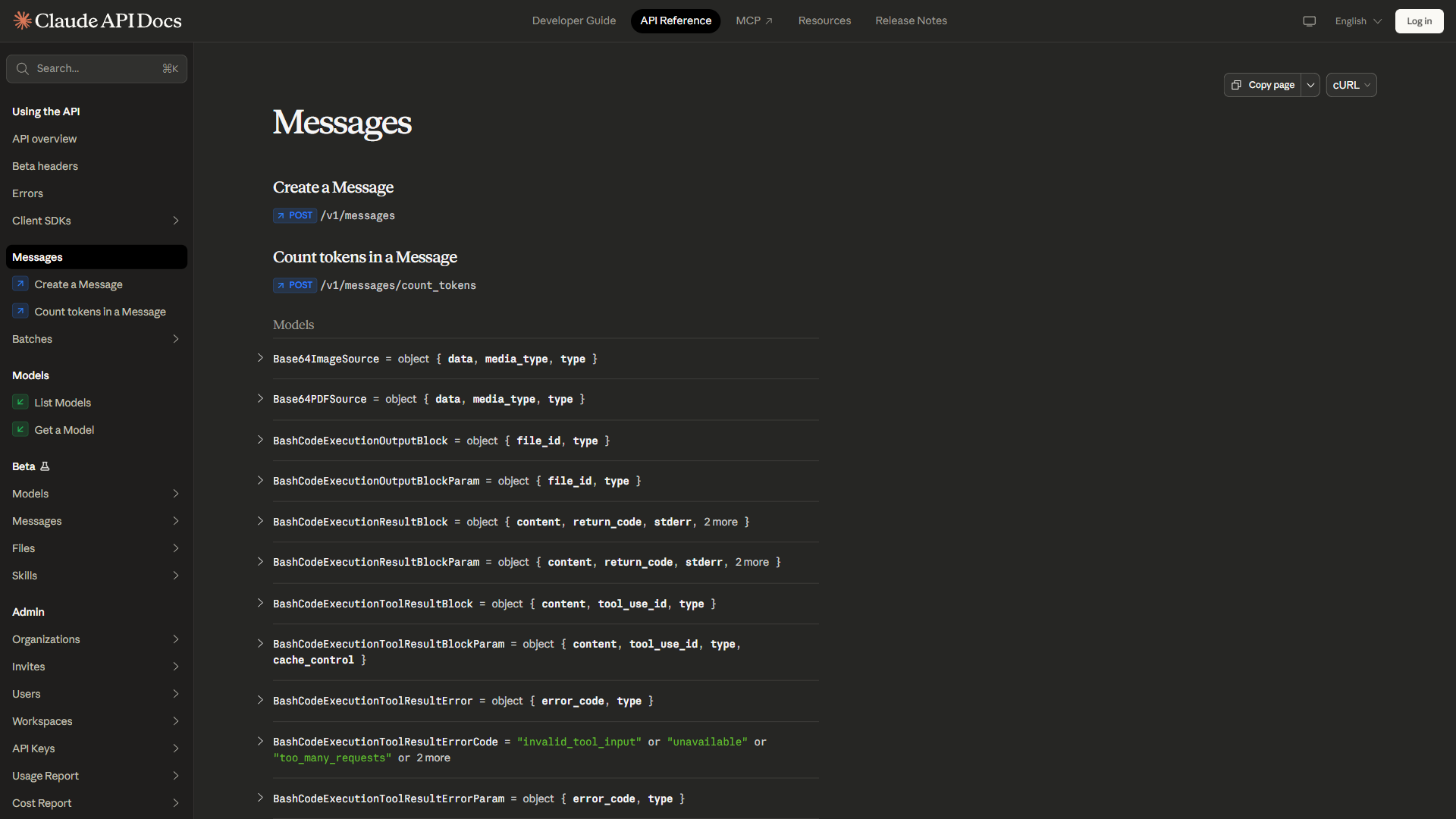
Practitioner tip: The exam tests real API patterns, not just conceptual understanding. Know the difference between messages.create() and messages.stream(), understand how to structure multi-turn conversations with the messages array, and be comfortable with error codes (429 for rate limits, 529 for overloaded).
A common question pattern involves identifying the correct API call structure for a given scenario. For example:
# Know when to use streaming vs. standard requests
# Standard - best for short, deterministic responses
response = client.messages.create(
    model="claude-sonnet-4-20250514",
    max_tokens=1024,
    messages=[{"role": "user", "content": "Summarize this document."}]
)

# Streaming - best for real-time UX, long responses
with client.messages.stream(
    model="claude-sonnet-4-20250514",
    max_tokens=4096,
    messages=[{"role": "user", "content": prompt}]
) as stream:
    for text in stream.text_stream:
        print(text, end="", flush=True)
Domain 2: Prompt Engineering and Optimization (20%)
The second-heaviest domain covers the art and science of getting optimal outputs from Claude. Key topics include:
- System prompt design - Role assignment, behavioral constraints, output formatting
- Few-shot and chain-of-thought - When to use examples vs. reasoning instructions
- Temperature and sampling - How
temperature,top_p, andtop_kaffect outputs - Context window management - Strategies for 200K token windows, chunking long documents
- Prompt caching - Cache-control headers, cost savings on repeated prefixes
Practitioner tip: The exam loves scenario-based questions where you must choose the best prompt strategy for a given use case. “A customer wants Claude to extract structured data from legal contracts - which approach minimizes hallucination?” Knowing when to use XML tags for structured output versus JSON mode versus few-shot examples is heavily tested.
Domain 3: Model Context Protocol (MCP) (18%)
MCP is the domain where most candidates struggle - and where this guide provides the most value over competitor resources. MCP is Anthropic’s open protocol for connecting Claude to external tools, data sources, and services. The exam tests both conceptual understanding and implementation patterns. Our Claude Code MCP servers guide covers practical server building beyond what the exam asks.
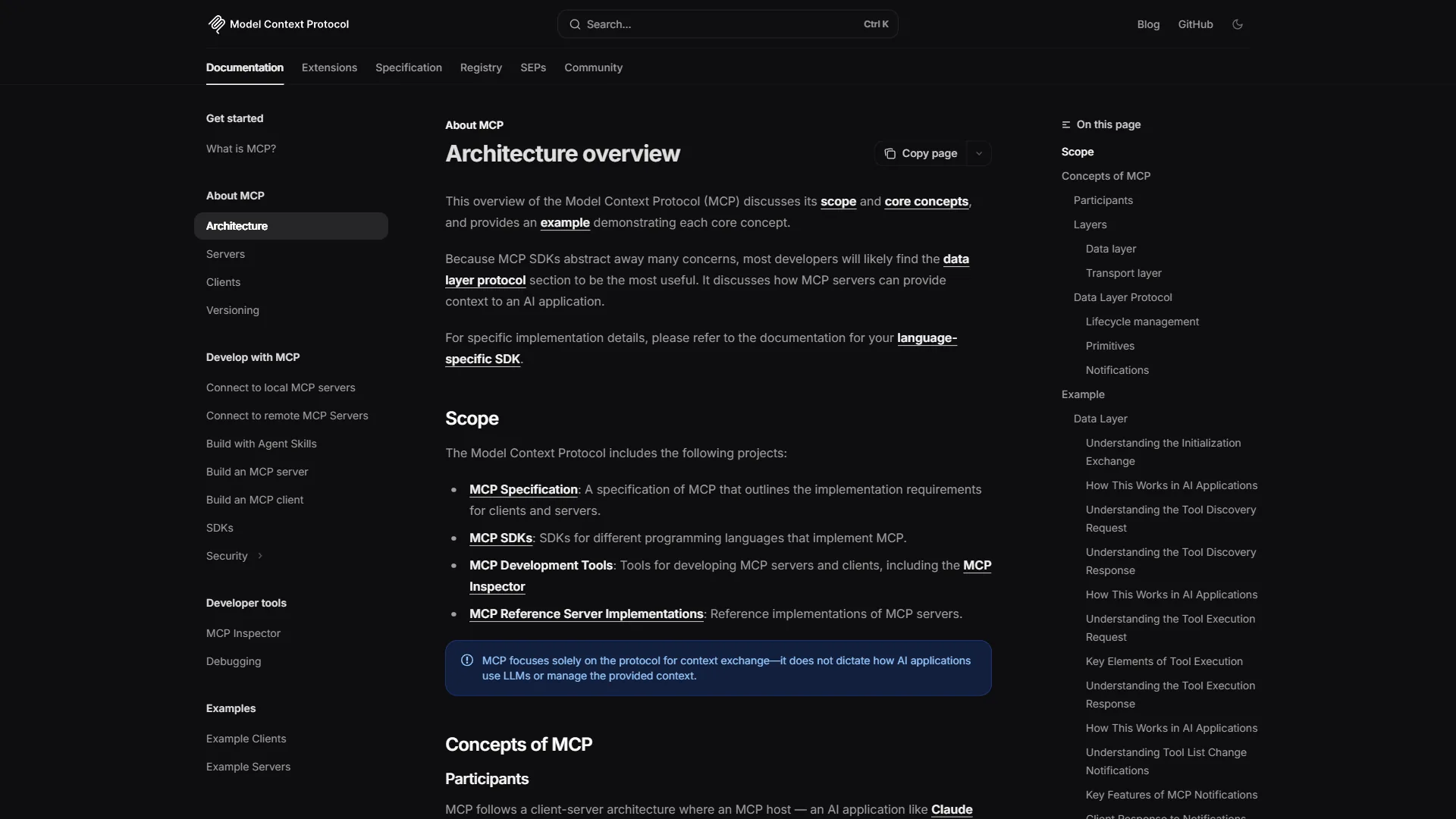
Core MCP concepts tested:
- Architecture - Client-server model, transport layers (stdio, SSE), capability negotiation
- Tools - Defining tool schemas, input validation, handling tool results
- Resources - Exposing data sources to Claude, URI templates, resource subscriptions
- Prompts - Server-defined prompt templates, argument schemas
- Sampling - Server-initiated LLM requests (the inverse of normal tool use)
Implementation patterns you must know:
# MCP Server - basic tool definition pattern
from mcp.server import Server
from mcp.types import Tool, TextContent

server = Server("example-server")

@server.list_tools()
async def list_tools():
    return [
        Tool(
            name="get_weather",
            description="Get current weather for a city",
            inputSchema={
                "type": "object",
                "properties": {
                    "city": {"type": "string", "description": "City name"}
                },
                "required": ["city"]
            }
        )
    ]

@server.call_tool()
async def call_tool(name: str, arguments: dict):
    if name == "get_weather":
        weather = await fetch_weather(arguments["city"])
        return [TextContent(type="text", text=weather)]
Key exam angles on MCP:
- When to use MCP vs. direct tool use - MCP adds a protocol layer; the exam tests whether you can identify when that overhead is justified (multi-tool orchestration, third-party integrations) versus when direct function calling is simpler
- Security - MCP servers run with host-level permissions. Expect questions on sandboxing, input validation, and the principle of least privilege
- Transport selection - stdio for local tools, SSE for remote servers. Know the tradeoffs
Domain 4: Agent Design and Orchestration (22%)
Tied with API Integration as the heaviest domain, this section covers the patterns for building autonomous and semi-autonomous Claude-powered agents.
Topics tested:
- Agentic loops - ReAct patterns, plan-execute cycles, self-reflection
- Tool orchestration - Multi-tool chains, error recovery, fallback strategies
- CLAUDE.md configuration - Project-level instructions, memory persistence, behavioral constraints
- Claude Code patterns - Terminal-based agentic workflows, worktree management
- Multi-agent architectures - Orchestrator-worker patterns, delegation, context sharing
# Example CLAUDE.md pattern the exam may reference
# Project-level instructions that persist across sessions

## Architecture Rules
- Always use TypeScript for new files
- Database queries must use parameterized statements
- All API endpoints require authentication middleware

## Code Standards
- Maximum function length: 50 lines
- Required: unit tests for all public functions
- Prefer composition over inheritance
Practitioner tip: The exam tests understanding of when to use single-agent vs. multi-agent patterns. A single Claude instance with tools handles most use cases. Multi-agent architectures (with separate planning, execution, and validation agents) become necessary for complex workflows with different security boundaries or specialized model requirements. For comparing the agentic IDE landscape, see our Claude Code vs Aider breakdown.
Domain 5: Safety, Security, and Responsible Deployment (18%)
This domain covers Anthropic’s constitutional AI principles in practice:
- Content filtering - Understanding Claude’s built-in safety layers, when they activate, how to work within them
- Data privacy - API data retention policies, enterprise data handling, PII considerations
- Jailbreak resistance - System prompt hardening, input validation, adversarial testing
- Responsible scaling - Usage policies, acceptable use, monitoring for misuse
- Evaluation and testing - Red-teaming approaches, bias detection, output quality metrics
Practitioner tip: Do not underestimate this domain. Many developers focus entirely on the technical domains and lose critical points on safety questions. Anthropic takes its safety mission seriously, and the exam reflects that. Know the difference between Claude’s refusal behaviors (hard refusals vs. soft caveats) and understand when system prompts can and cannot override default safety behaviors.
How Should You Structure a 4-Week Claude Certified Architect Study Plan?
Based on analysis of successful candidates and the Claude Certified Architect exam guide resources available through Anthropic Academy, here is an optimized study timeline:
Week 1: Foundation (API + Prompt Engineering)
- Days 1-3: Complete Anthropic Academy’s “Building with Claude” course on Skilljar
- Days 4-5: Build a small project using the Messages API - a summarizer, classifier, or Q&A bot
- Days 6-7: Practice prompt engineering patterns - system prompts, few-shot, chain-of-thought
Milestone: You should be able to write a complete API integration from memory, including error handling and streaming.
Week 2: MCP Deep Dive
- Days 1-2: Read the full MCP specification on the official documentation site
- Days 3-4: Build a simple MCP server (file reader, database query tool, or API wrapper)
- Days 5-7: Study transport layers, security patterns, and capability negotiation
Milestone: You should be able to explain MCP architecture to a colleague and implement a basic server with at least two tools.
Week 3: Agent Design + Safety
- Days 1-3: Study agentic loop patterns, build a ReAct-style agent with tool use
- Days 4-5: Configure CLAUDE.md for a sample project, practice Claude Code workflows
- Days 6-7: Review Anthropic’s safety documentation, usage policies, and constitutional AI paper
Milestone: You should understand when to use single vs. multi-agent architectures and be able to articulate Anthropic’s safety framework.
Week 4: Review + Practice
- Days 1-2: Review all five domains with focus on your weakest areas
- Days 3-4: Take practice assessments through Anthropic Academy
- Days 5-6: Review incorrect answers, fill knowledge gaps
- Day 7: Light review only - avoid cramming. Cross-reference our Claude pricing breakdown so you understand which API tiers map to the cost-optimization questions.
Key resource: The Claude documentation and the Anthropic Academy courses on Skilljar are the most important study materials. They are designed by the same team that writes the exam questions.
Sample Questions with Reasoning
Understanding the question style helps enormously. Any Claude Certified Architect exam guide worth reading should include worked examples. Here are representative questions based on the published exam objectives:
Question 1 (API Integration): A developer needs to process 10,000 customer support tickets through Claude for classification. The responses do not need to be real-time. Which approach minimizes cost?
- A) Standard Messages API with streaming
- B) Messages API with prompt caching enabled
- C) Batch API with bulk processing
- D) Multiple parallel streaming requests
Answer: C. The Batch API is designed for high-volume, non-real-time processing and offers a 50% cost reduction compared to standard API calls. Streaming (A, D) adds unnecessary overhead for batch workloads. Prompt caching (B) helps with repeated prefixes but does not match the Batch API discount for pure volume.
Question 2 (MCP): An MCP server exposes a tool that queries a production database. Which security measure is MOST critical?
- A) Rate limiting API calls to the MCP server
- B) Input validation and parameterized queries to prevent injection
- C) Encrypting the MCP transport layer
- D) Logging all tool invocations for audit
Answer: B. While all options are good practices, input validation and parameterized queries directly prevent the highest-severity risk (SQL injection through LLM-generated tool arguments). MCP servers execute with host-level permissions, making injection attacks potentially catastrophic. The MCP transport documentation details the security boundaries.
Question 3 (Agent Design): A team is building an autonomous coding agent that needs to make changes across multiple repositories. Which architecture pattern is most appropriate?
- A) Single agent with all repository access
- B) Orchestrator agent delegating to per-repository worker agents
- C) Sequential pipeline processing one repository at a time
- D) Human-in-the-loop approval for each change
Answer: B. The orchestrator-worker pattern provides security isolation (each worker only accesses its repository), parallel execution, and clear failure boundaries. A single agent (A) violates least-privilege. Sequential processing (C) is unnecessarily slow. Human-in-the-loop (D) removes the autonomy benefit.
What Should You Expect on Exam Day?
Before the Exam
- Environment check: The proctored exam requires a webcam, microphone, and clean desk. Run the system check at least 24 hours before your scheduled time
- ID verification: Have a government-issued photo ID ready
- Browser: Use the latest Chrome or Firefox. Disable browser extensions that might interfere with Skilljar’s proctoring software
- Internet: A stable connection with at least 5 Mbps is recommended. Have a backup hotspot available
During the Exam
- Time management: 120 minutes for 60 questions gives you exactly 2 minutes per question. Flag difficult questions and return to them - do not get stuck on any single question
- Question style: Most questions present a scenario and ask for the best approach. Read all four options completely before selecting - the exam frequently includes “good but not best” distractors
- Domain markers: Questions are not labeled by domain, but the topic is usually obvious. If you notice you are spending too much time on safety questions, skip ahead and return later
If You Do Not Pass
The 14-day mandatory waiting period between attempts is enforced by the Skilljar platform. There is no limit on the number of retakes, but each attempt after the first may require re-enrollment. Use the waiting period productively:
- Review your domain scores - The results report shows performance by domain. Focus your restudy on the weakest area
- Build something - The exam tests practical knowledge. Building a small project in your weak domain is more effective than re-reading documentation
- Revisit MCP and Safety - These two domains account for 36% of the exam and are where most retake candidates improve the most
How CCA-F Compares to Other AI Certifications
| Certification | Vendor | Focus | Format | Difficulty |
|---|---|---|---|---|
| CCA-F (Claude Certified Architect) | Anthropic | Claude API, MCP, agents | 60 MCQ, 120 min | Intermediate |
| AWS Machine Learning Specialty | Amazon | SageMaker, ML pipelines | 65 MCQ, 180 min | Advanced |
| Google Cloud Professional ML Engineer | Vertex AI, MLOps | 60 MCQ, 120 min | Advanced | |
| Azure AI Engineer Associate | Microsoft | Azure AI services | 40-60 MCQ, 120 min | Intermediate |
Key differences: The CCA-F is unique in its focus on LLM application architecture rather than general ML/AI infrastructure. AWS, Google, and Azure certifications test broader machine learning concepts - data preprocessing, model training, deployment pipelines - that are irrelevant if your work is primarily building applications on top of foundation models.
For developers who exclusively build with LLMs, the CCA-F is more directly applicable. For those working across the full ML stack (training custom models, managing data pipelines, deploying to edge devices), the cloud provider certifications remain more relevant.
The CCA-F also stands apart in its emphasis on MCP - no other AI certification currently tests knowledge of an open protocol for tool integration. As MCP adoption grows across the industry, this becomes increasingly valuable.
What Are the Most Common CCA-F Exam Mistakes?
Mistake 1: Studying only documentation, not building. The exam tests applied knowledge. Reading the API docs is necessary but insufficient. Build at least two small projects during your preparation.
Mistake 2: Ignoring MCP. At 18% of the exam, MCP questions can make or break a passing score. Many candidates treat this as a minor topic and regret it.
Mistake 3: Underestimating safety. Developers tend to skip safety content, assuming it is common sense. Anthropic’s approach to constitutional AI has specific technical implications that the exam tests in detail.
Mistake 4: Memorizing API parameters instead of understanding patterns. The exam rarely asks “what is the default value of temperature?” It asks “given this use case, which combination of parameters produces the most reliable output?”
Mistake 5: Not using the Anthropic Academy resources. The Skilljar courses are free with enrollment and closely mirror the exam content. Skipping them in favor of third-party study materials is a common error. Pair the Academy with the Anthropic Cookbook for working code references.
Is the CCA-F Worth It?
The certification’s value depends on your career context:
Strong yes if you:
- Work at a company building on Claude’s API and need to demonstrate expertise
- Are a consultant or freelancer positioning yourself for AI architecture engagements
- Lead a team and want a standardized benchmark for Claude proficiency
- Are job-seeking in the AI engineering space - the CCA-F is increasingly listed in job postings
Maybe not if you:
- Use Claude casually through the web interface only
- Work exclusively with other LLM providers and have no plans to adopt Claude
- Already have extensive production Claude experience and do not need credential validation
The certification carries weight because Anthropic is selective about what it validates. Unlike some vendor certifications that test product awareness, the CCA-F requires genuine architectural understanding. Hiring managers in the AI space recognize this distinction.
The Bottom Line
The Claude Certified Architect - Foundation exam is a rigorous but fair assessment of your ability to build production systems with Claude. The five domains cover the full lifecycle from API integration through safety deployment, with particular emphasis on the emerging MCP protocol and agentic design patterns that define modern LLM architecture.
The most effective preparation strategy combines structured learning through Anthropic Academy with hands-on project building. Focus your study time proportionally to domain weights, dedicate extra attention to MCP (the domain most candidates underestimate), and approach the safety domain with the same seriousness as the technical ones.
For developers already building with Claude, the exam validates skills you are already developing. For those new to the ecosystem, the preparation process itself is one of the fastest paths to Claude proficiency.
FAQ
Q: How hard is it to pass the ARE exam?
Practitioner tip: Do not underestimate this domain. Many developers focus entirely on the technical domains and lose critical points on safety questions.
Q: What is the Claude Code exam for architecture?
The Claude Certified Architect - Foundation exam is a rigorous but fair assessment of your ability to build production systems with Claude.
Q: How much does Claude certification cost?
Question 1 (API Integration): *A developer needs to process 10,000 customer support tickets through Claude for classification. The responses do not need to be real-time.
Q: How to pass the Google cloud Architect exam?
| Certification | Vendor | Focus | Format | Difficulty | |---------------|--------|-------|--------|------------| | CCA-F (Claude Certified Architect) | Anthropic | Claude API, MCP, agents | 60 MCQ, 120 min | Intermediate | | AWS Machine Learning Specialty | Amazon | SageMaker, ML pipelines | 65 MCQ, 180 min | Advanced | | Google Cloud Professional ML Engineer | Google | Vertex AI, MLOps | 60 MCQ, 120 min | Advanced | | Azure AI Engineer Associate | Microsoft | Azure AI services | 40-60 MCQ, 120 min | Intermediate |
Q: What is the Claude Certified Architect exam?
The CCA-F is Anthropic’s official foundation-level certification validating proficiency in designing and deploying Claude-based applications. Launched in late 2025 through the Anthropic Academy on the Skilljar platform, it targets developers and architects who build production systems using the Claude API, Claude Code, and the broader Anthropic ecosystem.
Related Reading
- Claude AI: Full Platform Review and Ratings
- Claude vs ChatGPT 2026: Complete AI Assistant Comparison
- The Future of AI Coding Assistants: 2026 and Beyond
- AI Pair Programming: Complete Developer Guide for 2026
- Claude Team Plan Privacy: What Admins Can and Cannot See - what workspace admins can and cannot see on Claude Team and Max plans