
AI marketing agents are reshaping how marketing teams work, automating the campaign planning, launch, and optimization that used to eat hours of manual setup. The biggest shift in marketing software this year is not a new feature - it is a new operating model. Instead of building workflows by hand, marketing teams are starting to hand goals to software that plans and runs the work itself. That software is the AI marketing agent, and it is moving from demo to daily driver across email marketing, automation, and campaign management.
This explainer breaks down what AI marketing agents actually are, how autonomous marketing differs from the automation you already know, and how to evaluate the shift. We use ActiveCampaign’s Active Intelligence as the worked example throughout, because it is one of the clearest implementations of agentic features inside a mainstream platform. If you are weighing platforms first, our ActiveCampaign vs Mailchimp comparison covers the fundamentals.
What Are AI Marketing Agents?
AI marketing agents are AI systems that plan, execute, and optimize marketing tasks toward a goal you define, with minimal manual setup. Unlike rule-based automation, which follows fixed if-this-then-that logic you wire together, an agent interprets a plain-language objective, decides the steps itself, runs them across channels, and adjusts based on results.
The distinction matters. Traditional automation is deterministic: you specify every trigger, condition, and action in advance, and the system does exactly that and nothing more. An agent is goal-directed. You tell it what outcome you want - more qualified leads, higher reactivation, better campaign engagement - and it assembles and adapts the path to get there.
That is why AI marketing agents are often described as a move from doing to delegating. The marketer’s job shifts toward defining outcomes, supplying good data, and reviewing results, while the agent handles the assembly and iteration that used to eat hours. In digital marketing, where the number of channels and segments has exploded, that delegation is the difference between scaling output and drowning in setup.
Why is 2026 the inflection point? Two things converged. First, large language models became reliable enough to draft campaigns, interpret loose instructions, and reason about sequencing rather than just generating text. Second, the marketing platforms people already pay for - email, CRM, automation - started embedding those models directly against your live data, so the agent acts inside the tool instead of in a disconnected chat window. The result is software that can read your audience, propose a plan, and execute it without a handoff.
Agents are not magic, though. They depend on clean data, clear goals, and human judgment on brand and strategy - a theme we return to when we look at real results.
AI Marketing Agents vs Traditional Marketing Automation
Rule-based automation and autonomous agents both save time, but they work in fundamentally different ways. Traditional automation executes a plan you built; an autonomous agent builds and revises the plan itself. The table below contrasts the two across the dimensions that matter most to marketing teams choosing between them.
| Dimension | Rule-based automation | Autonomous AI agent |
|---|---|---|
| Setup | You build every trigger, branch, and action manually | You state a goal in plain language; the agent drafts the build |
| Decision-making | Fixed logic decided in advance | The agent chooses steps and reacts to live signals |
| Adaptability | Static until a human edits it | Continuously measures and adjusts toward the goal |
| Human role | Designer and operator of each workflow | Director who sets goals and reviews outcomes |
| Example | A welcome series that always sends emails A, B, C in order | A reactivation goal where the agent picks audience, timing, and message |
The practical takeaway is that automation answers “how do I want this to run,” while an agent answers “what outcome do I want.” Most teams will run both for a while: deterministic workflows for compliance-sensitive or simple sequences, and agents for open-ended goals where adaptation pays off. This blend is already common in performance marketing, where rapid testing and reallocation reward systems that can adjust without a human rebuilding the flow each time.
It also changes where your time goes. With rule-based automation, the cost is front-loaded: you spend hours mapping every branch before anything ships, and any change means reopening the editor. With an agent, the upfront cost drops and the work moves to oversight - reviewing drafts, checking that the agent’s interpretation of your goal matches your intent, and approving what goes live. That trade favors teams who would rather steer than build, but it puts a premium on clear goal-setting, because a vague objective produces a vague plan.
How Autonomous Marketing Works: Imagine, Activate, Validate
Autonomous marketing works as a three-stage loop, and ActiveCampaign frames its version as Imagine, Activate, and Validate. Most agentic marketing platforms follow this same pattern, and understanding it is the fastest way to see how autonomous marketing differs from clicking through a workflow editor.
Imagine is where you set the goal in plain language. Rather than dragging nodes onto a canvas, you describe the outcome - for example, “re-engage subscribers who have not opened an email in 60 days” - and the system interprets that intent into a concrete plan. Our email automation workflows guide shows the manual version of flows like this.
Activate is where the AI builds and runs the work. It assembles the campaign or automation, drafts copy and structure, selects audiences, and launches across the relevant channels. What used to be an afternoon of manual configuration becomes a draft you review and approve.
Validate is where the agent measures and adapts. It watches engagement, conversion, and deliverability signals, then refines timing, targeting, and content to push toward the goal you set. This closing loop is what separates an agent from a one-time generator - it keeps working after launch.
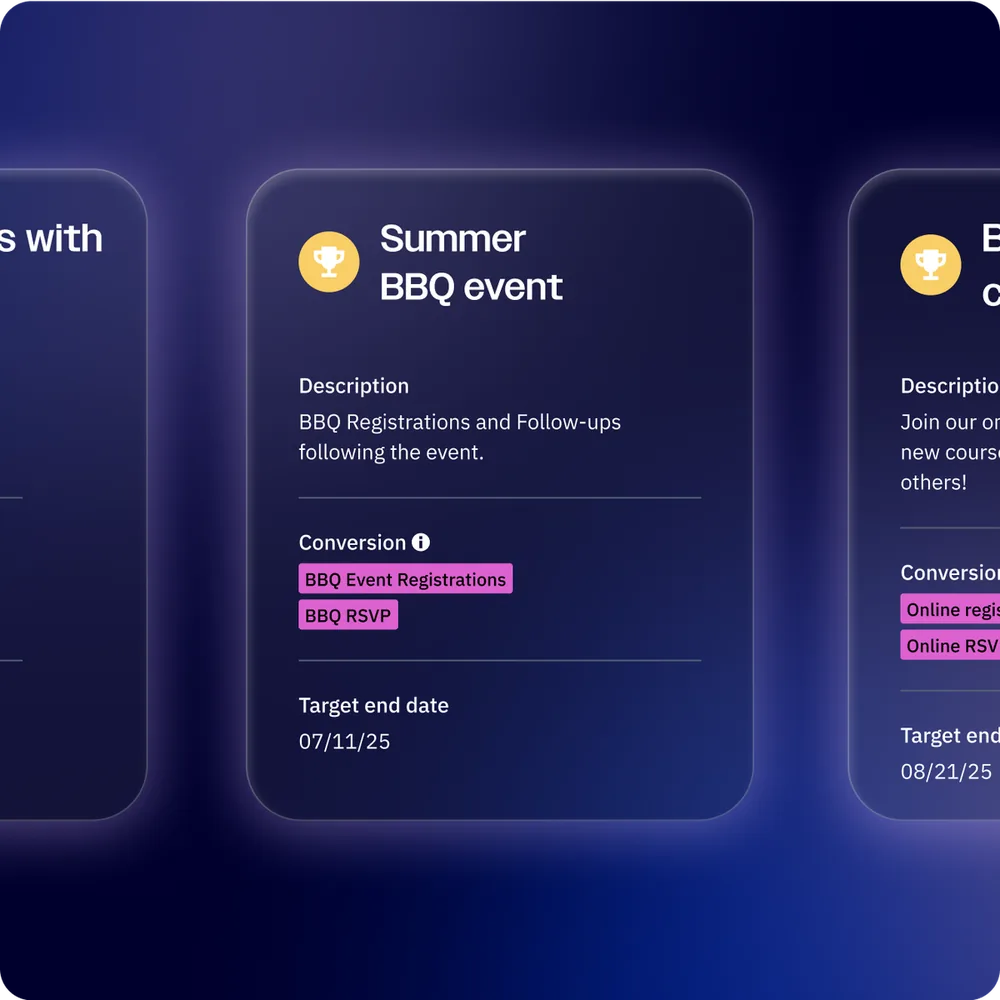
The loop is deliberately simple to describe because the complexity moves into the software. Your contribution is the goal and the guardrails; the platform handles the build-measure-adjust cycle that defines autonomous marketing.
Inside ActiveCampaign’s Active Intelligence
ActiveCampaign’s Active Intelligence is a useful hero example because it embeds agentic features inside a platform marketers already use for email and automation, rather than bolting on a separate chatbot. It exposes several distinct agents and AI capabilities that map cleanly onto the Imagine, Activate, Validate loop.
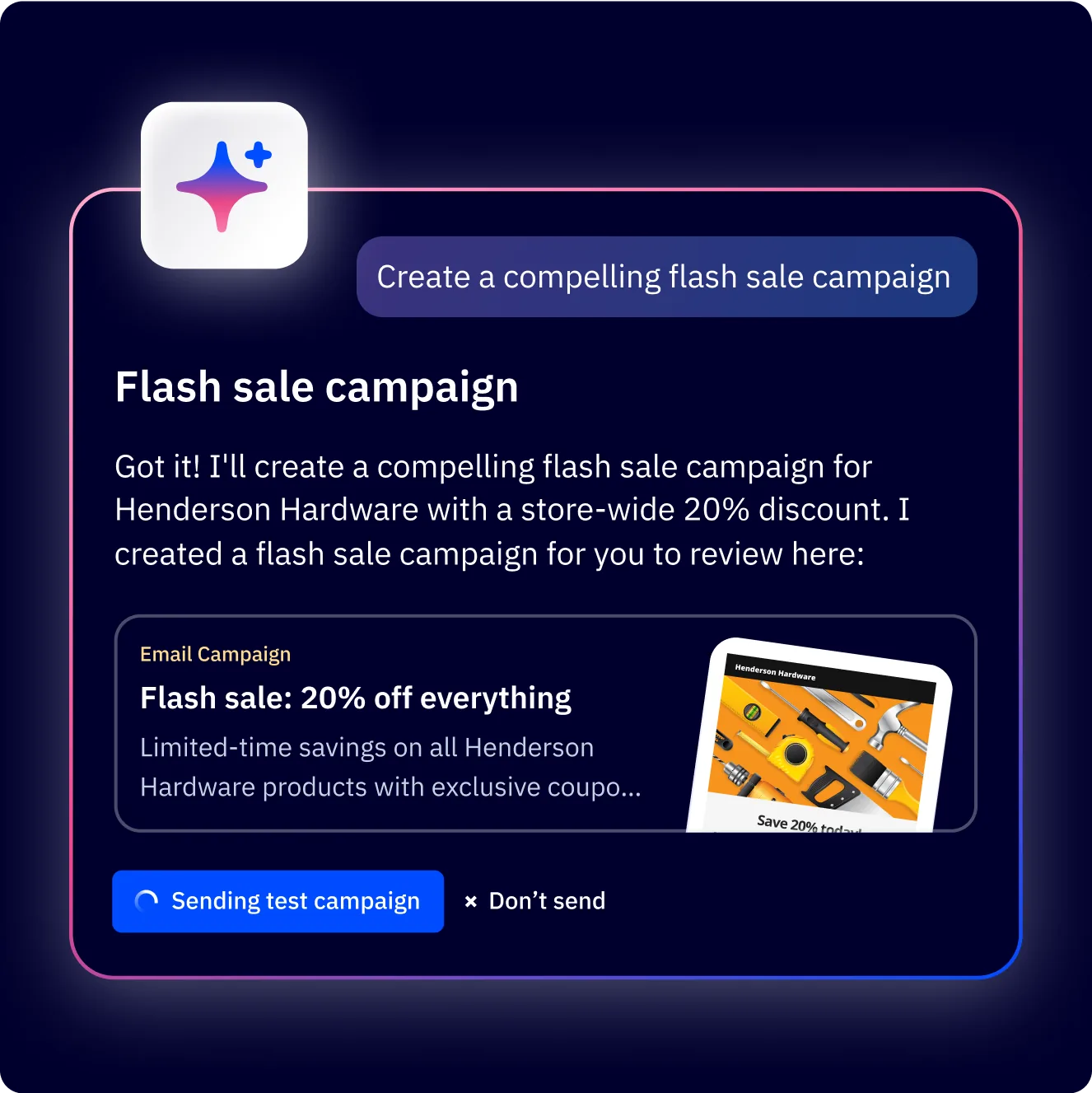
AI Campaign Builder sits in the Imagine and Activate stages. You describe the campaign you want in a chat-style prompt, and it scaffolds the structure, drafts the messaging, and stands up a campaign you can refine instead of building from a blank page. For a deeper walkthrough, see our ActiveCampaign AI features guide.
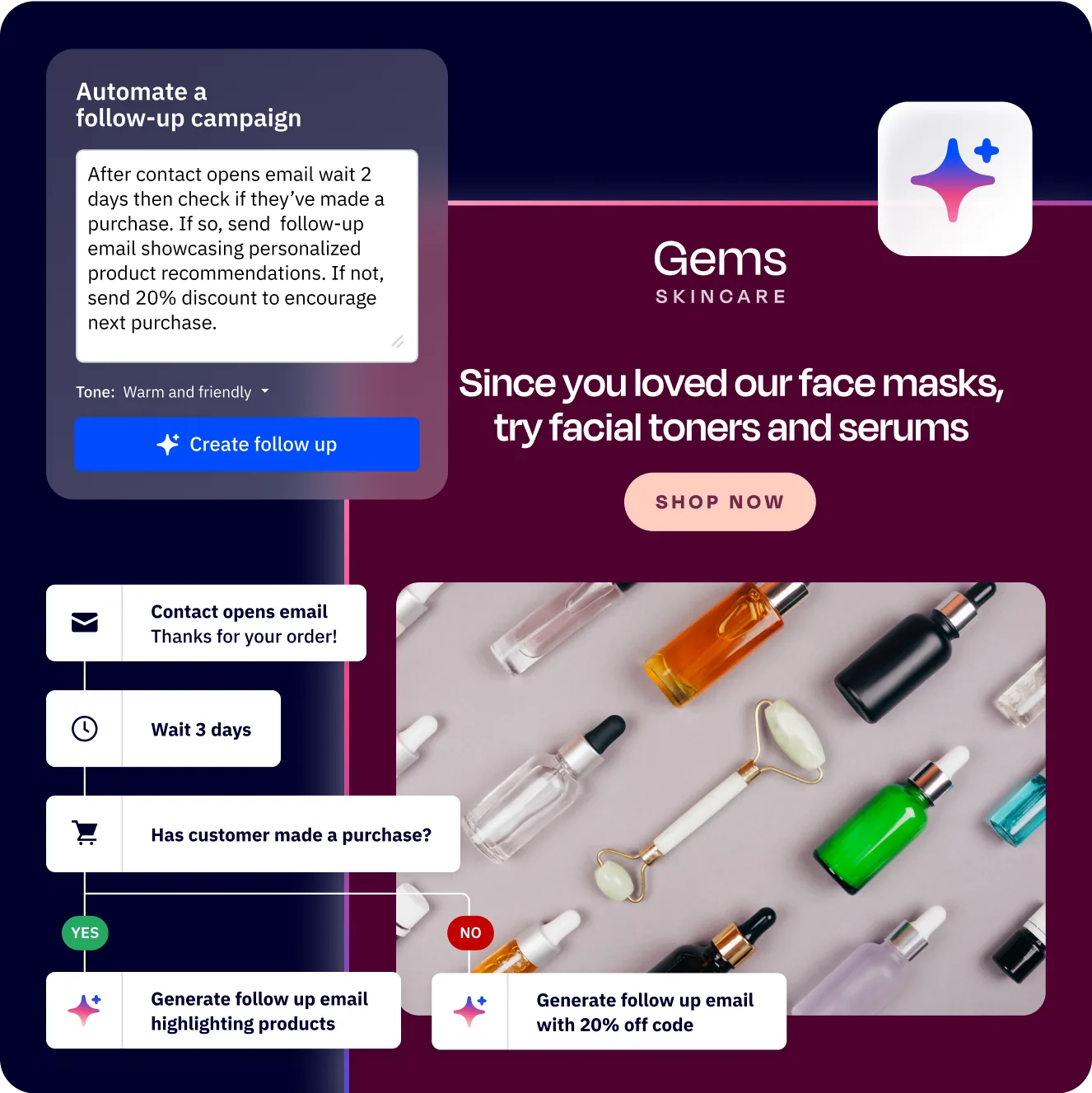
AI Automation Builder does the same for multi-step workflows. Describe the automation - a lead-nurture sequence, an onboarding flow, a win-back path - and it generates the branching logic and actions as an editable draft. Our automation builder guide covers how to extend and tune what it produces.
Predictive Sending lives in the Validate stage. It uses machine learning to predict the moment each contact is most likely to engage and schedules delivery per recipient rather than blasting everyone at once. Our predictive sending guide explains how to enable and read it.
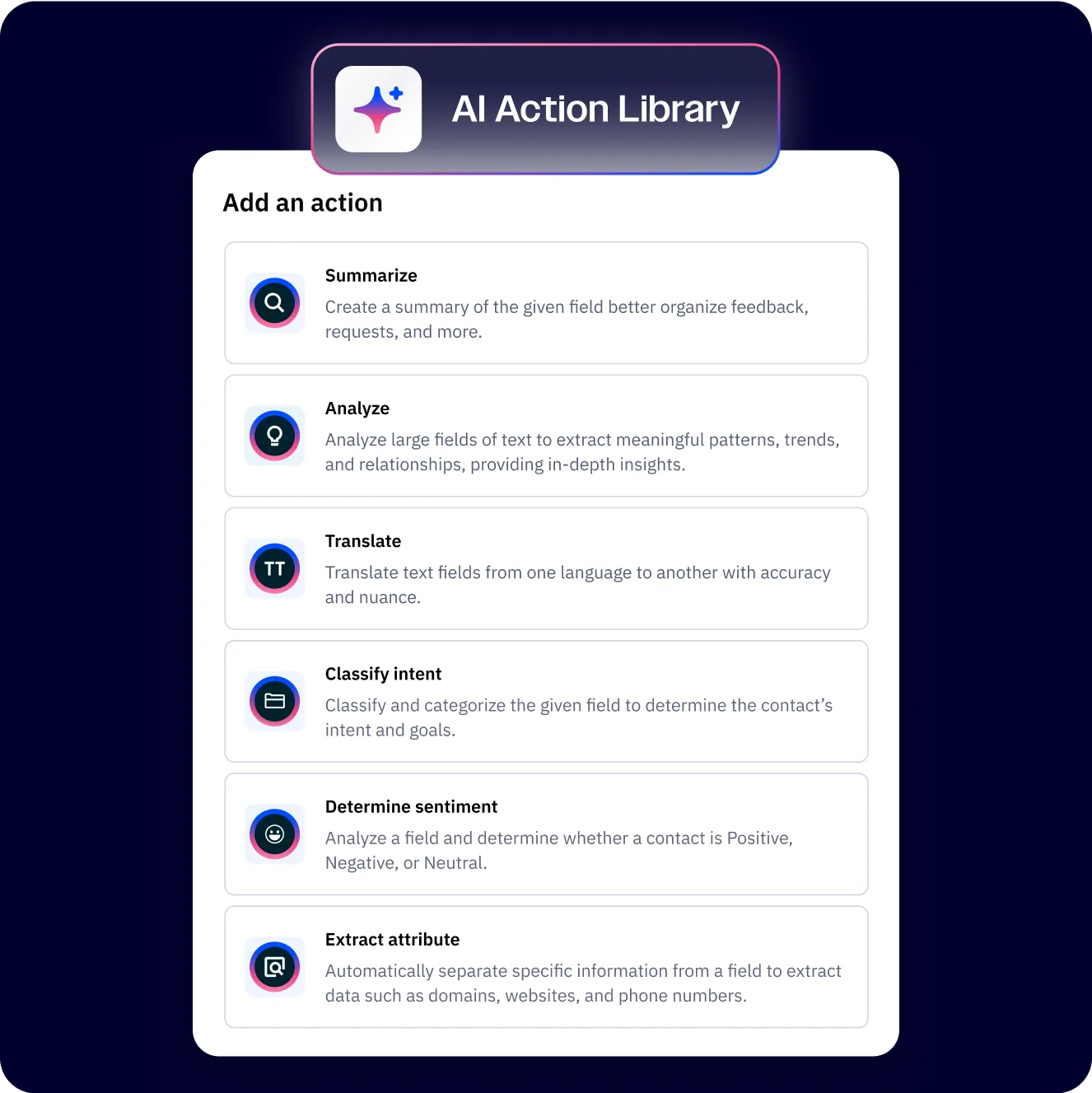
AI-Suggested Segments closes the loop on targeting, surfacing audience groupings and next-best-action recommendations from your contact data so you act on patterns you might not have queried manually; our segmentation strategies guide covers how to build these audiences by hand. Together these agents let marketing teams direct outcomes while the platform handles the assembly, scheduling, and segmentation underneath.
Real Results From Autonomous Marketing
The case for agents is ultimately about results, so it is worth looking at what the vendor reports - and reading those figures with appropriate caution. Our analysis draws on ActiveCampaign’s published product documentation and customer case studies, with vendor-reported figures flagged as such. The numbers below are ActiveCampaign’s own customer and product figures, not independent measurements, and your mileage depends heavily on data quality and how you configure the agents.
According to Manab Boruah, Product Marketing Manager at Kommunicate, “66% of revenue year on year is likely driven by ActiveCampaign automation.” According to Nathan Monk, Co-Founder of Motrain, “ActiveCampaign has doubled our conversion rate.” Across its customer base, ActiveCampaign cites an average of 13 hours saved per week and up to a 451% increase in qualified leads from automation. On the optimization side, Predictive Sending raises click-through rates by around 17% on average, per ActiveCampaign, and ActiveCampaign reports 83% of customers see ROI within the first year.
The table below summarizes those ActiveCampaign-reported figures against the manual baseline they replace, so the gap between hand-built automation and agent-assisted workflows is easy to read at a glance. For a platform-level view of the same trade-offs, our ActiveCampaign vs HubSpot comparison weighs the two automation suites side by side.
| Metric (ActiveCampaign-reported) | Manual / traditional baseline | With AI agents |
|---|---|---|
| Campaign setup | Hours of manual configuration per flow | Plain-language goal, drafted in minutes |
| Time saved per week | 0 hours (baseline) | 13 hours saved |
| Qualified-lead lift | Baseline volume | Up to 451% more qualified leads |
| Click-through rate | Baseline send timing | About 17% higher with Predictive Sending |
| ROI within first year | Not reported | 83% of customers report ROI |
User sentiment broadly supports the automation strengths behind those claims: ActiveCampaign carries a aggregate across review platforms, with reviewers consistently praising the depth of its automation builder while noting a learning curve on advanced features.
It is worth being clear about how to read figures like these. Vendor case studies select for success, single out standout customers, and rarely publish the accounts where automation underperformed. A 451% lead increase is a real outcome for the customer it describes, but it is a ceiling, not an average you should budget around. Treat such numbers as evidence that the capability can deliver, then validate against your own baseline before and after you switch an agent on.
The honest framing is this: agents amplify a good marketing system and expose a weak one. The reported gains assume clean lists, sensible goals, and a human reviewing output for brand fit and accuracy. Autonomous marketing reduces manual labor; it does not remove the need for marketers to set strategy, supply quality data, and check the work before it ships.
How to Start With AI Marketing Agents
Starting with AI marketing agents requires one clear goal, clean data, and a staged rollout, not a full stack rebuild. Start small, measure, and expand the agent’s remit as trust builds. A sensible first 30 days looks like this:
- Pick one goal. Choose a single, measurable outcome - reactivation, lead nurture, or a campaign launch - rather than handing the agent everything at once.
- Clean the inputs. Agents act on your data, so tidy segments, tags, and contact fields before you delegate. Good automation depends on good data.
- Let the agent draft, then review. Use the AI Campaign Builder or Automation Builder to generate the first version, then edit for brand voice and accuracy. Our automation builder guide shows the workflow.
- Turn on optimization and validate. Enable Predictive Sending, watch the engagement and conversion signals, and keep or roll back changes based on what the data shows.
- Expand gradually. Once one goal performs, add another. This staged approach is how most marketing teams move from automation to agents without losing control.
On cost, ActiveCampaign has no free tier but offers a 14-day trial, and its agentic features become available on paid plans. Here is current pricing for 1,000 contacts:
Pricing verified June 2026 from ActiveCampaign's pricing page:
- Starter: $15/user/mo annual ($19 monthly) (1,000 contacts, 1 user)
- Email marketing
- Marketing automation (up to 5 actions per automation)
- Inline & pop-up forms
- Plus: $49/user/mo annual ($59 monthly) (1,000 contacts, 1 user)
- Everything in Starter
- Active Intelligence AI (usage limits apply)
- Unlimited automation actions
- Pro: $79/user/mo annual ($99 monthly) (1,000 contacts, 3 users)
- Everything in Plus
- Advanced segmentation
- Predictive sending (AI)
- Enterprise: $145/user/mo annual ($179 monthly) (1,000 contacts, 5+ users)
- Everything in Pro
- Premium segmentation
- Dedicated account team
For context, the $99/month Pro plan is the tier most marketing teams land on for advanced automation and Predictive Sending. If you want to evaluate the agentic features hands-on, you can try ActiveCampaign on the trial before committing. For a broader market view, compare options in our roundup of the best marketing automation tools 2026 and the best AI tools for marketers.
The Bottom Line
AI marketing agents deliver a genuine shift in how marketing work gets done, moving teams from building workflows to setting goals. You define the outcome, the agent assembles and adapts the path, and you review the results. Traditional automation does not disappear; it becomes the deterministic layer beneath a goal-directed one.
The practical advice is to treat agents as powerful collaborators rather than replacements. Supply clean data, set clear goals, keep a human in the loop on brand and accuracy, and let the software absorb the repetitive assembly. If you want to see an agentic implementation inside a mainstream platform, ActiveCampaign’s Active Intelligence is a strong place to start, and the wider AI marketing landscape is moving in the same direction fast.
Frequently Asked Questions
What is an AI marketing agent?
An AI marketing agent is a goal-directed AI system that plans, executes, and optimizes marketing tasks with minimal manual setup. You describe an outcome in plain language, and the agent interprets the goal, builds the campaign or automation, runs it across channels, and adjusts based on results - rather than following fixed rules you wire together in advance.
Are AI marketing agents the same as marketing automation?
No. Traditional marketing automation follows fixed if-this-then-that logic that you build and the system executes exactly. An AI marketing agent is goal-directed: it interprets an objective, decides the steps itself, and adapts to live performance signals. Most teams run both - deterministic automation for simple sequences and agents for open-ended, outcome-based goals that benefit from adaptation.
What can ActiveCampaign’s Active Intelligence do?
Active Intelligence is ActiveCampaign’s set of agentic features. It includes an AI Campaign Builder and AI Automation Builder that draft campaigns and workflows from plain-language prompts, Predictive Sending that times delivery per recipient using machine learning, and AI-Suggested Segments plus next-best-action recommendations that surface audiences and actions from your contact data for review and approval.
Do AI marketing agents replace marketers?
No. AI marketing agents automate the repetitive assembly and optimization of campaigns, but they depend on clean data, clear goals, and human judgment on strategy, brand, and accuracy. The role shifts from manually building workflows to defining outcomes and reviewing results. Marketers direct and oversee the agent; they do not hand over strategy or quality control to it.
Related Reading
- ActiveCampaign review and pricing
- ActiveCampaign AI features guide
- Best marketing automation tools 2026
- Best AI tools for marketers
- ActiveCampaign vs HubSpot
External Resources
- ActiveCampaign Active Intelligence - the autonomous marketing platform
- ActiveCampaign AI Agents overview
- ActiveCampaign: 13 Hours Back Each Week report