


Perplexity vs ChatGPT is one of the most searched AI comparisons in 2026, and for good reason. Both tools cost $20 per month at their mid-tier, both draw on frontier AI models, and both promise to make knowledge work faster. But they solve fundamentally different problems - and choosing the wrong one means paying for capabilities that do not match the way you actually work.
ChatGPT is a general-purpose AI assistant built for creative writing, coding, image generation, voice conversations, and plugin-powered workflows. It has over 200 million weekly active users and the broadest feature set of any consumer AI product. Many users arrive here after exploring adjacent comparisons - Perplexity vs ChatGPT vs Gemini and Perplexity vs ChatGPT vs Grok are among the fastest-rising related searches in 2026. Perplexity is an AI-powered search engine designed for research, fact-checking, and sourced answers - every response includes numbered citations linking back to original material.
This chatgpt vs perplexity comparison breaks down exactly where each tool wins, where it falls short, and who should subscribe to which - based on real use cases, not marketing copy.
TL;DR Verdict
Short on time? Here is the quick answer.
Choose ChatGPT Plus ($20 per month) for creative writing, code generation, image creation, voice mode, and general-purpose AI tasks. It does more things well than any other AI tool on the market.
Choose Perplexity Pro ($20 per month) for research, fact-checking, and any workflow where verifiable sources matter. The inline citation system has no real equivalent elsewhere.
The power user play: Subscribe to both for $40 per month total. Use Perplexity for research and discovery, then ChatGPT for creating content from what you find. Many professionals report this two-tool approach covers virtually every AI use case. Our Claude vs ChatGPT comparison covers the third major option in the same price band.
Comparison Table: Perplexity vs ChatGPT
Here is how ChatGPT and Perplexity stack up across the categories that matter most.
| Category | ChatGPT | Perplexity |
|---|---|---|
| Rating | ||
| Best for | Writing, coding, images, general tasks | Research, citations, fact-checking |
| Free tier | GPT-3.5, limited GPT-4o | Unlimited basic, 5 Pro searches/day |
| Mid tier | Plus at $20/mo | Pro at $20/mo |
| Premium tier | Pro at $200/mo | Max at $200/mo |
| Web search | Built-in, no inline citations | Built-in with numbered source citations |
| Image generation | Built-in via GPT-4o | Not available |
| Voice mode | Live voice conversations | Not available |
| Model selection | GPT-5, GPT-4o, o1 (OpenAI only) | GPT-5, Claude 4, Gemini 2.5 (multi-vendor) |
| Context window | 128K tokens (GPT-5) | Conversation-based |
| Code execution | Advanced Data Analysis (Python sandbox) | Not available |
| File uploads | Up to 80 files every 3 hours (Plus) | Unlimited (Pro/Max) |
| Desktop app | macOS and Windows | macOS and Windows |
| Team plan | $30/user/month | Enterprise (custom pricing) |
The table reveals a clear pattern. ChatGPT has broader capabilities across more categories. Perplexity goes deeper in the one category that defines it - research with verifiable sources.
Research and Fact-Checking
This is the category where the chatgpt vs perplexity gap is widest, and likely the reason most people are comparing these two tools.
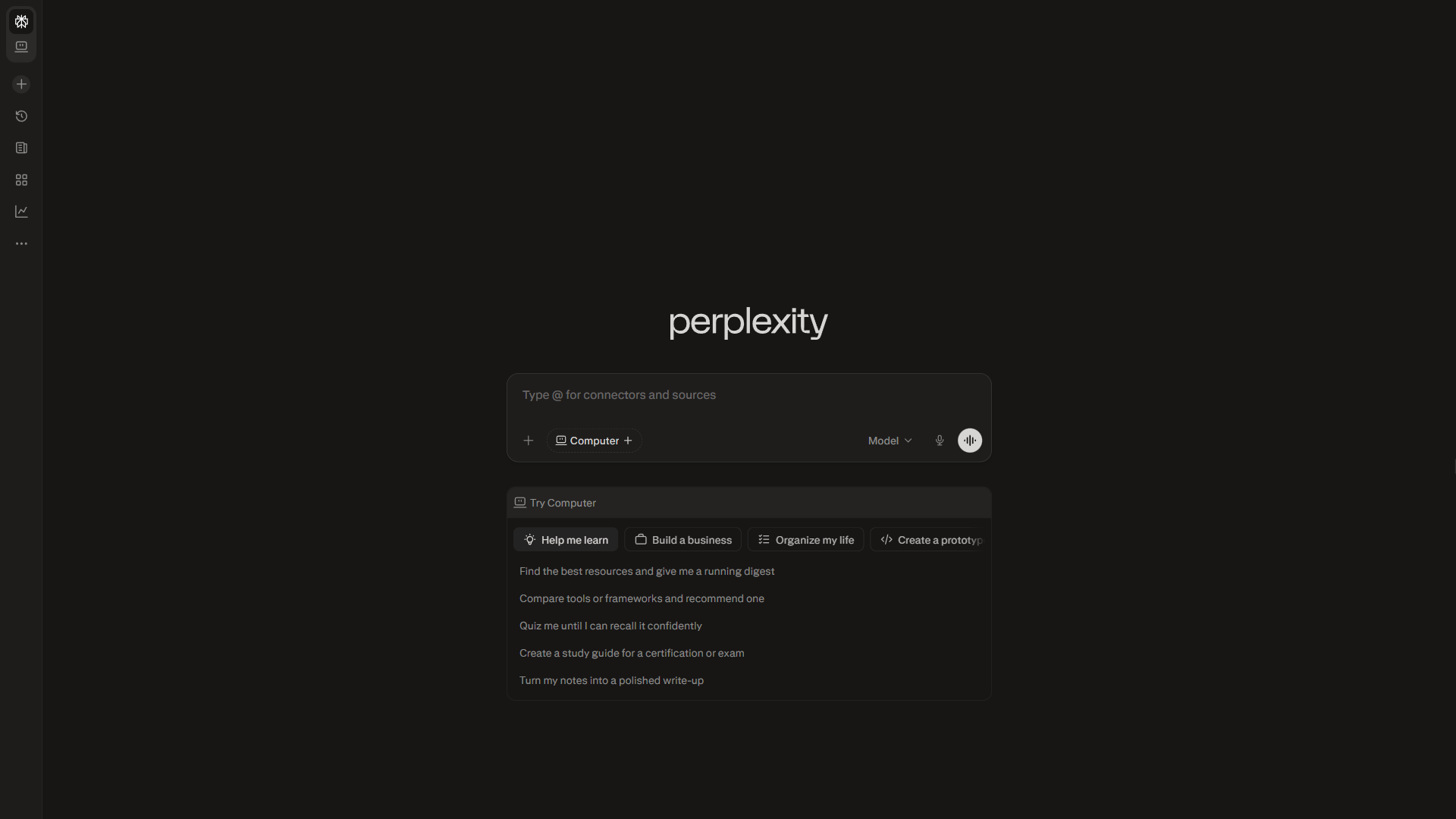
Perplexity was designed from the ground up as a research engine. Every answer includes numbered inline citations - click any [1], [2], or [3] to jump directly to the source. Pro Search synthesizes 20+ sources into a coherent answer, while Deep Research produces multi-page reports with 50+ citations. Focus modes let you filter results by source type: academic papers, Reddit discussions, YouTube transcripts, news articles, or SEC filings.
The citation system changes the entire dynamic of AI-assisted research. Instead of asking “did the AI make this up?” you can verify every claim in seconds. For studying, academic writing, journalism, and anyone working in regulated industries, this transparency is not a nice-to-have - it is essential. Analysts and students alike report that sourced answers hold up to scrutiny in a way that unsourced AI output simply cannot. The Perplexity getting-started hub walks through the full Focus mode set.
ChatGPT can browse the web and pull in recent information through its ChatGPT Search feature, but it does not provide systematic inline citations. Responses sometimes include a link or two, but there is no audit trail connecting specific claims to specific sources. For casual lookups - “what framework should I use for X” or “summarize recent trends in Y” - this works fine. For academic papers, client-facing reports, or anything where “trust me” is not acceptable, the absence of sourcing is a real limitation.
Verdict: Perplexity wins decisively. If research accuracy and source verification define your work, this category alone justifies the subscription choice.
Limitations and tradeoffs: ChatGPT lacks systematic inline citations and cannot be trusted for academic or regulated-industry research without manual verification. Perplexity is not for users who need creative output, image generation, or voice mode - those workflows fall outside its sourced-research focus.
Creative Writing and Content Creation
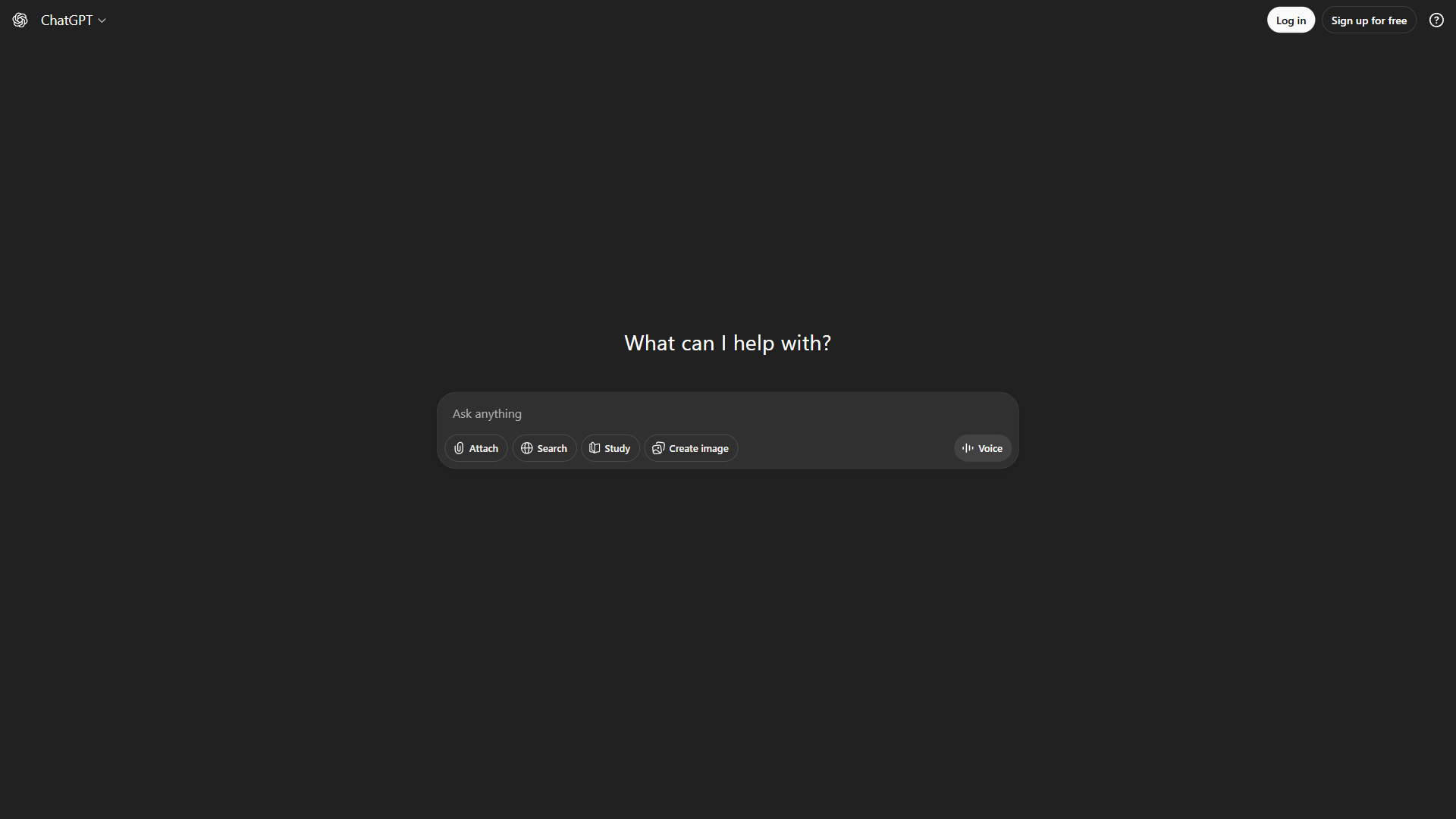
This is where ChatGPT pulls ahead by a wide margin. ChatGPT handles every content format with range and flexibility. Blog posts, email sequences, social media captions, ad copy, creative fiction, product descriptions, scripts - GPT-5 produces strong first drafts across all of them. The memory feature learns preferences over time, so the 50th draft sounds more like your brand than the first. Custom GPTs take this further by creating specialized writing assistants tuned to specific tasks, tones, or audiences.
The creative versatility is the key differentiator. Need a formal whitepaper and a casual social post from the same source material? ChatGPT shifts tone naturally. Want 15 headline variations with genuine variety? Done in seconds. The ability to iterate on voice, structure, and style makes it a genuine creative partner rather than just a text generator.
Perplexity can summarize and restructure information it discovers online, but creative writing is not its design goal. Asking Perplexity to draft marketing copy produces output that reads like a research summary - factual, well-sourced, and flat. The citation system that makes it excellent for research actually adds friction to creative flow because every statement wants to be grounded in an external source.
Verdict: ChatGPT wins clearly. For original content creation, copywriting, and any task requiring creative range, ChatGPT is the substantially stronger tool.
Limitations and tradeoffs: Perplexity is not for creative writing - the citation-grounded output reads flat for marketing or fiction work. ChatGPT has drawbacks too: memory and tone consistency still drift across long sessions, and brand-voice control requires custom GPTs or careful prompting rather than working out of the box.
Code Generation and Technical Work
Both tools serve developers, but in different roles.
ChatGPT is among the most capable general-purpose coding assistants available today. GPT-5 generates, debugs, refactors, and explains code across dozens of languages. The Advanced Data Analysis feature runs Python directly in the browser - invaluable for data processing, visualization, and rapid prototyping. The broader ecosystem matters too: ChatGPT integrates with developer workflows through custom GPTs, browser extensions, and API access.
For everyday coding tasks - debugging a React component, writing SQL queries, scaffolding an API, explaining unfamiliar codebases - ChatGPT handles them with speed and confidence. It can hold context across long conversations, making it useful for iterative development sessions. For dedicated coding workflows, our Claude Code vs Cursor comparison covers the editor-grade alternatives.
Perplexity is not a code editor or development environment. Where it adds genuine value for developers is in the research phase: finding the right library for a task, locating API documentation, comparing framework benchmarks with current data, and identifying solutions to obscure error messages. Because every answer includes citations, developers can verify that the Stack Overflow thread or GitHub issue Perplexity references actually exists and is current.
Verdict: ChatGPT for writing, debugging, and iterating on code. Perplexity for researching tools, finding documentation, and verifying technical claims before implementation. The distinction is creation versus discovery.
Limitations and tradeoffs: Perplexity is not a code editor and offers no execution environment - skip it for hands-on development. ChatGPT’s drawbacks include 128K context that struggles with very large codebases and a Python sandbox limited to short-running scripts.
Pricing Comparison
Both tools match at $20 per month for their mid-tier plans, but the value proposition differs at every level.
ChatGPT Pricing (2026)
| Tier | Monthly | Annual | What You Get |
|---|---|---|---|
| Free | $0 | $0 | GPT-3.5, limited GPT-4o with cooldowns |
| Plus | $20 | $240 | GPT-5, images, voice, Advanced Data Analysis |
| Pro | $200 | $2,400 | Unlimited all models, o1 pro mode, priority |
| Team | $30/user | $300/user | Shared GPTs, admin console, training opt-out |
| Enterprise | Custom | Custom | 2M token context, SOC 2, dedicated support |
Perplexity Pricing (2026)
| Tier | Monthly | Annual | What You Get |
|---|---|---|---|
| Free | $0 | $0 | Unlimited basic, 5 Pro searches/day |
| Pro | $20 | $200 | Unlimited Pro searches, multi-model, file uploads |
| Max | $200 | $2,000 | Frontier models (o3-pro, GPT-5 Thinking, Claude Opus 4.5), Comet browser |
| Enterprise | Custom | Custom | Team management, SSO, internal knowledge base |
Value Analysis by Tier
Free tier: Perplexity’s free plan is more practical for most users. Five Pro searches per day with full citations delivers tangible research value. ChatGPT’s free tier limits GPT-4o access with cooldowns that kick in after a few dozen messages, pushing users toward GPT-3.5 for anything sustained.
At $20 per month: This is where the decision matters most. ChatGPT Plus covers writing, coding, images, voice, web browsing, and data analysis in one subscription. Perplexity Pro covers unlimited research with citations, multi-model access (GPT-5, Claude 4, Gemini 2.5), and file analysis. Your primary use case determines which is the better deal.
At $200 per month: Both premium tiers target power users. ChatGPT Pro provides unlimited access to all OpenAI models and o1 pro reasoning. Perplexity Max provides frontier models from multiple vendors plus the Comet AI browser. Neither is worth it for casual use - these exist for professionals who bill for their time and need the absolute best AI capabilities available.
Annual savings: Perplexity offers a better annual discount. Pro drops to $16.67 per month when paid yearly ($200 per year). ChatGPT Plus remains at $20 per month annually ($240 per year). Over a year, that is $40 saved on Perplexity - not huge, but not nothing. For more pricing context, our Claude pricing breakdown and ChatGPT competitors guide compare the broader market.
Multi-Model Access
One often-overlooked advantage in the chatgpt vs perplexity comparison is model diversity.
Perplexity Pro lets users switch between AI models from different providers within the same interface. The Pro tier includes GPT-5, Claude 4, and Gemini 2.5. The Max tier adds frontier reasoning models like o3-pro, GPT-5 Thinking, and Claude Opus 4.5. This means a researcher can test the same question against multiple models, compare answers, and pick the most useful response - all without maintaining separate subscriptions.
ChatGPT is restricted to OpenAI models. Plus subscribers get GPT-5 and GPT-4o. Pro subscribers add o1 pro mode for enhanced reasoning. The models are excellent and regularly updated, but users are locked into a single provider’s ecosystem. If GPT-5 struggles with a particular query type, the only option is to rephrase - not switch to a different model architecture entirely.
Why this matters: Different models have different strengths. Claude tends to handle nuanced analysis and long documents better, as documented in Anthropic’s model overview. Gemini excels at multimodal tasks. GPT-5 is strong on creative generation. Having access to all three through a single Perplexity subscription effectively replaces what would cost $60+ per month across separate tools.
Limitations and tradeoffs: ChatGPT’s drawback here is real - users are locked into OpenAI models with no way to switch architectures mid-conversation. Perplexity’s multi-model access is not for users who need deep customization of a specific model’s parameters or fine-tuned outputs from a single vendor.
Privacy and Data Handling
Both platforms have evolved their privacy approaches, but the details matter for professional use.
ChatGPT uses conversations from free-tier users to train future models by default. Plus, Pro, Team, and Enterprise subscribers can opt out of training data usage. The Team plan ($30 per user/month) excludes conversation data from training automatically. Enterprise adds SOC 2 compliance, tenant-key encryption, custom retention rules, and audit logs. For businesses handling sensitive information, Enterprise is the only tier that meets institutional security requirements.
Perplexity does not use conversation data for model training on any tier. The Enterprise plan adds SAML SSO, admin controls, and internal knowledge base integrations. Because Perplexity primarily searches and synthesizes public web content rather than generating original text from training data, the privacy dynamics differ from ChatGPT’s approach.
For teams: ChatGPT has a dedicated Team tier ($30 per user/month) with admin controls and shared GPTs. Perplexity’s team features exist only at the Enterprise level with custom pricing. Organizations needing collaborative AI with manageable per-seat costs will find ChatGPT’s Team plan more accessible.
Limitations and tradeoffs: ChatGPT’s free tier trains on user data by default - a real drawback for anyone handling sensitive information. Perplexity’s downside is that its no-train policy applies only to model training; queries still hit third-party LLMs, so genuinely confidential research may need an enterprise contract on either platform.
When to Use ChatGPT
ChatGPT is the right choice for these workflows:
- Content creation at scale. Blog posts, marketing copy, email sequences, social media - ChatGPT’s writing quality and tone flexibility across formats is unmatched by any competitor.
- Code development. Writing, debugging, refactoring, and explaining code with Advanced Data Analysis for running Python directly in the browser.
- Image generation. GPT-4o’s integrated image generation produces solid visuals without a separate design tool subscription.
- Voice interactions. Live voice mode on Plus is the most natural conversational AI experience available - useful for brainstorming, language practice, and hands-free work.
- Team collaboration. The Team tier provides shared workspaces, custom GPTs, admin controls, and training data exclusion at a manageable per-seat price.
- Plugin and integration ecosystem. Custom GPTs, Zapier connections, browser extensions, and hundreds of third-party integrations make ChatGPT the hub of many automated workflows.
Limitations and who ChatGPT is not for: Skip ChatGPT as the primary tool if your workflow centers on academic research, regulated-industry deliverables, or any output where every claim needs a verifiable source - the limitations of inconsistent web-search citations make manual verification a constant tax. Heavy researchers will spend less time fact-checking with Perplexity.
When to Use Perplexity
Perplexity is the right choice for these workflows:
-
Research requiring citations. Academic papers, journalism, client deliverables, legal research - any context where every claim needs a verifiable source.
-
Current events and real-time data. Perplexity searches the live web for every query by default, with sources attached. No guessing whether the answer reflects today’s data or last quarter’s training cutoff.
-
Fact-checking and verification. The inline citation system turns source verification from a multi-step chore into a one-click action.
-
Multi-model comparison. Test the same research question against GPT-5, Claude 4, and Gemini 2.5 in one interface for $20 per month.
-
Competitive analysis. Company research, market intelligence, and industry deep-dives with sourced data that stakeholders can trust.
-
Regulated industries. Finance, healthcare, law - fields where unsourced AI claims create compliance and liability risks.
Limitations and who Perplexity is not for: Skip Perplexity as the primary tool if your daily work is creative writing, image generation, voice conversations, or hands-on coding - the limitations are real because Perplexity is built as a search engine, not a writing partner or code editor. Pair it with ChatGPT or Claude rather than expecting it to cover those workflows.
When to Subscribe to Both
The most productive professionals in 2026 are not choosing between ChatGPT and Perplexity - they are using both. Here is why the $40 per month combined spend makes sense for certain workflows:
Research-to-content pipeline: Use Perplexity to gather sourced facts, statistics, and expert perspectives on a topic. Then bring those verified findings into ChatGPT to draft the actual content - blog posts, reports, presentations, or email campaigns. The result is creative output grounded in verified information.
Development workflow: Use Perplexity to research libraries, compare tools, and find current documentation with citations. Use ChatGPT for the actual coding, debugging, and implementation. Discovery versus creation, each handled by the tool designed for it.
Client-facing work: Research with Perplexity so every claim in your deliverable has a source. Polish and present with ChatGPT so the final product reads well and matches the client’s tone. The citation trail from Perplexity protects your credibility; the creative range of ChatGPT sells it. Our apps like ChatGPT roundup covers other tools that fit similar pipelines.
Limitations and tradeoffs of running both: The combined $40 per month spend is not for casual users - if AI sits at the edge of your workflow, one subscription handles 80% of cases. The downside of dual-tool setups is context switching: copy-pasting between Perplexity research and ChatGPT drafting adds friction unless you build a deliberate pipeline.
The Bottom Line
The chatgpt vs perplexity decision ultimately comes down to one question: is your primary need creation or discovery?
ChatGPT is the best general-purpose AI assistant available in 2026. It writes, codes, generates images, holds voice conversations, runs data analysis, and connects to hundreds of integrations. For anyone who needs a single AI subscription that covers the widest range of tasks, ChatGPT Plus at $20 per month remains the default recommendation.
Perplexity is the best AI research tool available in 2026. The citation system, Focus modes, multi-model access, and Deep Research capabilities have no equivalent. For anyone whose work depends on verified information - researchers, journalists, analysts, students, lawyers - Perplexity Pro at $20 per month delivers value that ChatGPT cannot match.
Neither tool is trying to become the other. ChatGPT continues expanding into agents, voice, and multimodal experiences. Perplexity continues deepening its search capabilities with frontier model access and the Comet browser. The tools are converging in price but diverging in purpose, which means the “right” choice depends entirely on the work in front of you.
FAQ
Q: Is Perplexity pro better than ChatGPT?
It depends on your primary use case. At $20 per month, Perplexity Pro delivers unlimited research with numbered citations, multi-model access across GPT-5, Claude 4, and Gemini 2.5, and file analysis. ChatGPT Plus at the same price covers writing, coding, images, voice, and data analysis. Perplexity Pro is the better deal for research-heavy workflows; ChatGPT Plus wins for creative and technical tasks.
Q: Why is Perplexity so popular?
Perplexity is popular because its inline citation system makes AI-assisted research verifiable. Instead of asking whether the AI invented a claim, users can click any numbered reference and jump directly to the source. For studying, journalism, academic writing, and regulated industries, this transparency is not optional - it is what makes Perplexity trustworthy in contexts where unsourced AI output is unacceptable.
Q: Can Perplexity generate images or write code like ChatGPT?
Perplexity does not offer image generation or a code execution environment. ChatGPT includes built-in image generation via GPT-4o and an Advanced Data Analysis feature that runs Python directly in the browser. Perplexity’s strength is research and source verification, not creative generation or hands-on development - those tasks are better handled by ChatGPT.
Q: Is it worth subscribing to both ChatGPT and Perplexity at the same time?
Many professionals use both tools together for $40 per month. The recommended approach is to use Perplexity for research and sourced fact-gathering, then bring verified findings into ChatGPT to draft blog posts, reports, or presentations. This research-to-content pipeline combines Perplexity’s citation transparency with ChatGPT’s creative range, covering nearly every AI use case in one combined workflow.
Related Reading
- Perplexity vs ChatGPT: Which AI Assistant Should You Use in 2026? - The reverse comparison with deeper research-first perspective
- ChatGPT vs Claude: Which AI Assistant Is Better? - Head-to-head comparison of ChatGPT and Claude across writing, coding, and reasoning
- Best ChatGPT Alternatives 2026 - Broader roundup of ChatGPT alternatives including Perplexity, Claude, and Gemini
- Best AI Assistants for Productivity in 2026 - Comprehensive guide covering the top AI assistants and how to pick one
- ChatGPT Review
- Perplexity Review
External Resources
- ChatGPT Official Site - OpenAI’s product page with latest features and pricing
- Perplexity AI - Official site with product features and pricing
- GPT-5 Announcement - OpenAI’s official GPT-5 release and capabilities overview