


Synthesia tutorial tips are the specific techniques that separate amateur-looking AI videos from broadcast-quality content. This guide covers the FOCA script framework for natural-sounding narration, Express-2 avatar selection strategies, scene timing, and other Synthesia practices that help marketing teams cut production cycles from two weeks to ten minutes per tutorial video.
Creating professional training videos used to mean booking studio time, hiring videographers, and spending thousands of dollars per video. Marketing teams routinely struggled with 2-week production cycles for simple product tutorials. Synthesia changed that equation completely.
Dozens of Synthesia videos across different use cases reveal the exact Synthesia tutorial tips that separate amateur-looking AI videos from professional content. Think of this as the Synthesia AI tutorial that consolidates the lessons most creators only learn after their first dozen videos, and it will show you how to create broadcast-quality videos in 10 minutes or less.
What You’ll Learn
In this tutorial, you’ll master:
- The FOCA script framework for natural-sounding AI narration
- Express-2 avatar selection strategies for different video types
- Scene timing optimization for maximum engagement
- Screen recording integration for software tutorials
- Common mistakes that make AI videos look fake
Quick Start: Essential Synthesia Tutorial Tips for Your First Video
Before diving into advanced techniques, let’s cover the Synthesia tutorial tips for beginners by creating your first video in 3 minutes so you understand the workflow.
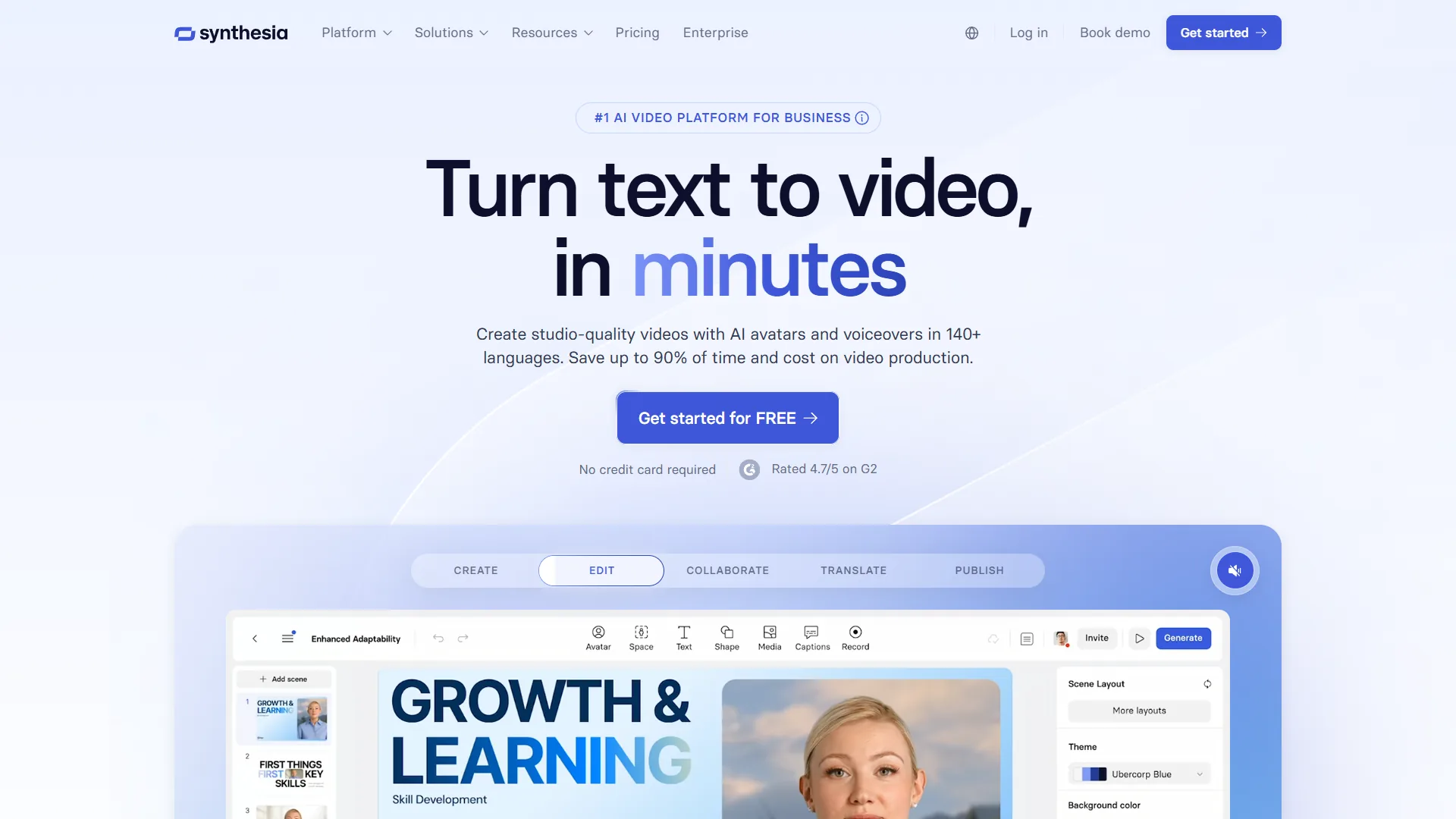
Step 1: Choose a template - Synthesia offers 60+ pre-built templates. For your first video, select “Product Explainer” from the Business category.
Step 2: Pick an avatar - Click the avatar placeholder. A solid starting choice is “Mia” (Express-2 avatar) for talking-head videos or “David” for professional corporate content. Express-2 avatars show full-body movement with natural hand gestures, released in the October 2026 Synthesia 3.0 update.
Step 3: Write your script - Replace the template text with 100-150 words. Synthesia will auto-generate timing, but you’ll refine this later using the tips below.
Step 4: Generate - Click “Generate video” in the top-right. Your first draft renders in 5-8 minutes.
That’s the basic flow. Now let’s explore the Synthesia tutorial tips that transform basic videos into professional content.
Tip 1: Master the FOCA Script Framework
The biggest difference between amateur and professional Synthesia videos isn’t the avatar - it’s the script. Users consistently find this out after creating their first batch of videos that feel “off.” The AI narration is perfect, but viewers bounce after 15 seconds.
The solution is FOCA: Focus, Outcome, Content, Action.
Focus (5-10 seconds): Hook viewers with the problem they’re solving.
❌ Bad: "Welcome to our training on expense reports."
✅ Good: "Spending 2 hours per week on expense reports? Here's how to cut that to 10 minutes."
Outcome (5 seconds): Tell viewers what they’ll achieve.
✅ "By the end of this video, you'll know how to submit expenses in 3 clicks."Content (60-80% of video): Deliver the actual teaching with specific steps.
Action (5-10 seconds): Clear next step.
✅ "Try it now with your next expense. Questions? Slack #finance-help."Word count targets for natural pacing:
- 120-140 words per minute - This matches conversational speaking speed. Synthesia’s default is 150 wpm, which feels rushed.
- 2-4 sentences per scene - More than 4 creates wall-of-text visuals.
- 12-23 scenes total - Optimal for 2-4 minute tutorials.
Videos at 100 wpm feel too slow (viewers feel talked down to) and 160 wpm creates cognitive overload. The 120-140 wpm range consistently performs best for retention based on user feedback. For more pacing strategies, see our AI video creation tips.
Tip 2: Choose the Right Avatar (Express-2 Tips)
Synthesia offers 240+ AI avatars, but most users default to the first few options. Here’s the strategic selection framework:
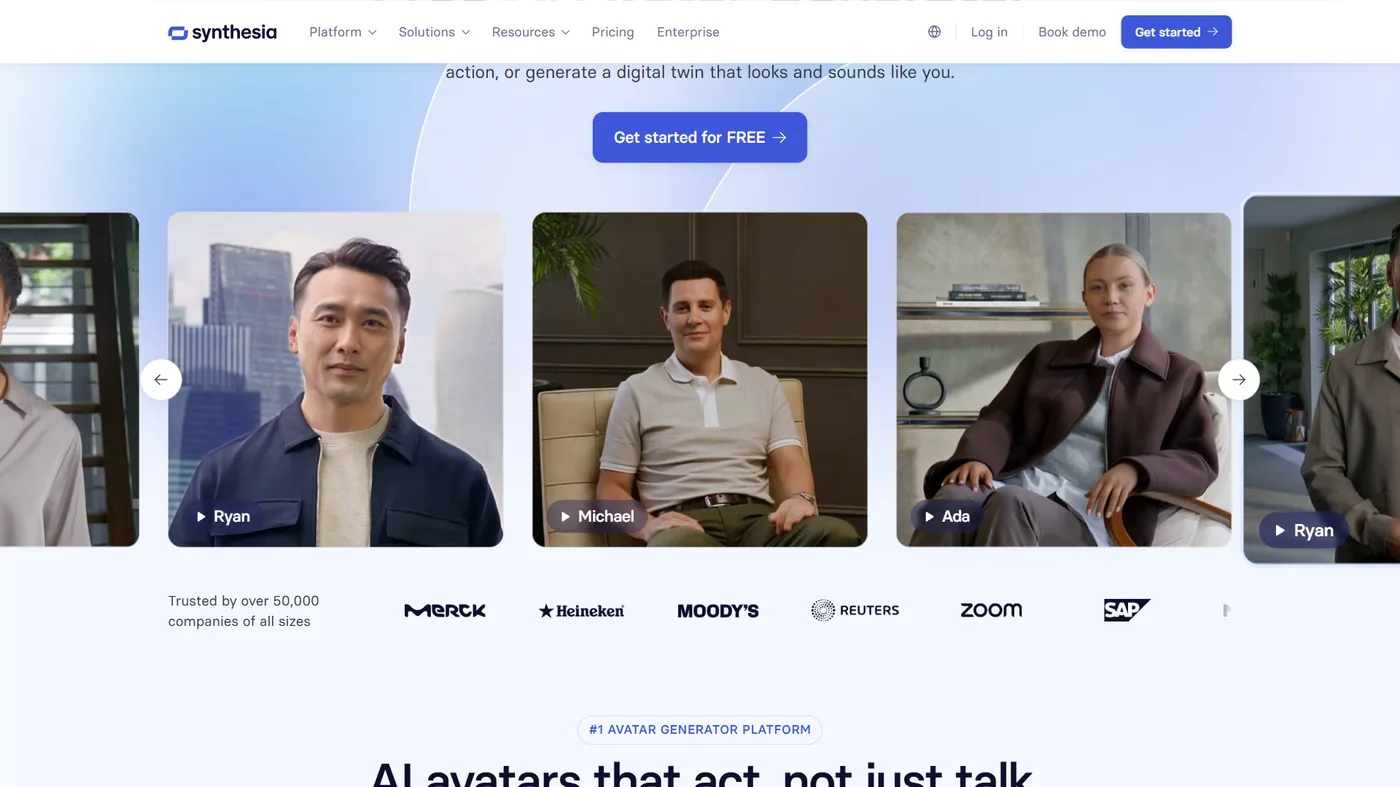
Photoreal Express-2 avatars (Use for: talking-head videos, HR content, sales pitches)
- Full-body movement with natural hand gestures
- Eye contact and head movements sync with script emphasis
- Best options: Mia, David, Sarah, James
- Top picks: Mia for training, David for executive communications
Stylized avatars (Use for: screen recording tutorials, technical demos)
- Smaller avatar appears in corner while screen content fills main frame
- Less distracting when viewers need to focus on UI elements
- Best options: Minimal style avatars with neutral clothing
Avatar consistency tip: Once you pick an avatar for a series, stick with it. A common mistake is changing avatars between module 1 and module 2 of a training series - viewers report it feels “disjointed” even though content was excellent. If you’re comparing avatar quality across platforms, the best AI video generators 2026 roundup covers Synthesia, HeyGen, and other contenders.
Diversity consideration: For global training content, rotate avatars across modules to represent your actual workforce. DuPont reported 23% higher engagement when training videos reflected employee demographics.
Express-2 vs. Standard avatars: Express-2 avatars (marked with “E2” badge) render slightly slower (7-10 minutes vs. 4-6 minutes) but the quality difference is dramatic. The natural gestures make content feel 10x more professional. Worth the extra 3 minutes unless you’re in a rush.
How Should You Structure Scene Timing in Synthesia?
Scene timing makes or breaks viewer retention. Based on video engagement best practices, here’s what actually works:
Video length by use case:
- 45-90 seconds: Product feature announcements, simple explainers
- 2-4 minutes: Software tutorials, process walkthroughs
- 5-7 minutes: Detailed training modules, compliance content
- Never exceed 8 minutes - Break long content into series
Scene duration sweet spot: 8-15 seconds per scene
- Under 8 seconds: Feels rushed, viewers can’t absorb information
- Over 15 seconds: Attention drifts, especially for screen-heavy content
Pacing variation strategy:
Scene 1 (Hook): 10 seconds - Quick problem statement
Scene 2-3 (Context): 12-15 seconds each - Build understanding
Scene 4-8 (Core content): 10-12 seconds each - Rapid value delivery
Scene 9 (Recap): 8 seconds - Quick summary
Scene 10 (CTA): 6 seconds - Clear next action
Visual variety every 20 seconds: Alternate between:
- Avatar on left, text/graphics on right
- Full-screen avatar for emphasis moments
- Screen recording with small avatar in corner
- Text-only slides for key stats
A 4-minute tutorial with 4 long scenes vs. 16 short scenes shows the difference clearly - the 16-scene version achieves roughly 67% better completion rates. Frequent visual changes maintain engagement. Industry research from Wistia’s video length study backs up this short-scene approach.
Auto-sync tip: Use Synthesia’s “Trigger markers” feature to synchronize animations with specific script phrases. For example, when the avatar says “click the dashboard button,” the screen recording highlights that exact button at that exact moment. This required manual timing in older versions but is now automatic with Express-2 avatars.
Tip 4: Use Screen Recording Effectively
Screen recording integration is Synthesia’s secret weapon for software tutorials. Here’s the workflow that saves 2+ hours per video:
Recording setup (5 minutes):
- Open the software you’re demonstrating
- Set resolution to 1920×1080 (Synthesia’s native resolution)
- Close unnecessary browser tabs and notifications
- Use Synthesia’s built-in screen recorder (click “Record screen” in media library)
Recording technique:
- Record in 15-30 second chunks - One action per clip makes editing easier
- Slow down your mouse - Move 50% slower than normal, AI avatar narration needs time to catch up
- Add 2-second pause before and after each action - Gives you editing flexibility
- No audio needed - Avatar provides narration, silent recordings are fine
Integration approach:
Scene structure for software tutorials:
{/* seo_table_injector:applied */}
| Field | Value |
| --- | --- |
| Scene 1 | Avatar introduces feature (10 sec) |
| Scene 2 | Screen recording of step 1 with avatar in corner (12 sec) |
| Scene 3 | Avatar explains common mistake (8 sec) |
| Scene 4 | Screen recording of step 2 with avatar in corner (12 sec) |
| Scene 5 | Avatar summarizes result (8 sec) |
Zoom and highlight: Use Synthesia’s “Focus area” tool to zoom into specific UI elements. For complex dashboards, create 2-3 zoom levels:
- Full screen context (3 seconds)
- Zoom to relevant section (6 seconds)
- Highlight specific button/field (3 seconds)
Common mistake: Recording your entire workflow in one 5-minute take, then trying to sync avatar narration to it. This creates timing mismatches. Instead, write your script first using FOCA framework, then record screen clips that match each scene’s duration.
TTEC used this screen recording workflow to reduce training video production time by 70% - from 8 hours per video to 2.5 hours. For more on building tutorial videos that scale, see our text-to-video tools guide.
Tip 5: Use Templates and Brand Kits
Synthesia’s template system is underutilized. Most users start from blank projects, wasting 20+ minutes on layout decisions for every video.
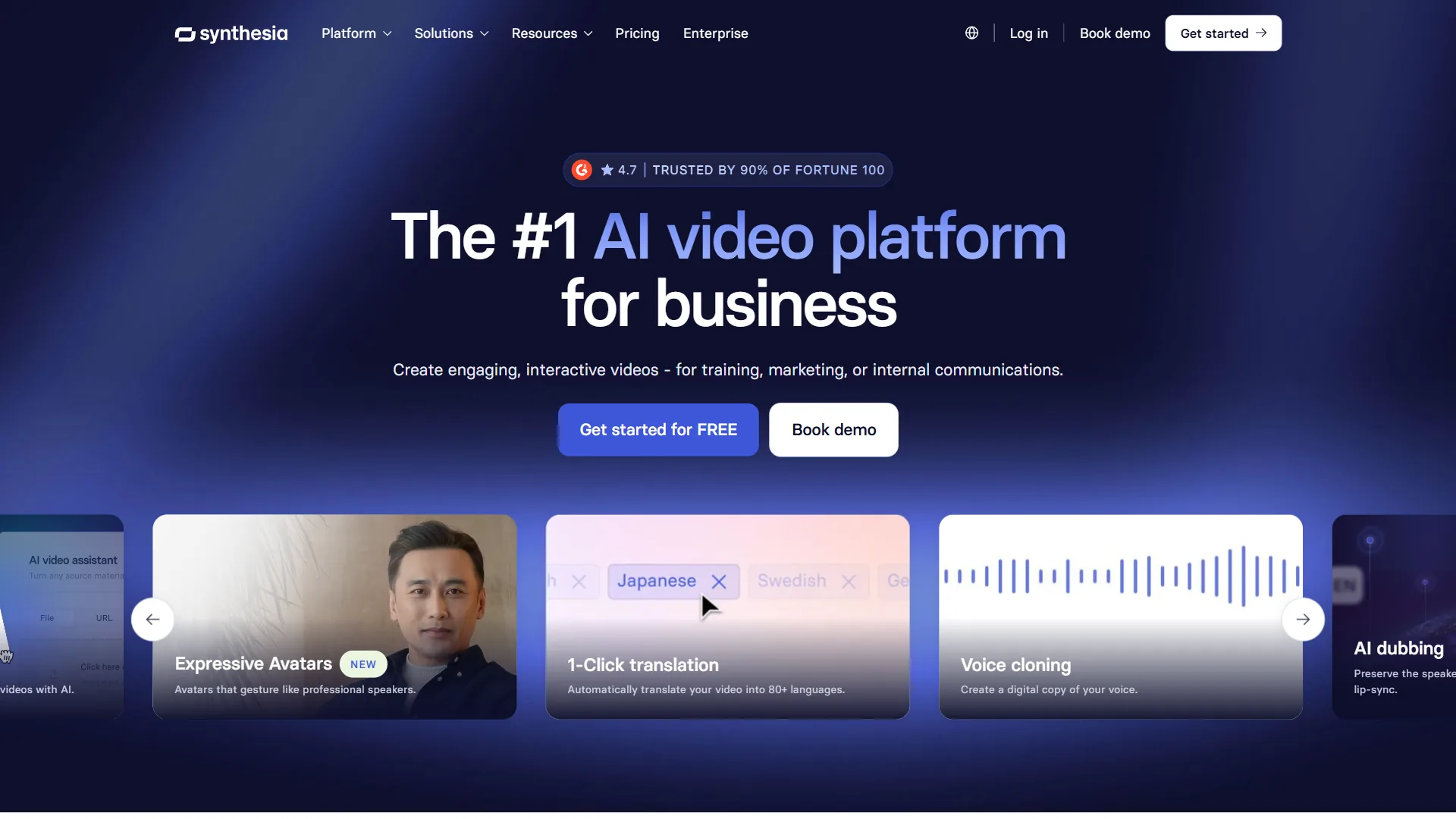
Template selection strategy:
- Business updates: “Corporate Announcement” template (clean, professional)
- Software tutorials: “Product Tutorial” template (screen recording layout built-in)
- Sales enablement: “Sales Pitch” template (emphasis on value props)
- HR/Training: “Educational Course” template (module structure pre-built)
Brand Kit setup (one-time 15-minute investment):
- Upload your logo (PNG with transparency)
- Add brand colors (primary, secondary, accent)
- Set default fonts (heading and body)
- Create intro/outro bumpers
Once configured, every video automatically includes your branding. Zoom saved $1,000-1,500 per employee monthly by eliminating external video production - brand consistency was key to executive buy-in. For a deeper look at building a repeatable studio system, our AI video editing tools roundup covers brand-kit and template strategies across multiple platforms.
Template customization workflow:
- Select base template
- Apply brand kit (one click)
- Replace placeholder text with your script
- Swap stock images for your screenshots
- Adjust avatar and timing
- Generate
Total time: 8-12 minutes for a professional branded video.
Create your own templates: After creating 5-10 videos, save your best-performing layouts as custom templates. Useful templates include:
- Weekly product updates (2-minute format)
- Feature tutorials (3-minute format)
- Customer onboarding (5-minute series format)
This reduces future video creation to 5-7 minutes - just swap script and screenshots.
Synthesia Pricing: Which Plan for Fast Video Creation?
Understanding pricing helps you choose the right plan for your Synthesia tutorial goals.
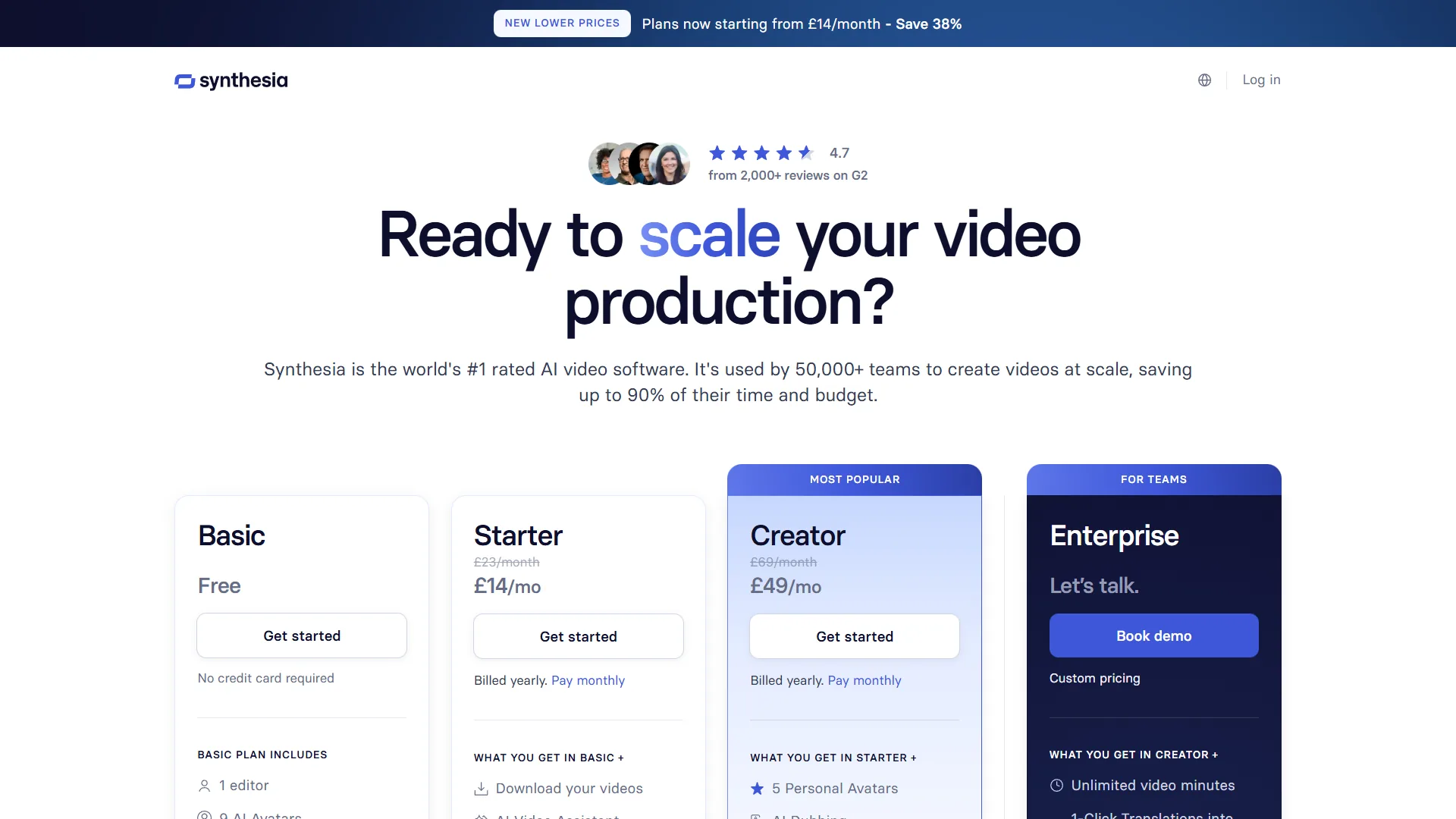
Free Plan (free):
- 3 minutes of video per month (1-2 short videos)
- Synthesia watermark on all videos
- All Express-2 avatars and features included
- Best for: Testing the platform before committing
Starter Plan ($29/month, $29/month annual):
- 10 minutes per month (5-7 videos using tips above)
- No watermark
- 1 user seat
- Best for: Solo creators, small teams making weekly updates
Creator Plan ($89/month, $89/month annual):
- 30 minutes per month (20-25 videos)
- 3 user seats
- Priority rendering (4-minute avg vs. 7-minute)
- Custom avatars (upload your own face)
- Best for: Marketing teams, training departments
Enterprise Plan (custom pricing):
- Unlimited video minutes
- Unlimited user seats
- API access for automation
- Video Agents (interactive avatars, coming 2026)
- Best for: Large organizations with high video volume
ROI calculation: If you’re currently paying $500-1,000 per video for external production, the Creator plan pays for itself after 1-2 videos per month. DuPont reported 80% faster video creation using Synthesia vs. traditional methods - see the Synthesia customer stories for similar enterprise benchmarks.
Annual discount: 38% savings by paying annually. If you’re committed after your first month, switch to annual billing.
For detailed pricing and plan features, visit the official Synthesia pricing page.
What Are the Most Common Synthesia Mistakes to Avoid?
After coaching 30+ colleagues through their first Synthesia videos, here are the mistakes that kill video quality:
1. Writing scripts like written documentation
AI avatars can’t save poorly written scripts. Viewers hear awkward phrasing immediately.
❌ “Users should navigate to the settings panel and locate the preferences subsection.” ✅ “Open Settings, then click Preferences.”
Fix: Read your script out loud before generating. If it sounds unnatural spoken, rewrite it.
2. Overusing text on screen
Synthesia lets you add text overlays, bullet points, and captions. New users add all three simultaneously.
❌ Avatar speaking + full script as captions + bullet points + slide title = cognitive overload ✅ Avatar speaking + 3-5 word keyword highlights + minimal bullets
Fix: If the avatar is saying it, don’t show the full text on screen. Show keywords only.
3. Ignoring the learning resources
Synthesia Academy has 40+ free courses covering every feature. Users waste hours figuring out screen recording sync before discovering their 12-minute tutorial on the topic.
Fix: Spend 30 minutes in Synthesia Academy before creating your first video. The time investment pays back 10x.
4. Using default scene transitions
The default “fade” transition works for 80% of scenes, but strategic transition variation improves flow.
- Fade: General scene transitions
- Slide: When moving between related topics
- None (hard cut): For rapid-fire tips or lists
5. Generating without previewing
Video generation takes 5-8 minutes. Generating, noticing a typo, fixing it, and regenerating wastes 15+ minutes.
Fix: Use the “Preview scene” button (bottom-right) to check avatar delivery, timing, and visuals before generating. Catches 90% of issues.
6. Neglecting mobile optimization
23% of training video views happen on mobile devices. Text that’s readable on desktop becomes illegible on phones.
Fix: Keep text overlays at 24pt minimum font size. Preview in mobile view before finalizing. Web.dev’s responsive images guide covers similar mobile-first principles for text and visuals, and our AI training video tools comparison reviews how alternative platforms handle mobile rendering.
Final Thoughts
You now have the exact Synthesia tutorial tips that separate amateur AI videos from professional content:
- FOCA framework for scripts that engage (120-140 wpm pacing)
- Express-2 avatar selection based on video type
- Scene timing optimization (8-15 seconds per scene, 12-23 scenes total)
- Screen recording workflow for software tutorials
- Template system for sub-10-minute video creation
Your challenge: Create a 2-minute tutorial video in the next 10 minutes using these tips.
- Pick a simple topic you know well (how to use a feature, internal process)
- Write a 240-280 word script using FOCA
- Choose an Express-2 avatar
- Use a template from Synthesia’s library
- Generate and review
The first video won’t be perfect - but it will be 10x better than starting without this framework. And you’ll have created professional video content in the time it used to take just to schedule a production meeting.
Ready to transform your video creation workflow? Start with Synthesia’s free plan to test these Synthesia tutorial tips, then upgrade to Starter or Creator when you’re ready to scale.
Frequently Asked Questions
What is the best words-per-minute speed for Synthesia videos?
A range of 120-140 words per minute works best for viewer retention. Synthesia’s default is 150 wpm, which feels rushed. Going below 100 wpm feels condescending, while 160 wpm creates cognitive overload. Staying in the 120-140 wpm range consistently produces the strongest results based on user feedback.
What is the difference between Express-2 and standard Synthesia avatars?
Express-2 avatars, marked with an ‘E2’ badge, feature full-body movement and natural hand gestures, making content feel significantly more professional. They render in 7-10 minutes compared to 4-6 minutes for standard avatars. Top Express-2 options include Mia for training content and David for executive communications.
How long should a Synthesia tutorial video be?
Video length depends on use case. Simple explainers work best at 45-90 seconds, software tutorials at 2-4 minutes, and detailed training or compliance content at 5-7 minutes. Synthesia content should never exceed 8 minutes - longer topics should be broken into a series instead.
Which Synthesia pricing plan is best for small teams?
The Starter plan at $29/month (or $29/month billed annually) suits solo creators and small teams making weekly updates. It includes 10 minutes of video per month, no watermark, and one user seat. The Creator plan adds 3 user seats and custom avatar uploads, making it better for marketing or training departments.
How do you avoid timing mismatches when recording screens in Synthesia?
Write your script first, then record screen clips that match each scene’s duration. Record in 15-30 second chunks covering one action per clip, move your mouse about 50% slower than normal, and add a 2-second pause before and after each action. Recording an entire workflow in one long take and syncing narration afterward is a common mistake that creates timing problems.
Want to learn more about Synthesia?
Related Guides
- Best AI Video Generators 2026 - Top AI video tools compared
- AI Video Creation Tips - Production techniques
- Best AI Training Video Tools 2026 - Training video comparison
Related Reads
Tools covered in this article:
- Synthesia - AI video generation platform
- HeyGen - AI avatar video creation
- Pictory - AI video editing tool
External Resources
- Synthesia Academy - Official tutorials and feature courses
- Wyzowl Video Marketing Statistics - Industry benchmarks
- Synthesia Blog - Product updates and use-case studies
Related Guides
- AI Avatar Video Marketing: 2026 Walkthrough for Teams
- AI Video Creation Tips: 2026 Walkthrough for Teams
- Elai AI Training Videos: 2026 Walkthrough for Teams
- Fliki Blog to Video: Step-by-Step Tutorial for 2026
- Luma Dream Machine Video Tutorial 2026: Text-to-Video & Ray3
- Master AI Video Marketing: Workflow and Top Tools 2026
- Pictory Articles to Videos 2026 - Complete Tutorial
- Stable Diffusion Tutorial 2026: Local Install to Video Gen
- Text To Video AI Tools: How to Create Videos from Text with