

The open-source AI models landscape in 2026 has fundamentally shifted. What was once a distant second tier behind proprietary offerings from OpenAI and Anthropic is now a legitimate alternative, and in several important benchmarks, the leader. ChatGPT competitors like DeepSeek V3.2, GLM-5, and Qwen 3.5 are matching or exceeding GPT-5 on reasoning tasks, while Google’s Gemma 4 and Meta’s Llama 4 Scout deliver frontier-class intelligence at a fraction of the cost. Several of these also rank among the best open-source AI models for coding, where the leading candidates now match proprietary tools on real engineering workloads.
This comparison covers the six open-source AI models generating the most attention in early 2026: Gemma 4, Qwen 3.5, Llama 4, DeepSeek V3.2, GLM-5, and MiniMax M2.7. For each model, the analysis covers architecture, benchmark performance, licensing, and the practical question that matters most - which model fits which use case. Several rank among the best open-source AI models local teams can run on consumer hardware without sending data to an API. For practical deployment context, our best local LLM tools 2026 guide pairs naturally with this list.
Quick Comparison: Open Source AI Models at a Glance
Open Source AI Models is a topic that directly impacts how teams work day to day, and the landscape in 2026 has fundamentally shifted. Use the open-source AI models list below as a quick reference, then jump to the deep dives for the practical details you need to make an informed decision.
| Model | Developer | Parameters | License | Best For |
|---|---|---|---|---|
| Gemma 4 | Google DeepMind | 2B - 31B (dense/MoE) | Apache 2.0 | On-device and edge deployment |
| Qwen 3.5 | Alibaba Cloud | 0.8B - 397B MoE | Apache 2.0 | Multilingual and multimodal tasks |
| Llama 4 | Meta | 109B - 400B MoE (17B active) | Llama Community | Long-context and multimodal workloads |
| DeepSeek V3.2 | DeepSeek AI | 685B MoE (37B active) | MIT | Reasoning and agentic applications |
| GLM-5 | Zhipu AI | 744B MoE (40B active) | MIT | Coding and systems engineering |
| MiniMax M2.7 | MiniMax | 229B MoE | MIT (expected) | Self-improving agent workflows |
The table above captures the headline numbers, but the real differences emerge when examining what each model does well - and where each falls short. The following sections break down each model in detail.
Gemma 4: Google’s Edge AI Powerhouse
Google DeepMind released Gemma 4 on April 2, 2026, delivering four open-weight models built from the same research behind Gemini 3. The entire family ships under the Apache 2.0 license - fully permissive for commercial use with no restrictions.
Model variants:
- E2B (Effective 2B): Fits on smartphones via Android AICore integration
- E4B (Effective 4B): Ideal for edge devices and lightweight applications
- 26B MoE: Mixture-of-Experts architecture balancing performance and efficiency
- 31B Dense: The flagship, ranking number three among all open models on the Arena AI text leaderboard
Benchmark highlights:
- AIME 2026: 89.2% (31B model) - strong mathematical reasoning
- GPQA Diamond: 84.3% - competitive scientific knowledge
- LiveCodeBench v6: 80.0% - solid competitive coding
Every variant supports multimodal input out of the box - images, video (up to 60 seconds for 26B and 31B), and audio for speech recognition on the smaller models. The architectural innovations include Post-Layer Embedding (PLE) for reduced memory overhead and a hybrid attention mechanism that handles long contexts efficiently on consumer hardware.
Where Gemma 4 excels: On-device deployment, mobile applications, and scenarios where running a model locally without API costs is the priority. The 31B model competes with models 20 times its size on reasoning tasks - which is why it shows up in our best AI assistants 2026 round-up.
Where it falls short: At 31 billion parameters maximum, Gemma 4 cannot match the raw capability of 400B+ models like Llama 4 Maverick or 685B models like DeepSeek V3.2 on the most demanding benchmarks. For heavy enterprise workloads requiring peak performance, the larger competitors hold an edge.
For a deep dive into Gemma 4’s architecture, local setup process, and practical performance, see the full Google Gemma 4 review.
Qwen 3.5: The Multilingual Efficiency Leader
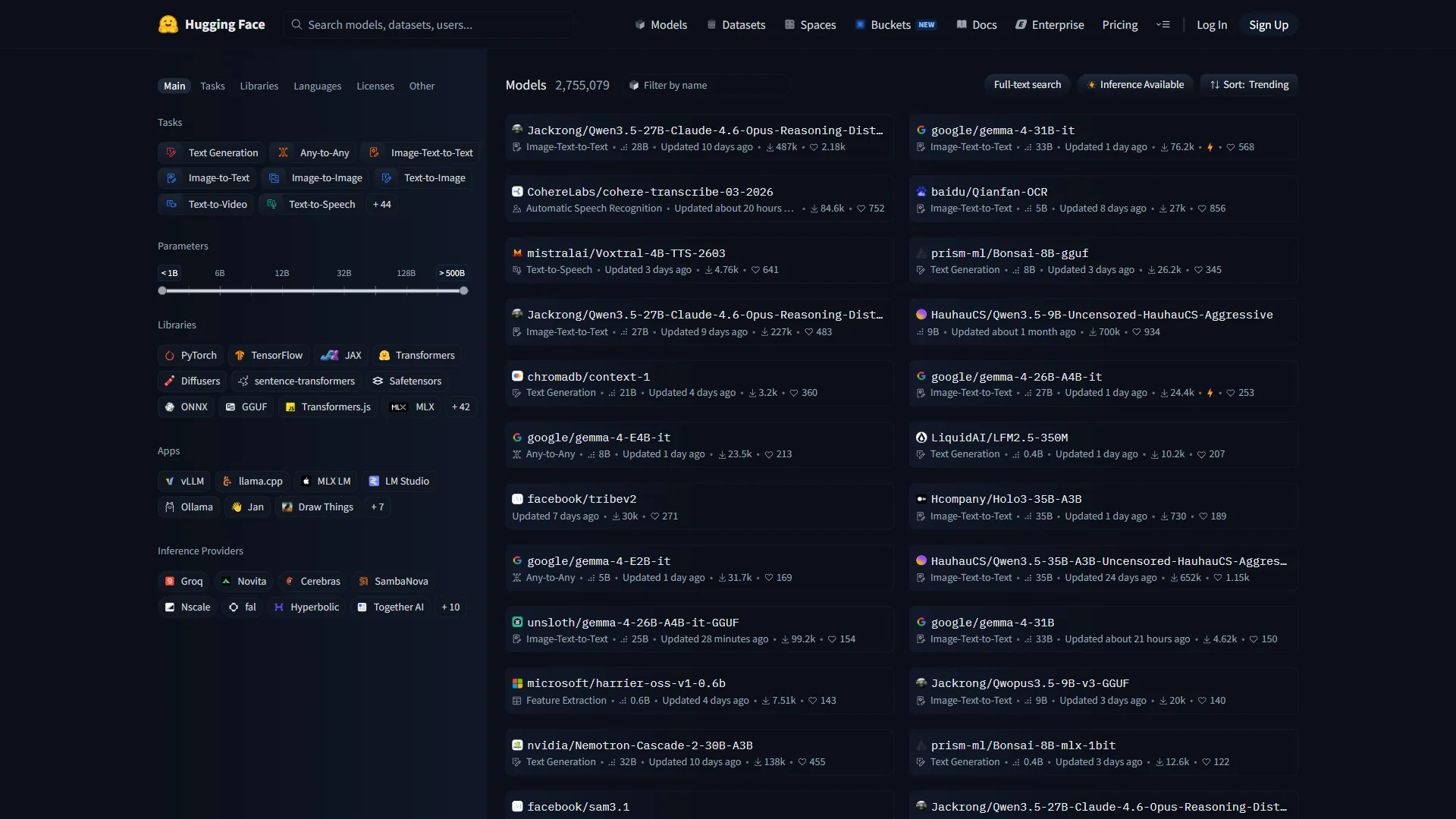
Alibaba released Qwen 3.5 in phases throughout late February and early March 2026. The flagship model - Qwen3.5-397B-A17B - uses a sparse Mixture-of-Experts architecture that activates only 17 billion parameters per query despite the massive total parameter count. This means frontier-level performance at a fraction of the compute cost.
Key innovations:
- Gated Delta Networks: A new attention mechanism that delivers high-throughput inference with minimal latency overhead
- Sparse MoE design: Only activates the parameters needed for each query, dramatically reducing inference cost
- 201 language support: The broadest multilingual coverage of any open source model in 2026
- Near-100% multimodal training efficiency: Vision capabilities come at virtually no performance cost to the language model
The smaller models punch well above their weight class. The 9B variant scores 70.1 on MMMU-Pro visual reasoning - 22.5% higher than GPT-5-Nano’s 57.2. The 35B-A3B model surpasses its predecessor Qwen3-235B and matches proprietary models including GPT-5 mini and Sonnet 4.5 on knowledge and visual reasoning benchmarks.
Licensing: Apache 2.0 across the entire family, with Alibaba’s CEO publicly confirming that Qwen will remain open source. This is the most permissive licensing among the frontier-class models in this comparison.
Where Qwen 3.5 excels: Multilingual applications (201 languages), teams needing permissive licensing, and deployments where inference cost matters. The range of model sizes - from 0.8B to 397B - means there is a Qwen variant for almost any hardware constraint - localization teams should also see best AI translation tools.
Where it falls short: The Qwen3.5-Omni multimodal variant broke Alibaba’s open-source streak by launching as closed-source, raising questions about the long-term openness of the most capable variants. The base text models remain fully open, but teams building multimodal agents should watch this closely.
Llama 4: Meta’s Context Window Champion
Meta’s Llama 4 introduced the first natively multimodal, Mixture-of-Experts open models in the Llama family. The release includes two production models - Scout and Maverick - with a third, Behemoth, in preview.
Scout (109B total, 17B active, 16 experts): The standout specification is the 10 million token context window - unmatched by any other open model. Scout handles entire codebases, long document collections, or extended conversation histories that would overflow the context limits of every other model in this comparison. Despite activating only 17B parameters per forward pass, Scout maintains the reasoning quality of much larger dense models.
Maverick (400B total, 17B active, 128 experts): Maverick scales to 128 experts while keeping the same 17B active parameter footprint as Scout. The result is GPT-5.3 level performance on reasoning and code generation benchmarks at the same inference cost per token. On pure reasoning tasks (MMLU-Pro, GPQA Diamond, MATH), Maverick trails GPT-5.3 by only 1-2 percentage points while matching or exceeding it on code generation.
Behemoth (in preview): Meta previewed Llama 4 Behemoth as one of the most capable LLMs in existence, outperforming GPT-4.5, Claude Sonnet 3.7, and Gemini 2.0 Pro on STEM benchmarks including MATH-500 and GPQA Diamond. No release date has been announced.
Licensing: Llama Community License - more restrictive than Apache 2.0 or MIT. Commercial use is permitted, but with conditions including a monthly active user threshold (700 million) that requires a separate license from Meta. Most organizations will never hit this limit, but it is a meaningful difference from the fully permissive alternatives.
Where Llama 4 excels: Long-context applications that need to process millions of tokens, multimodal workloads combining text and images, and teams already invested in the Meta AI ecosystem - similar trade-offs covered in our Anthropic Claude vs OpenAI GPT breakdown.
Where it falls short: The Llama Community License creates legal overhead that Apache 2.0 and MIT alternatives avoid. Scout trails Maverick by 8-12 points on pure reasoning tasks, which is a substantial gap for teams that need top-tier quality but cannot afford to deploy the larger model.
DeepSeek V3.2: The Reasoning Benchmark King
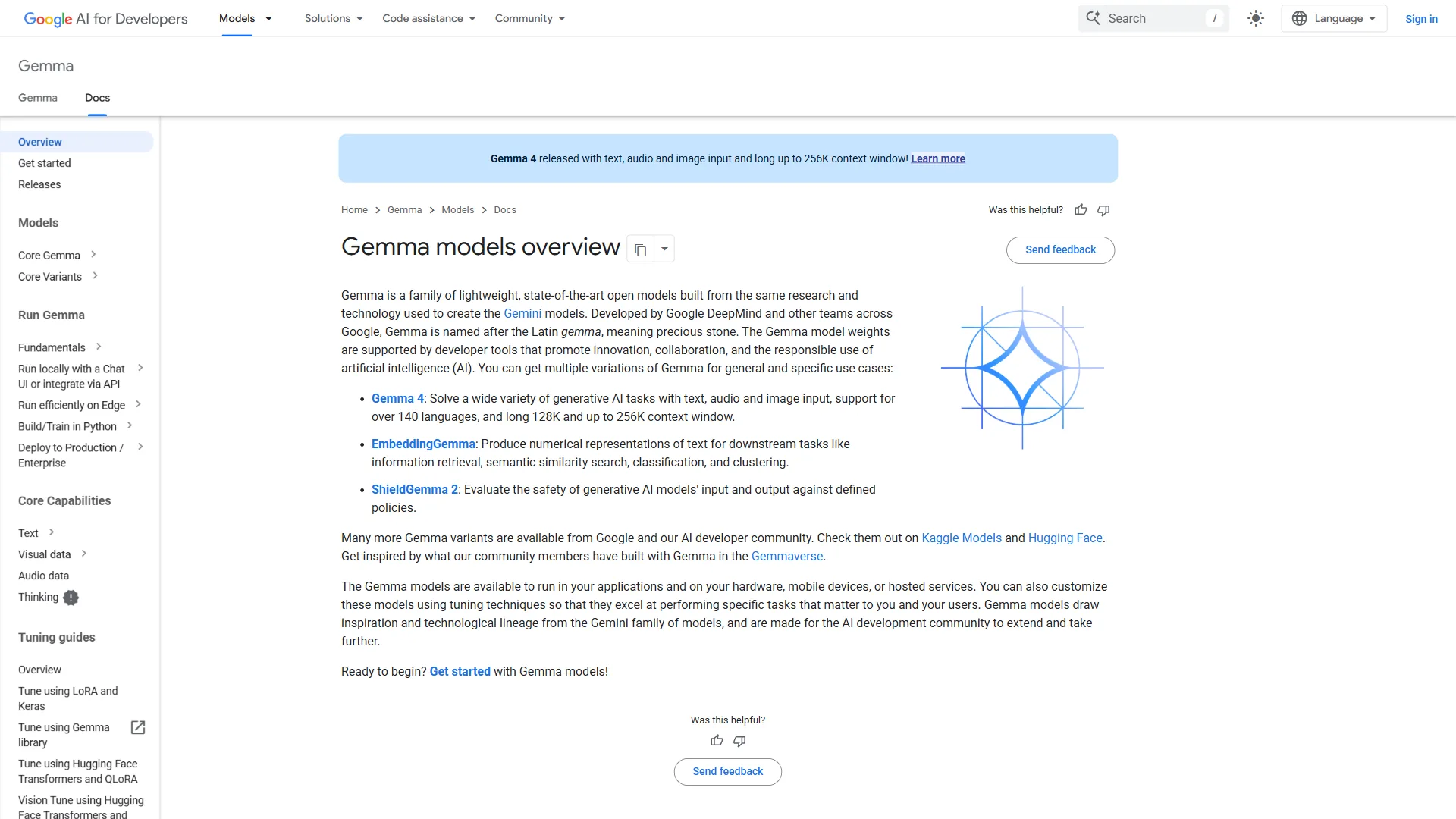
DeepSeek V3.2 is arguably the most impressive open source model release of the past year. With 685 billion total parameters and 37 billion active per query, it delivers performance on par with GPT-5 and Gemini 3.0 Pro - while shipping under an MIT license with no restrictions whatsoever.
Benchmark performance:
- MMLU: 94.2% - effectively tied with proprietary frontier models on general knowledge
- SWE-bench: 67.8% - competitive coding evaluation
- GPQA Diamond: 79.9% - strong scientific reasoning
- AIME 2025: 89.3% - mathematical problem solving
- Competitive math: Gold-medal performance at the 2025 International Mathematical Olympiad (IMO) and International Olympiad in Informatics (IOI)
The high-compute variant, DeepSeek-V3.2-Speciale, outperforms GPT-5 outright on several reasoning benchmarks and matches Gemini 3.0 Pro. This makes DeepSeek V3.2 the open source model most likely to be considered as a direct drop-in replacement for proprietary APIs in reasoning-heavy applications.
Technical innovations: DeepSeek Sparse Attention (DSA) reduces computational complexity substantially, and the reinforcement learning phase consumed more compute than pre-training - an unusual decision that paid off in reasoning quality. The model excels at long-tail agent tasks, making it a strong foundation for autonomous AI workflows.
Cost efficiency: At $0.28 per million input tokens via the DeepSeek API, V3.2 is dramatically cheaper than proprietary alternatives. Self-hosted deployment on appropriate hardware eliminates per-token costs entirely.
Where DeepSeek V3.2 excels: Reasoning-heavy applications, mathematical and scientific workloads, autonomous agent systems, and any deployment where matching proprietary model quality at open-source cost is the goal - many of the orchestration patterns we describe in best AI agent platforms work cleanly with V3.2.
Where it falls short: The 685B parameter count demands significant hardware for self-hosting. Teams without access to multi-GPU setups will need to use the API or consider smaller alternatives. The model also originates from a Chinese lab, which creates compliance considerations for certain government and defense applications.
GLM-5: The Coding Specialist
Zhipu AI released GLM-5 on February 13, 2026 - a 744 billion parameter open model trained entirely on Huawei Ascend chips without a single NVIDIA GPU. The geopolitical significance is notable, but the performance numbers speak for themselves.
Architecture: 744B total parameters with 40B active per query, trained on 28.5 trillion tokens using 100,000 Huawei Ascend 910B chips running the MindSpore framework. GLM-5 incorporates DeepSeek Sparse Attention (DSA) for efficient long-context processing.
Benchmark performance:
- SWE-bench Verified: 77.8% - among the highest for any open model, trailing Opus 4.6 by only 3 points
- Coding (GLM-4.7): 91.2% on SWE-bench - the GLM family leads on coding tasks
- Hallucination rate: Compressed from 90% (GLM-4.7) to 34%, beating Claude Sonnet 4.5’s previous record
The hallucination improvement is worth highlighting. Moving from a 90% hallucination rate to 34% in a single generation is a significant engineering achievement that makes GLM-5 substantially more reliable for production applications where accuracy matters.
Licensing: MIT license - fully permissive with no restrictions. The model weights are available on both Hugging Face and ModelScope, with inference supported across vLLM, SGLang, and the BigModel.cn API.
Infrastructure independence: GLM-5 runs inference on chips from Huawei, Moore Threads, Cambricon, and Kunlunxin. This is no longer a research demonstration - it is a production frontier model operating on a fully domestic Chinese hardware stack, which has implications for supply chain resilience and hardware diversification strategies.
Where GLM-5 excels: Coding tasks, complex systems engineering, long-horizon agentic work, and organizations looking to diversify their AI infrastructure away from exclusive NVIDIA dependency - it lines up with the workflows in our best AI coding assistants review.
Where it falls short: Despite the benchmark improvements, GLM-5 still trails the top proprietary models by a few points on the most demanding reasoning tasks. The Huawei-chip-only training may also limit optimization for NVIDIA hardware during inference, though community efforts are actively addressing this.
MiniMax M2.7: The Self-Evolving Wildcard

MiniMax M2.7 is the most conceptually ambitious model in this comparison. Released on March 18, 2026 as an API-only product (with open weights expected soon), M2.7 is a 229 billion parameter MoE model that participated in its own reinforcement learning process - a first at this scale.
Self-evolution approach: During training, M2.7 ran over 100 rounds of its own optimization. The model analyzed where it failed, modified its own training scaffolding, ran evaluations, and decided whether to keep or revert changes. This is fundamentally different from the standard train-evaluate-retrain pipeline used by every other model in this comparison.
Performance:
- SWE-Pro: 56.22% - approaching Opus-level capability
- GDPval-AA ELO: 1495 - the highest score among open source models on this evaluation
Open source status: MiniMax has not yet released M2.7 with open weights, though the company has a strong track record. M2, M2.1, and M2.5 all shipped with open weights under MIT or Modified-MIT licenses. Given that M2.5 went from API launch to open release in roughly the same timeframe, an open M2.7 could arrive within weeks.
Where M2.7 excels: The self-evolution approach makes this model particularly interesting for agent-based workflows where iterative self-improvement is valuable. Teams building autonomous AI systems should watch this model closely - and our best AI automation tools 2026 guide covers complementary orchestration platforms.
Where it falls short: API-only availability (for now) limits self-hosted deployment options. The 229B parameter count, while efficient for MoE, positions M2.7 below the 685B+ models on raw capability benchmarks. The self-evolution approach is also less proven at scale, making production reliability harder to assess.
How Do the Top Open Source AI Models Compare on Benchmarks?
The following table consolidates the most cited benchmark results across all six models. Empty cells indicate benchmarks where official results have not been published.
| Benchmark | Gemma 4 (31B) | Qwen 3.5 (397B) | Llama 4 Maverick | DeepSeek V3.2 | GLM-5 | M2.7 |
|---|---|---|---|---|---|---|
| MMLU | ~87% | ~93% | ~91% | 94.2% | ~92% | - |
| GPQA Diamond | 84.3% | ~82% | ~80% | 79.9% | ~78% | - |
| AIME 2025 | 89.2% (AIME 2026) | ~88% | ~85% | 89.3% | - | - |
| SWE-bench | - | - | ~65% | 67.8% | 77.8% | 56.2% (SWE-Pro) |
| Context Window | 128K | 128K | 10M (Scout) | 128K | 128K | 128K |
| Active Params | 31B (dense) | 17B | 17B | 37B | 40B | ~25B (est.) |
| License | Apache 2.0 | Apache 2.0 | Llama Community | MIT | MIT | MIT (expected) |
A few patterns emerge from the benchmarks. DeepSeek V3.2 leads on general knowledge (MMLU) and mathematical reasoning. GLM-5 dominates coding benchmarks. Gemma 4 delivers competitive results at a fraction of the parameter count. And Llama 4 Scout’s 10 million token context window exists in a category of its own - readers chasing high-context use cases should also see best AI knowledge management tools.
How Do You Choose the Right Open Source AI Model?
With six strong options, the choice depends less on overall capability and more on specific deployment requirements.
By Licensing Requirements
Maximum permissiveness (Apache 2.0): Gemma 4, Qwen 3.5 No restrictions, no royalties, no geographic limitations. These models can be used in any commercial application without legal review.
Permissive (MIT): DeepSeek V3.2, GLM-5, MiniMax M2.7 (expected) MIT license is similarly permissive. The only meaningful difference from Apache 2.0 is the absence of explicit patent grants.
Conditional: Llama 4 (Llama Community License) Commercial use is permitted, but organizations exceeding 700 million monthly active users need a separate license from Meta. Most companies will never trigger this clause, but the restriction exists.
By Hardware Constraints
Smartphone or edge device: Gemma 4 E2B or E4B - purpose-built for on-device deployment with native Android AICore support.
Consumer GPU (16-24GB VRAM): Gemma 4 26B or 31B, Qwen 3.5 9B - these models run well on a single GPU.
Multi-GPU workstation: Llama 4 Scout, Qwen 3.5 35B-A3B - MoE architectures reduce active parameter requirements. The Apple M5 Max local LLM guide covers similar memory math for unified-memory machines.
Server cluster or cloud: DeepSeek V3.2, GLM-5, Qwen 3.5-397B - frontier performance requires frontier hardware. Capacity planners can pair this with our best AI documentation tools 2026 shortlist.
By Use Case
Reasoning and general knowledge: DeepSeek V3.2 - the 94.2% MMLU score and IMO gold-medal performance make it the strongest general-purpose reasoning model.
Coding and software engineering: GLM-5 - the 77.8% SWE-bench score leads the open source field. For lighter coding tasks, Gemma 4’s 31B model offers strong results with far less hardware. Pair these with the editors in our best AI code editors 2026 review.
Multilingual applications: Qwen 3.5 - with 201 language support, no other model comes close. Localization buyers may also want our best AI localization tools 2026 shortlist.
Long-context processing: Llama 4 Scout - the 10 million token context window enables use cases that are simply impossible with other models.
On-device and mobile AI: Gemma 4 - the only family in this comparison with variants specifically designed and optimized for smartphone deployment. The same trends are reshaping our best AI search tools recommendations.
Autonomous agents: DeepSeek V3.2 or MiniMax M2.7 - both demonstrate strong agentic capabilities, with M2.7’s self-evolution approach offering a unique angle on iterative agent improvement.
How Has the Open Source AI Licensing Landscape Changed?
One of the most significant shifts in 2026 is that the best open source models now ship with genuinely permissive licenses. Apache 2.0 (Gemma 4, Qwen 3.5) and MIT (DeepSeek V3.2, GLM-5) mean organizations can deploy these models commercially without licensing fees, usage caps, or geographic restrictions. This is a stark contrast to early 2024, when most competitive open models carried non-commercial or heavily restricted licenses.
The practical impact is substantial. A startup building an AI-powered product can now choose between:
- Proprietary API - Pay per token to OpenAI, Anthropic, or Google. Simple to start, but costs scale linearly with usage and the provider controls pricing, availability, and terms.
- Open source self-hosted - Deploy DeepSeek V3.2 or GLM-5 on owned infrastructure. Higher upfront cost for hardware, but zero marginal cost per token and complete control over the stack.
- Open source API - Use providers like DeepSeek’s API ($0.28/M input tokens) or hosted Llama endpoints for a fraction of proprietary pricing. Many of these endpoints power tools we cover in best AI chatbots.
For teams evaluating how Google’s open source strategy connects to their broader AI ecosystem, the Gemini tool page covers the relationship between Gemma (open source) and Gemini (hosted product).
What to Watch in Q2-Q3 2026
Several developments will reshape this comparison in the coming months:
Llama 4 Behemoth release: Meta’s preview suggests this will be the most capable open model ever released. The production release date and licensing terms will determine whether it displaces DeepSeek V3.2 at the top of the reasoning benchmarks.
MiniMax M2.7 open weights: The expected open-weight release will determine whether the self-evolution training approach translates into real-world advantages when the community can fine-tune and adapt the model.
Qwen 3.5 Omni openness: Whether Alibaba reverses the closed-source decision for the Omni multimodal variant will signal the direction of open source AI policy at one of the world’s largest tech companies.
Hardware diversification: GLM-5’s demonstration that frontier models can be trained entirely on non-NVIDIA hardware has implications for every organization concerned about chip supply constraints. Expect more models to explore alternative hardware stacks throughout 2026.
Efficiency gains: The trend toward Mixture-of-Experts architectures (used by five of six models in this comparison) means that the active parameter count - not total parameters - is becoming the more meaningful measure of deployment cost. Models that activate 17-40 billion parameters per query while delivering 400B+ quality represent the new standard - a shift our AI hype vs reality piece puts in broader perspective.
The Bottom Line
Open source AI models in 2026 are no longer a compromise. DeepSeek V3.2 matches proprietary frontier models on reasoning. GLM-5 leads on coding. Qwen 3.5 covers 201 languages under Apache 2.0. Gemma 4 puts competitive AI on a smartphone. Llama 4 Scout processes 10 million tokens in a single context window. And MiniMax M2.7 is exploring self-evolving training that could define the next generation of autonomous agents.
The right choice depends on the specific deployment - hardware available, licensing requirements, primary use case, and whether the workload demands the absolute peak of benchmark performance or benefits more from efficiency and accessibility. For most applications, the gap between these open models and the best proprietary alternatives has narrowed to single-digit percentage points. For some benchmarks, open source is already in the lead. To see how Google’s open source Gemma models connect to their hosted Gemini platform, check the tool page for the full ecosystem breakdown - and pair this with our best ChatGPT alternatives review to round out the picture.
FAQ
Q: Which are the best open-source AI models in 2026?
The six leading open source AI models in 2026 are Gemma 4, Qwen 3.5, Llama 4, DeepSeek V3.2, GLM-5, and MiniMax M2.7. DeepSeek V3.2 leads on reasoning, GLM-5 dominates coding benchmarks, Qwen 3.5 covers 201 languages, Gemma 4 excels on-device, and Llama 4 Scout offers a 10 million token context window.
Q: Are there any free OpenAI models?
OpenAI’s main GPT-5 and GPT-4 models are proprietary and only available via paid API. The closest open alternatives are DeepSeek V3.2 (matches GPT-5 on reasoning under MIT license) and Llama 4 (Meta’s open-weight model under a research license). For voice, OpenAI’s Whisper is open source.
Q: Is there any AI that is open-source?
Yes - several frontier-grade AI models are open source in 2026. Gemma 4 (Google), Qwen 3.5 (Alibaba), and GLM-5 (Zhipu AI) ship under Apache 2.0 or MIT licenses. DeepSeek V3.2 is MIT-licensed. Llama 4 (Meta) uses a custom research license. These run locally on consumer hardware or via free hosted inference.
Q: Are there any free open source AI models that compete with proprietary alternatives?
Yes. DeepSeek V3.2 delivers performance on par with GPT-5 and Gemini 3.0 Pro while shipping under an MIT license with no restrictions. Qwen 3.5 and Gemma 4 ship under Apache 2.0, and GLM-5 also uses MIT. These permissive licenses mean organizations can deploy these models commercially without licensing fees, usage caps, or geographic restrictions.
Related Reading
- Google Gemma 4: Open Source On-Device AI - deep dive into Gemma 4 architecture, benchmarks, and local setup
- The Future of AI Coding Assistants: 2026 and Beyond - how AI models are reshaping developer workflows
- Apple M5 Max Local LLM Guide - practical guide to running open source models on Apple Silicon
- Which Claude Model for Coding - choosing the right proprietary model as a baseline comparison
- Gemini Review
External Resources
- Google DeepMind Gemma 4 Official Page - model documentation, download links, and benchmarks
- DeepSeek V3.2 on Hugging Face - model weights and technical documentation
- GLM-5 on Hugging Face - Zhipu AI’s open-weight frontier model
- Open LLM Leaderboard 2026 - live benchmark rankings across open source models