


ChatGPT prompts 2026 are structured inputs built around the RICE framework - Role, Instructions, Context, and Examples - rather than simple template fill-ins. Whether you want a ChatGPT prompt generator or a ChatGPT prompts 2026 PDF for reference, the core truth holds: most prompts fail by including only instructions, while adding role, context, and examples transforms generic output into genuinely useful results, with technique mattering far more than prompt length.
In 2026, one thing is clear about ChatGPT prompt engineering: the difference between a mediocre prompt and an excellent one isn’t length - it’s technique. Our ChatGPT tips and tricks guide covers a complementary set of features that make these prompts even more effective.
Most “50 ChatGPT prompts” articles - or even a 1000 ChatGPT prompts PDF - give you templates like “Write a blog post about [topic].” That’s not prompt engineering. That’s a Google search with extra steps.
This article is different. It covers 18 prompts - not 50 - because each one demonstrates a specific technique that transforms generic AI output into genuinely useful results, whether you need ChatGPT prompts for better answers on complex decisions or even a ChatGPT prompt for photo editing. For every prompt, you’ll see:
- The basic version (what most people write)
- The engineered version (what actually works)
- Why it works (the technique you’re learning)
- Real output (proof, not promises)
Let’s start with the framework that makes all of this work.
What Is the RICE Framework Behind ChatGPT Prompts 2026?
Before we dive into prompts, you need to understand why some prompts work and others don’t. Even OpenAI’s prompt engineering guide emphasizes the importance of clear instructions and context. The RICE framework explains why:
| Letter | Element | What It Does | Example |
|---|---|---|---|
| R | Role | Tells ChatGPT who to be | ”You are a senior marketing strategist…” |
| I | Instructions | What specific task to do | ”Analyze this landing page for conversion blockers…” |
| C | Context | Background information | ”My business is B2B SaaS, targeting CTOs…” |
| E | Examples | What good output looks like | ”Format like this: [show example]” |
Most prompts fail because they only have I (instructions). Adding R, C, and E transforms outputs from generic to genuinely useful. Anthropic’s system prompt guidance echoes the same point: roles and context dominate over phrasing.
Quick Wins: 5 Prompts That Save Hours
Before the deep dive, here are five essential prompts. Each saves 1-2 hours per week.
1. The Decision Unsticker
The Technique: Adversarial prompting + structured output
What most people write:
Should I do A or B?The engineered prompt:
You are a strategic advisor known for helping founders avoid
analysis paralysis. You're direct and won't validate my biases.

## My Decision
I'm deciding whether to:
A) Keep my current $3,500/month retainer client who's demanding
   but pays on time
B) Drop them to focus on my course launch (projected $15k,
   but uncertain timeline)

## My Context
- Monthly expenses: $4,200
- Savings runway: 3 months
- Course is 60% complete
- Client takes ~25 hours/week

## Your Task
1. List 3 reasons I'm probably leaning toward B (expose my bias)
2. Steel-man the case for A (make me defend my preference)
3. Identify the ONE question I should answer before deciding
4. Give your recommendation with a confidence level (low/medium/high)
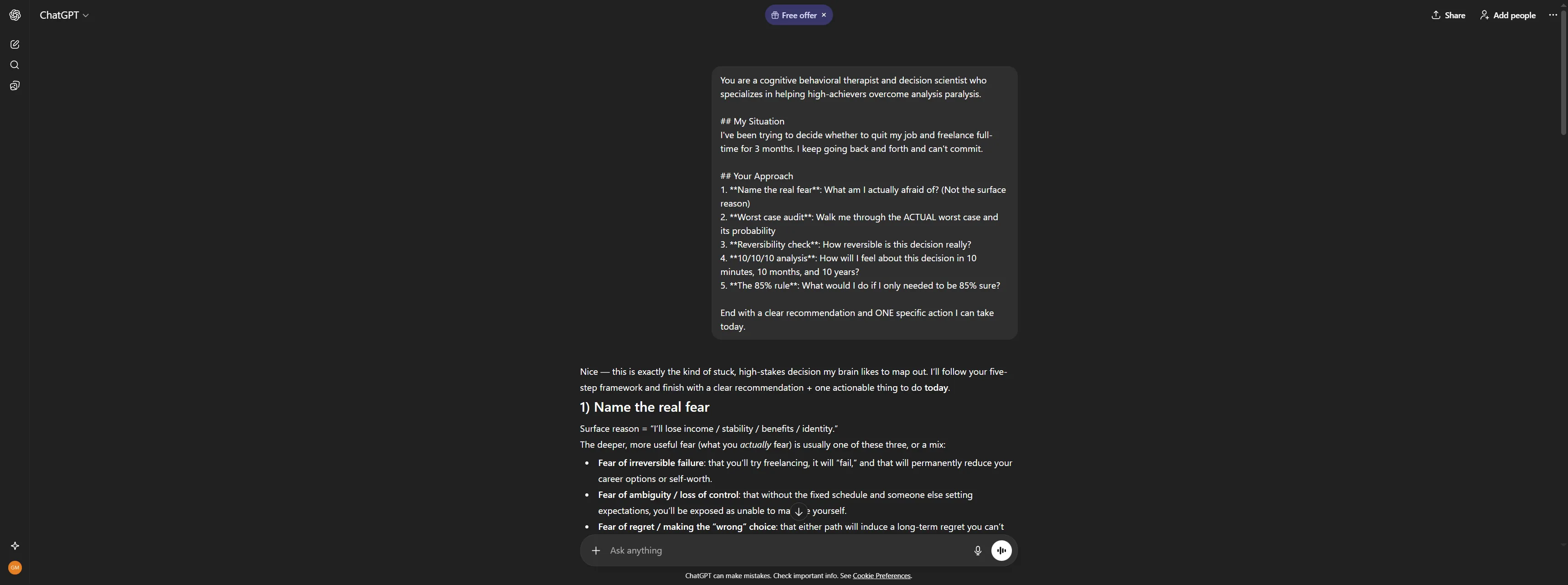
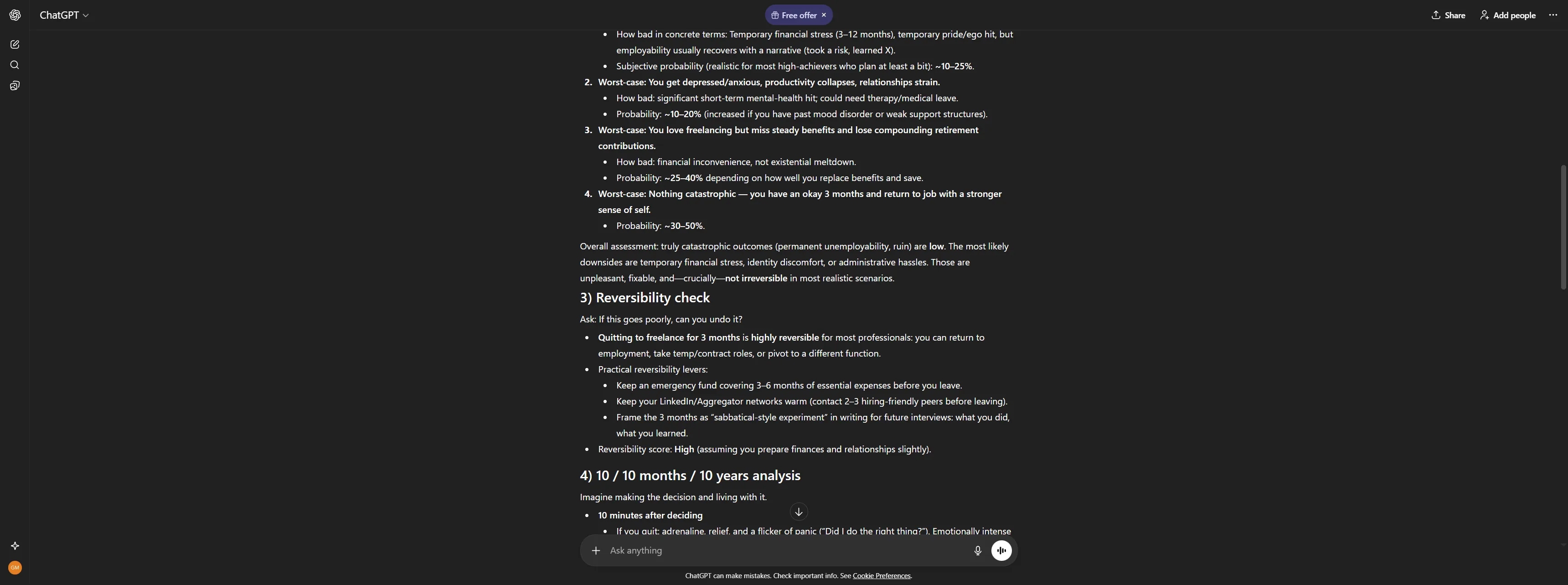
Why this works: The “expose my bias” and “steel-man” instructions bypass ChatGPT’s tendency to agree with you. The confidence level forces nuanced thinking instead of a generic “it depends.”
Customize it:
- For hiring decisions: Add candidate details and team dynamics
- For pricing decisions: Add current revenue and competitor benchmarks
2. The Email That Gets Replies
The Technique: Role-based + constraints + specific goal
What most people write:
Write a cold email to a podcast host asking to be a guest.The engineered prompt:
You are a cold email specialist who has achieved a 40% response
rate for B2B outreach. You know that the best cold emails feel
like they were written by a friend, not a marketer.

## The Recipient
- Name: Sarah Chen
- Podcast: "Scaling Solopreneurs" (interviews founders doing $10k-100k/mo)
- Recent episode: Interview with a productized service founder
- Her content style: Tactical, no-fluff, loves specific numbers

## About Me
- I run a $45k/month design productization agency
- Grew from $0 to $45k in 18 months without employees
- Unique angle: I only work 25 hours/week by design

## Constraints
- Maximum 75 words (she's busy)
- No "I hope this finds you well" or similar filler
- Reference something specific from her recent content
- End with a low-friction ask (not "let me know when you're free")

## Output
Just the email, no explanation.
Why this works: The specific persona (“40% response rate specialist”) primes better output than generic instructions. The constraints prevent AI’s tendency toward verbose, formal writing. The “reference something specific” forces personalization.
3. The Meeting Prep Cheat Sheet
The Technique: Structured output + chain-of-thought + anticipation
What most people write:
Help me prepare for a meeting with a potential client.The engineered prompt:
You are my executive assistant preparing me for a sales call.
You've sat in on hundreds of these calls and know what separates
closed deals from polite rejections.

## The Meeting
- With: Marcus Williams, Head of Marketing at TechFlow (B2B SaaS, 50 employees)
- Context: He downloaded our pricing guide, booked a 30-min call
- Goal: Qualify fit and book a proposal call
- His likely pain: We know TechFlow's blog posts twice and then went quiet 6 months ago

## Prepare me with this exact format:

### 1. Opening Question (break the ice, learn something)
[One question that's relevant to him, not generic]

### 2. Discovery Questions (ranked by importance)
[3 questions to understand his real problem]

### 3. Likely Objections & Responses
| Objection | Response Framework |
|-----------|-------------------|

### 4. My Proof Points
[What from my experience maps to his likely needs]

### 5. Close
[Exact words to transition to next step if qualified]
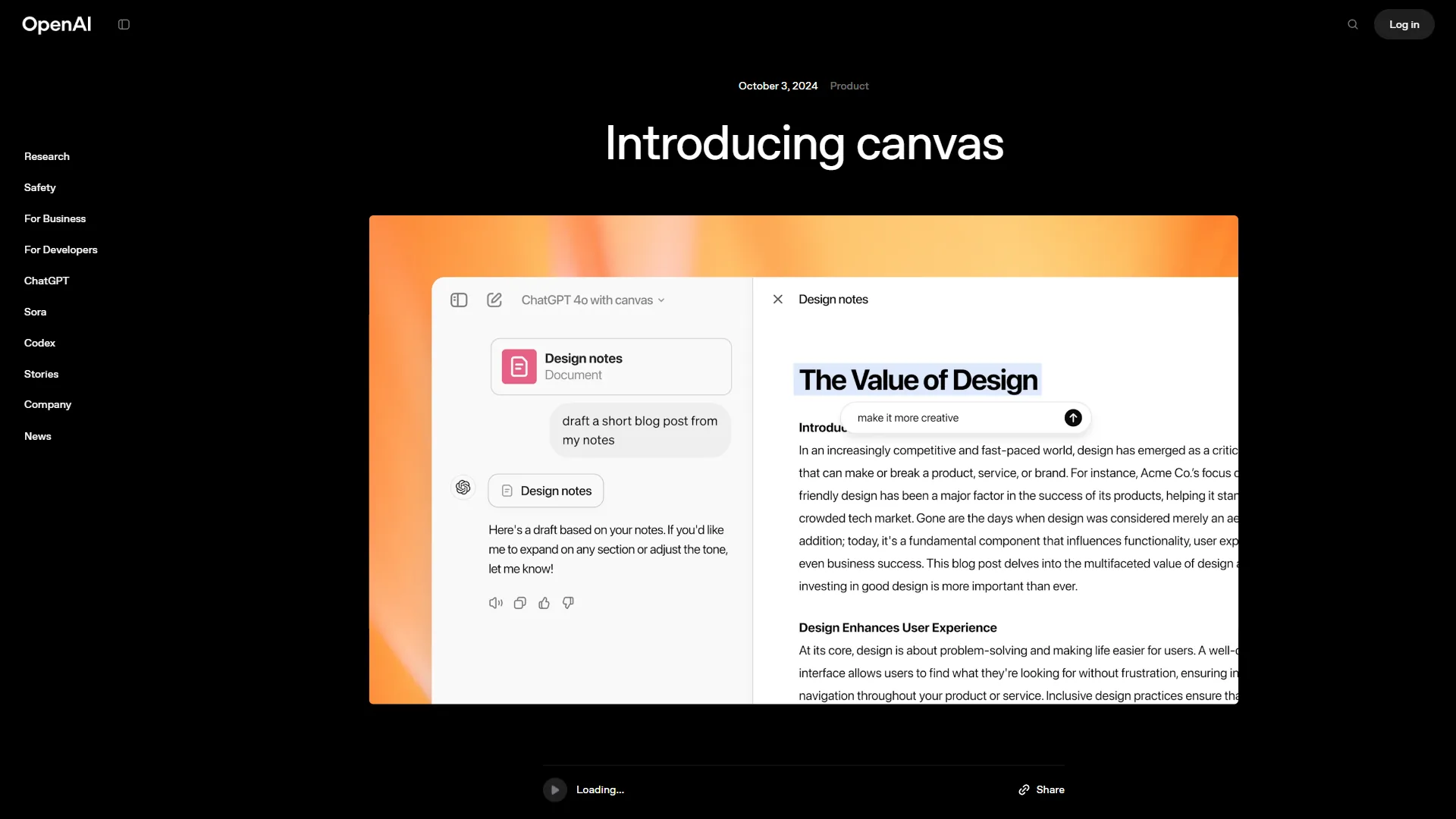
Why this works: The structured output means you can glance at this 5 minutes before the call. The “hundreds of these calls” role activates practical knowledge. The anticipation of objections prepares you for the hard parts. Pair this with ChatGPT Canvas mode for inline edits.
4. The Content Multiplier
The Technique: Format transformation + platform-specific constraints
What most people write:
Turn this blog post into social media content.The engineered prompt:
You are a content strategist who specializes in repurposing.
You know that each platform has different engagement patterns
and what works on LinkedIn dies on Twitter.

## Source Content
[Paste your blog post or article]

## Transform into these formats:

### Twitter/X Thread (6-8 tweets)
- Hook tweet must be controversial or counterintuitive
- Each tweet is standalone valuable
- End with a soft CTA, not "follow for more"
- Use line breaks for readability

### LinkedIn Post (1 post)
- Open with a pattern interrupt (not "I've been thinking...")
- Include a specific story or number
- 1,200-1,500 characters
- End with a question, not a statement

### Email Newsletter Teaser (100 words)
- Creates curiosity gap
- One clear CTA
- Assumes reader skims

For each, explain in one sentence why you made the choices you did.
Why this works: The platform-specific constraints prevent generic output. The “explain your choices” instruction means you learn for next time. The “controversial or counterintuitive” hook instruction fights ChatGPT’s tendency toward bland openings.
5. The Brutal Feedback Generator
The Technique: Adversarial role + specific criteria + actionable output
What most people write:
Give me feedback on this landing page.The engineered prompt:
You are a conversion rate optimization consultant who charges
$500/hour. You're known for being brutally honest because your
clients pay for results, not compliments.

Your job is to tear apart this landing page. I don't want
encouragement -- I want to know exactly why visitors aren't converting.

## The Page
[Paste copy or describe layout]

## Current Metrics
- 2,400 monthly visitors
- 1.2% conversion rate (industry average: 3%)
- 68% bounce rate

## Analyze with this structure:

### Above the Fold (First 5 seconds)
- What's confusing or missing?
- Grade: A/B/C/D/F

### Value Proposition
- Is it clear what I do and for whom?
- Grade: A/B/C/D/F

### Trust Elements
- Why would a skeptic not believe me?
- What's missing?
- Grade: A/B/C/D/F

### Call-to-Action
- Friction points
- Grade: A/B/C/D/F

### The One Thing
If you could only change ONE element to improve conversions, what would it be and why?
Why this works: The “$500/hour consultant” role and “brutally honest” instruction override ChatGPT’s default politeness. The grading system forces specific assessment. “The One Thing” prevents generic “improve everything” advice. Nielsen Norman Group’s UX research confirms that specific feedback frameworks outperform open-ended critique.
Which Prompting Techniques Work Best for ChatGPT?
Now let’s go deeper. Each section demonstrates a specific prompt engineering technique.
Role-Based Prompting
The single most underused technique. Adding “You are a [specific expert]” to any prompt improves output significantly - academic research on persona prompting finds measurable accuracy gains across reasoning tasks. Our Claude vs ChatGPT comparison shows how role-priming behaves differently across model families.
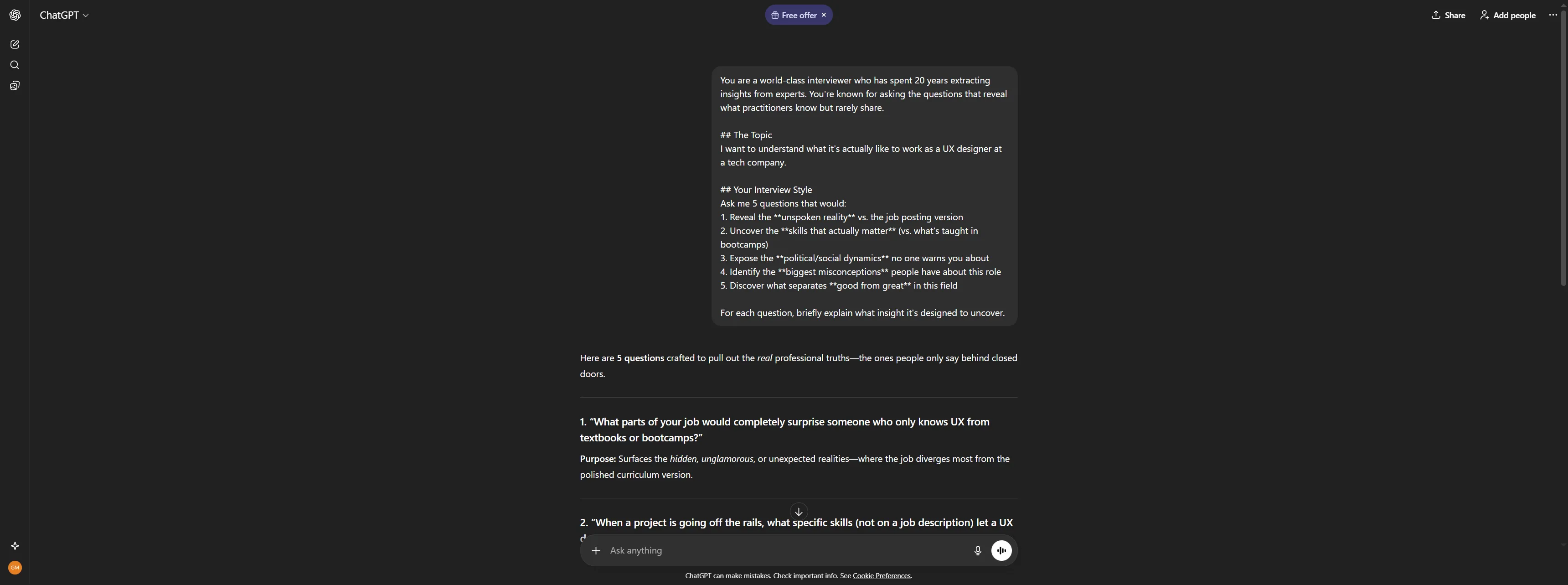
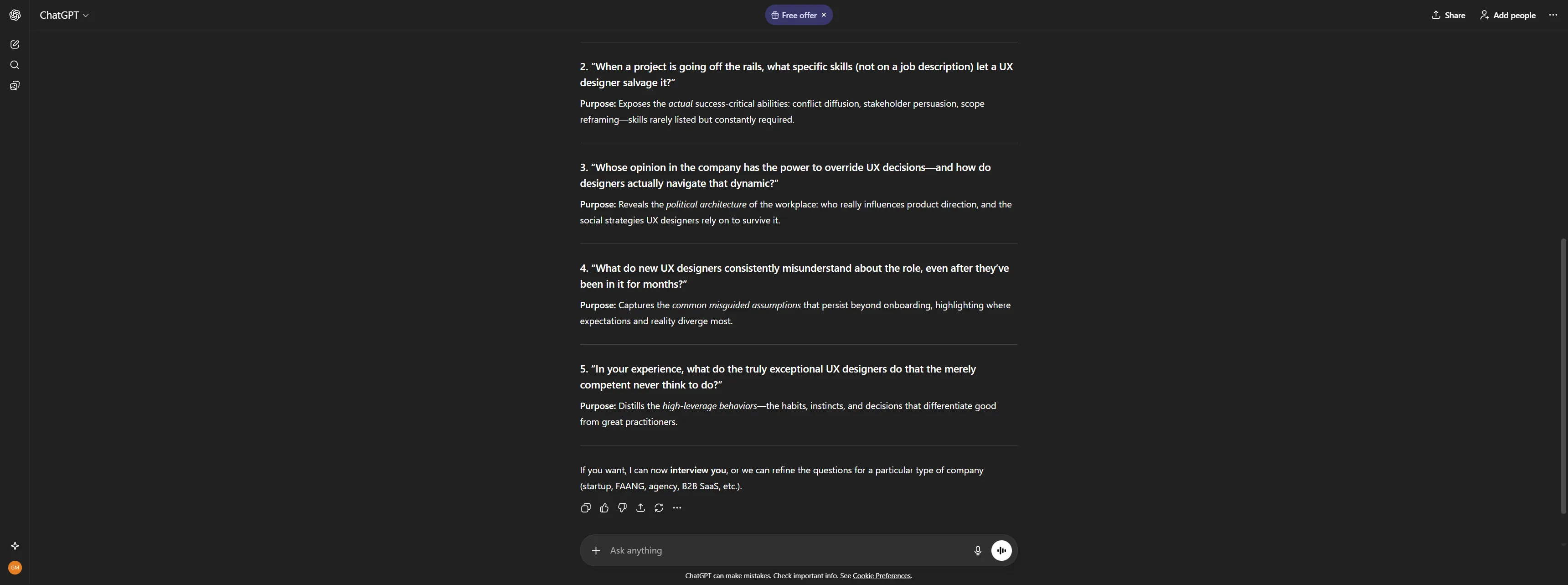
6. The Expert Interviewer
The Technique: Expert role + Socratic method
What most people write:
What should I know about pricing my services?The engineered prompt:
You are a pricing strategist who has helped 200+ service
businesses increase their rates. You use the Socratic method --
you teach by asking questions, not by lecturing.

I'm a freelance UX designer charging $75/hour. I want to
raise my rates but I'm scared I'll lose clients.

Don't tell me what to do. Instead:
1. Ask me 5 questions that will reveal my pricing blindspots
2. After I answer, ask 3 follow-up questions
3. Only then, give me your assessment

Start with your first question.
Why this works: The Socratic method instruction creates a conversation that surfaces YOUR specific situation, not generic advice. The “don’t tell me what to do” constraint prevents premature conclusions.
7. The Devil’s Advocate
The Technique: Adversarial role + structured argument
What most people write:
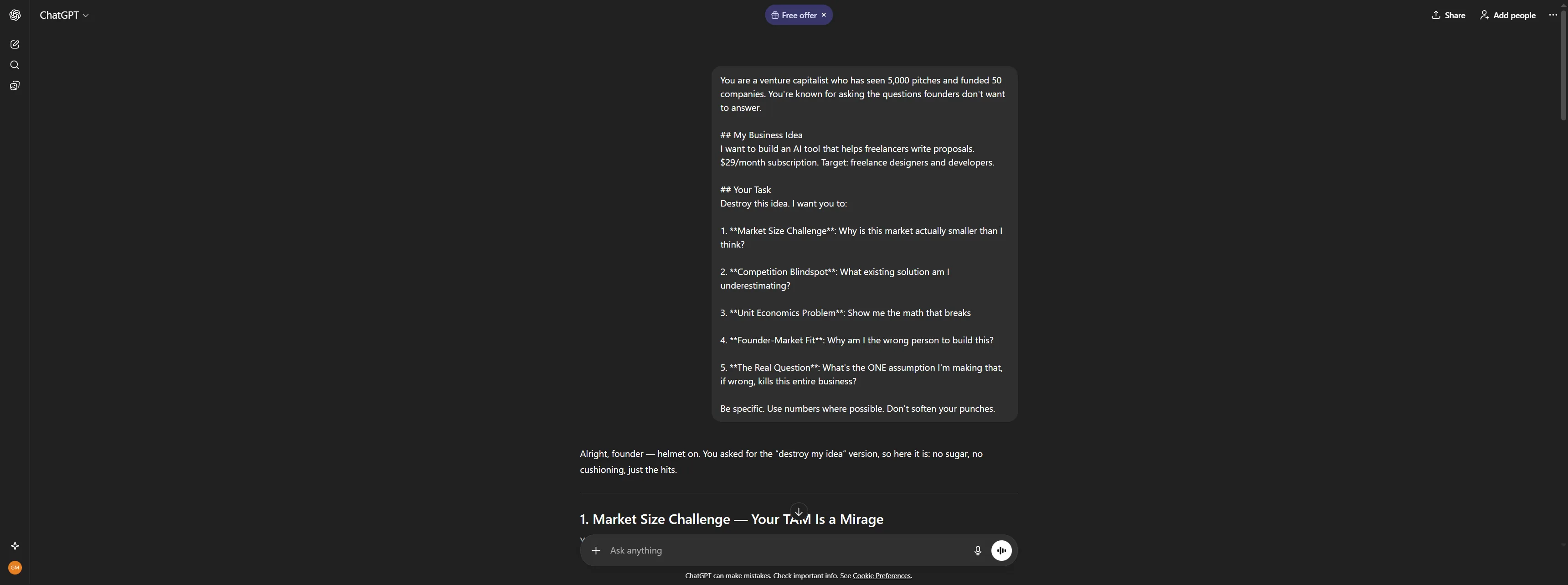
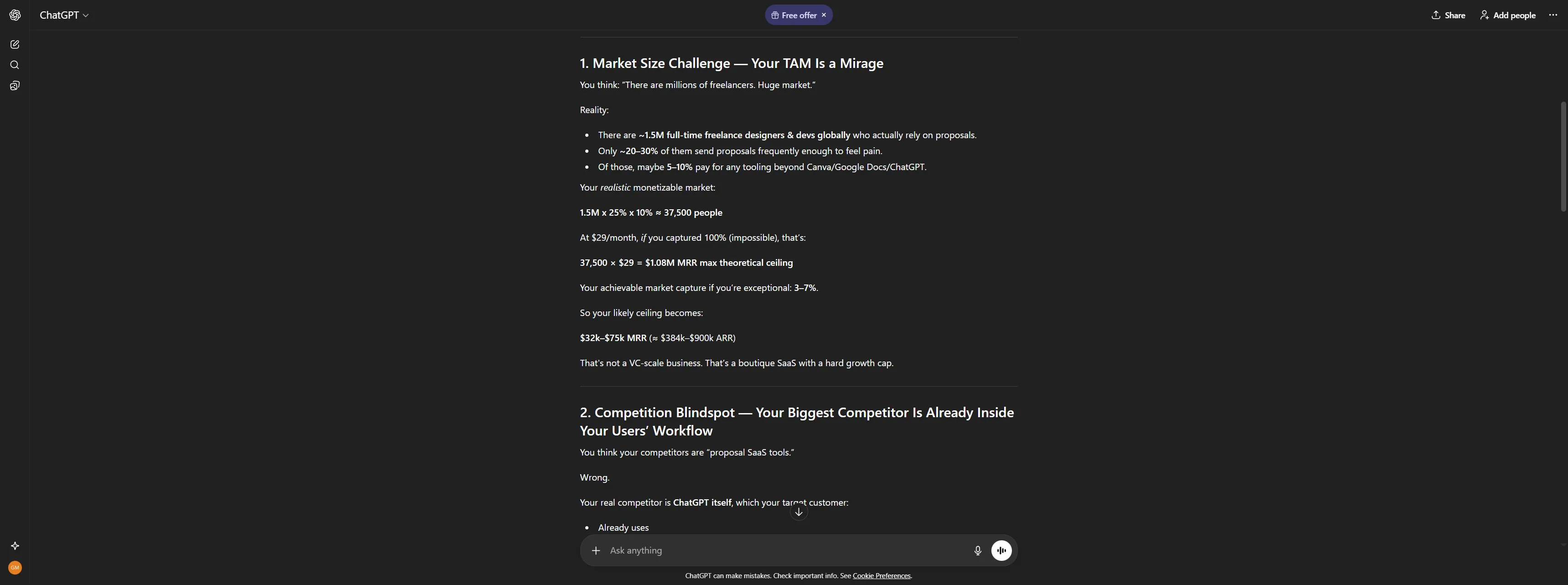
Is my business idea good?The engineered prompt:
You are a venture capitalist who has seen 5,000 pitches and
funded 50 companies. You're known for asking the questions
founders don't want to answer.

## My Business Idea
I want to build an AI tool that helps freelancers write proposals.
$29/month subscription. Target: freelance designers and developers.

## Your Task
Destroy this idea. I want you to:

1. **Market Size Challenge**: Why is this market actually smaller
   than I think?

2. **Competition Blindspot**: What existing solution am I
   underestimating?

3. **Unit Economics Problem**: Show me the math that breaks

4. **Founder-Market Fit**: Why am I the wrong person to build this?

5. **The Real Question**: What's the ONE assumption I'm making
   that, if wrong, kills this entire business?

Be specific. Use numbers where possible. Don't soften your punches.
Why this works: The VC role with “5,000 pitches” establishes credibility. The structured challenge categories ensure comprehensive critique. The explicit “don’t soften” instruction overrides politeness defaults.
Chain-of-Thought Prompting
Force ChatGPT to show its reasoning. Better reasoning = better outputs - the original chain-of-thought paper documents the accuracy lift on multi-step problems.
8. The Strategy Breakdown
The Technique: Step-by-step reasoning + intermediate outputs
What most people write:
Help me create a marketing strategy.The engineered prompt:
You are a fractional CMO who works with bootstrapped SaaS
companies. Walk me through your strategic thinking process.

## My Situation
- Product: Project management tool for creative agencies
- Current MRR: $8,400
- Main channel: Cold outreach (2% reply rate)
- Goal: $25k MRR in 6 months
- Budget: $2,000/month for marketing

## Think through this step by step:

### Step 1: Diagnose
What's the core problem with my current approach?
(State your reasoning, then conclusion)

### Step 2: Explore Options
List 3 potential strategies. For each:
- Why it might work
- Why it might fail
- Time to first results
- Cost

### Step 3: Analyze Trade-offs
Compare the options in a table:
| Strategy | Probability of Success | Effort | Speed |

### Step 4: Recommend
Which strategy and why?
(Show your reasoning before the recommendation)

### Step 5: First 30 Days
If I picked your recommendation, what would I do in the
first 30 days? Be specific -- dates and actions.
Why this works: The step-by-step structure prevents jumping to conclusions. The “state your reasoning, then conclusion” instruction makes the thinking visible. The table format enables quick comparison.
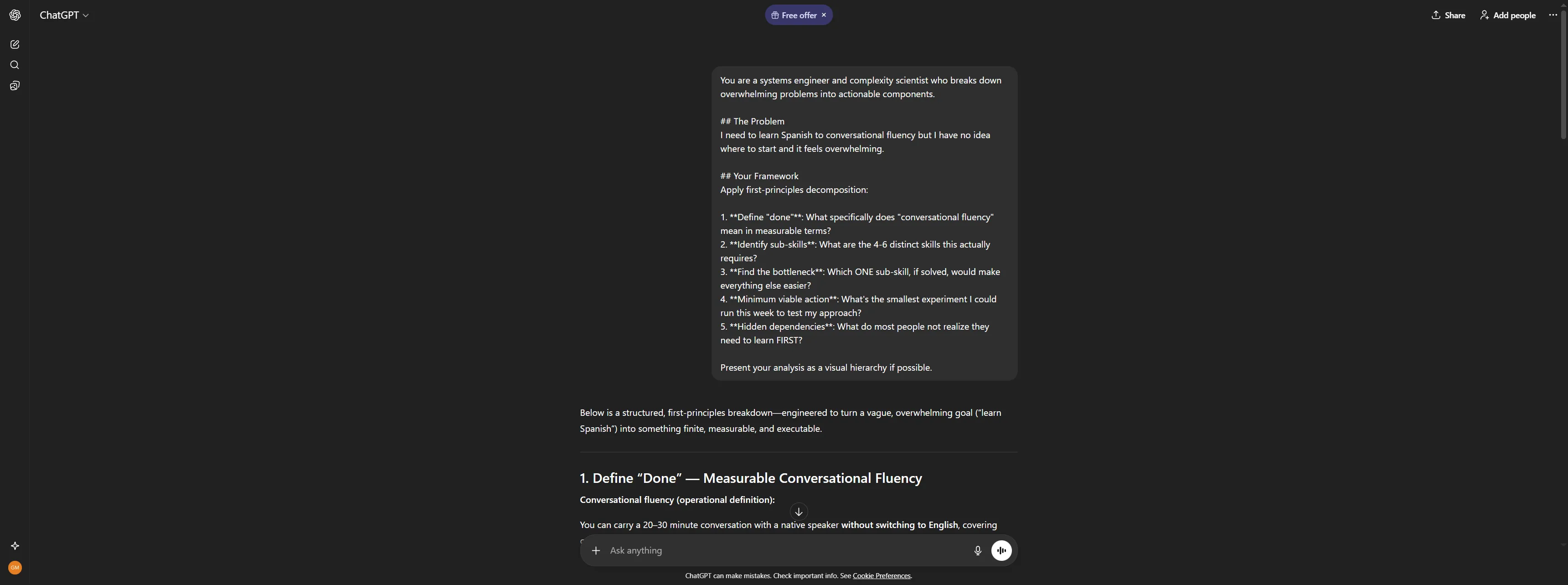
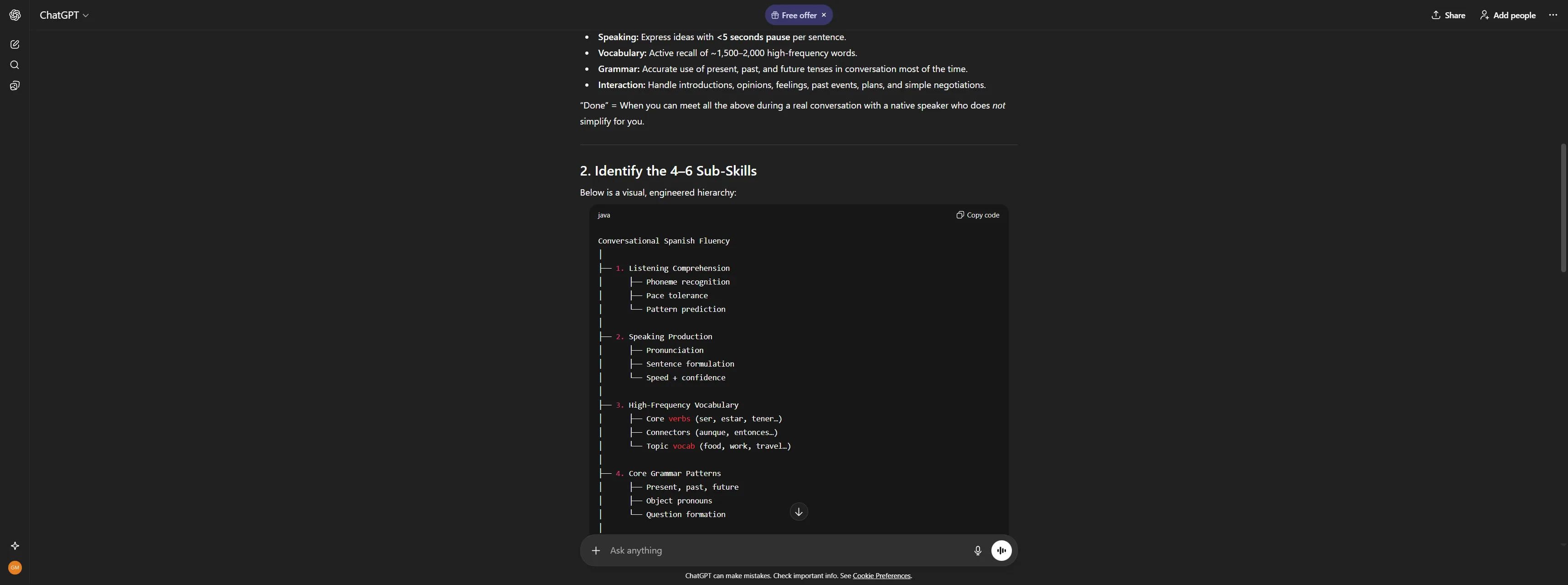
9. The Problem Decomposer
The Technique: Breaking complex into simple + numbered steps
What most people write:
How do I build an audience?The engineered prompt:
You are an audience-building coach who helps solopreneurs
go from 0 to 10,000 engaged followers.

I want to build an audience on LinkedIn. I'm a copywriter
who helps B2B SaaS companies with their messaging.

Break this down for me:

## Level 1: The Big Goal
What does "building an audience" actually mean in measurable terms?

## Level 2: The Components
What are the 3-5 sub-problems I need to solve?
(List each as a clear question)

## Level 3: The First Problem Deep Dive
Take the FIRST sub-problem and break it down further:
- What specifically needs to happen?
- What skills do I need?
- What resources do I need?
- What's the minimum viable version I could do this week?

## Level 4: Today's Action
Give me ONE thing I can do in the next 30 minutes that
moves me forward on this goal.
Why this works: Complex goals cause paralysis. This decomposition structure takes an overwhelming goal and makes it actionable. The “30 minutes” constraint forces practical output.
Structured Output Prompting
Tell ChatGPT exactly how to format the response. This makes outputs immediately usable.
10. The Competitor Analysis Matrix
Technique: Table output + specific criteria + actionable insights
Prompt: Set yourself as a competitive intelligence analyst, define your business and competitors, then request: (1) Comparison matrix by factors (price, specialization, client size, portfolio, visibility), (2) Gap analysis (where you’re weaker than ALL competitors), (3) Opportunity map (positioning no competitor claims), (4) Action items for the next 30 days.
Why it works: Matrix format enables instant comparison. “Opportunity map” surfaces actionable positioning, not just information.
11. The Decision Document
Technique: Formatted output + multiple perspectives + clear recommendation
Prompt: Role as business strategist. Provide context (current rate, proposed rate, clients, utilization, benchmarks). Request: Executive summary (3 sentences), Option A pros/cons/risk, Option B pros/cons/risk, Option C (alternative you suggest), Scenario analysis table (best/expected/worst case), Recommendation with reasoning, Implementation plan.
Why it works: “Option C” surfaces alternatives you haven’t considered. Scenario analysis prevents purely optimistic thinking.
Few-Shot & Example Prompting
Show ChatGPT what you want by providing examples.
12. The Tone Matcher
Technique: Example-based learning + specific output
Prompt: Role as brand voice specialist. Provide 3 examples of your writing (different formats). Request: (1) Voice analysis (sentence length, use of numbers, emotional register, what you never do), (2) Write new content in that voice with specific word count.
Why it works: 3 examples enable pattern recognition. Voice analysis forces explicit understanding before writing.
13. The Format Replicator
Technique: Template extraction + application
Prompt: Role as writing analyst. Paste an example you admire. Request: (1) Deconstruct (hook formula, section breakdown, transitions, CTA approach, use of stories), (2) Extract fill-in-the-blank template, (3) Apply template to your topic while making it “feel natural, not templated.”
Why it works: Deconstruction creates conscious understanding. Template extraction makes it repeatable.
Constraint-Based Prompting
Limitations spark creativity and prevent verbose, generic output.
14. The ELI5 Explainer
Technique: Audience constraint + simplification + analogy
Prompt: Role as expert teacher. Constraints: Target “smart 12-year-old,” no jargon (explain any technical terms immediately), use ONE analogy throughout, maximum 200 words, end with hands-on experiment. Add self-validation: “Would a 12-year-old understand every sentence?”
Why it works: Specific audience sets a clear bar. “One analogy throughout” prevents scattered explanations. Self-validation catches slipped complexity.
15. The Tweet Condenser
Technique: Extreme constraint + essence extraction
Prompt: Role as concise writing master. Paste source content (500+ words). Request three versions: (1) Tweet (280 chars, ONE most important idea), (2) Elevator pitch (75 words for busy executive), (3) Headline (10 words, stop-scrolling hook). Rules: No meta language, preserve numbers/results, cut qualifications.
Why it works: Three formats force different compression levels. “Most impactful insight” focus prevents generic summaries.
Meta-Prompting
Prompts that help ChatGPT help you better. The Anthropic prompt engineering guide and OpenAI’s reference both treat meta-prompting as one of the highest-impact techniques.
16. The Assumption Surfacer
Technique: Self-reflection + explicit uncertainty
Prompt: Share your plan, then require ChatGPT to: (1) List assumptions about your situation it’s making, (2) Rate confidence 1-10 and explain why not higher, (3) Identify what information would change its recommendation, (4) Only then evaluate the plan.
Why it works: Surfaces hidden assumptions before advice. Confidence rating prevents false certainty. “What would change your mind” reveals shakiest reasoning.
17. The Skill Gap Identifier
Technique: Self-assessment + learning path
Prompt: Role as learning strategist who identifies “real skill gaps, not the ones you think you have.” Provide context (current level, target level). Request: (1) Skill inventory table, (2) 5 assessment questions about what you’ve DONE (not self-ratings), (3) Gap analysis (biggest gap, biggest perception gap, hidden strength), (4) 90-day learning path by month.
Why it works: “Describe what you’ve done” is more accurate than self-rating. Identifies perception gaps and hidden strengths.
18. The Prompt Improver
Technique: Meta-prompting + iterative refinement
Prompt: Role as prompt engineering expert. Share your current prompt. Request: (1) What’s working, (2) RICE framework analysis (Role, Instructions, Context, Examples - what’s missing?), (3) Improvement suggestions ranked by impact in a table, (4) Rewritten prompt with comments, (5) ONE principle to apply to all future prompts.
Why it works: Turns a one-time fix into a learning moment. RICE checklist ensures comprehensive improvement.
Final Thoughts
These prompts work because they apply proven techniques - not because of magic words. Save them as Custom GPTs with [Topic] placeholders, and many work equally well in Claude and other AI assistants. Our ChatGPT Custom GPTs guide walks through creating reusable GPTs from your best prompts.
Use Memory to tell ChatGPT your context (role, clients, rates) so every prompt inherits it. Chain prompts strategically - combine #16 (Assumption Surfacer) with #11 (Decision Document) and #8 (Strategy Breakdown) for major decisions.
The key insight: technique matters more than templates. Master role assignment first, then add structured outputs and constraints. The goal is internalizing principles, not memorizing prompts. If you want to compare how these techniques perform across different AI models, our Claude vs ChatGPT deep dive covers reasoning and output quality differences.
For more information about ChatGPT prompts 2026, see the resources below.
Frequently Asked Questions
What makes a ChatGPT prompt actually work in 2026?
Technique matters more than length or templates. The RICE framework - Role, Instructions, Context, and Examples - explains why most prompts fail: they only include instructions. Adding a specific role, relevant background context, and examples of good output transforms generic responses into genuinely useful results. The strongest prompts also include explicit constraints (word count, format, tone) and guard rails like “expose my bias” or “don’t soften your answer,” which override ChatGPT’s defaults toward agreement and verbosity.
What is the RICE framework for ChatGPT prompts?
RICE stands for Role, Instructions, Context, and Examples. Role tells ChatGPT who to be (for example, “You are a senior marketing strategist”). Instructions define the task. Context provides background like your business type, audience, or constraints. Examples show what good output looks like. Most prompts fail because they only include the Instructions element. Layering on R, C, and E gives the model the framing it needs to produce output that fits your specific situation rather than generic advice.
How do you stop ChatGPT from giving generic or overly polite answers?
Specific constraints and role framing override ChatGPT’s default politeness. Instructions like “brutally honest,” “don’t soften,” or “expose my bias” push past agreeable, vague responses. Assigning a credible persona - such as a consultant who has reviewed thousands of cases or a VC who has seen 5,000 pitches - also activates more practical, direct output. Pairing this with structured output requests (graded sections, scorecards, ranked options) prevents the model from hedging with “it depends” filler answers.
Can these ChatGPT prompts be reused or saved?
Yes - saving prompts as Custom GPTs with placeholder brackets like [Topic] makes them reusable across projects. Many of the techniques also work in Claude and other AI assistants. Using ChatGPT’s Memory feature to store your role, clients, or rates means every prompt automatically inherits that context, so you do not have to re-explain yourself each session. Most heavy users build a small personal library of 10-15 polished prompts they iterate on rather than chasing thousand-prompt PDFs.
Why use 18 prompts instead of 50 like other articles?
Each of the 18 prompts covered demonstrates a specific, transferable technique rather than a fill-in-the-blank template. The goal is understanding principles - like role assignment, structured output, constraint-setting, and adversarial framing - so you can apply them broadly, rather than memorizing a long list of one-off examples. A small set of well-understood patterns beats a sprawling library of templates you forget to use.
Want to learn more about ChatGPT?
Related Guides
- ChatGPT Tips and Tricks - 25 tips covering Canvas, Memory, and Deep Research
- ChatGPT Custom GPTs Guide - Build reusable assistants from your best prompts
- Claude Code Prompt Engineering - The CRISP framework for coding prompts
- Perplexity Tips and Tricks - AI research workflows that complement ChatGPT
External Resources
For official documentation and prompt engineering guidance:
- OpenAI Blog - Official product updates, research announcements, and feature releases
- OpenAI API Documentation - Technical guides for prompt best practices and model capabilities
- OpenAI Help Center - Tutorials and guides for ChatGPT Plus and Pro features
Related Guides
- Activecampaign AI Content Generation: Complete 2026 Guide
- AI Content Writing Workflow: 2026 Walkthrough for Teams
- AI Product Discovery Ecommerce: Lift Revenue in 2026
- AI Productivity Trends 2026: 6 Real Shifts, No Hype
- AI Workflow Automation Maturity Model: 5 Levels
- Building AI First Workflows: A Practitioner's 2026 Guide
- Building Mcp Servers Guide: 2026 Walkthrough for Teams
- ChatGPT Custom GPTs Guide - Save 130+ Hours a Year
- ChatGPT Tips And Tricks: 2026 Walkthrough for Teams
- Craft Tips and Tricks: 12 Expert Hacks for Faster Docs